
education
Random Student Picker: Fairness in the Classroom
A comprehensive guide to using a random student picker in the classroom to promote fairness, engagement, and inclusive participation, with practical steps, examples, and FAQs for teachers.

Creating a fair and engaging classroom environment is one of the most important responsibilities for educators. One increasingly popular strategy is the use of a random student picker classroom method, which ensures that all students have an equal opportunity to participate, answer questions, and contribute to discussions.
This approach is especially useful in diverse classrooms where participation bias can unintentionally favor more confident or outspoken students. By introducing randomness into selection, teachers can reduce bias, improve engagement, and foster a sense of fairness.
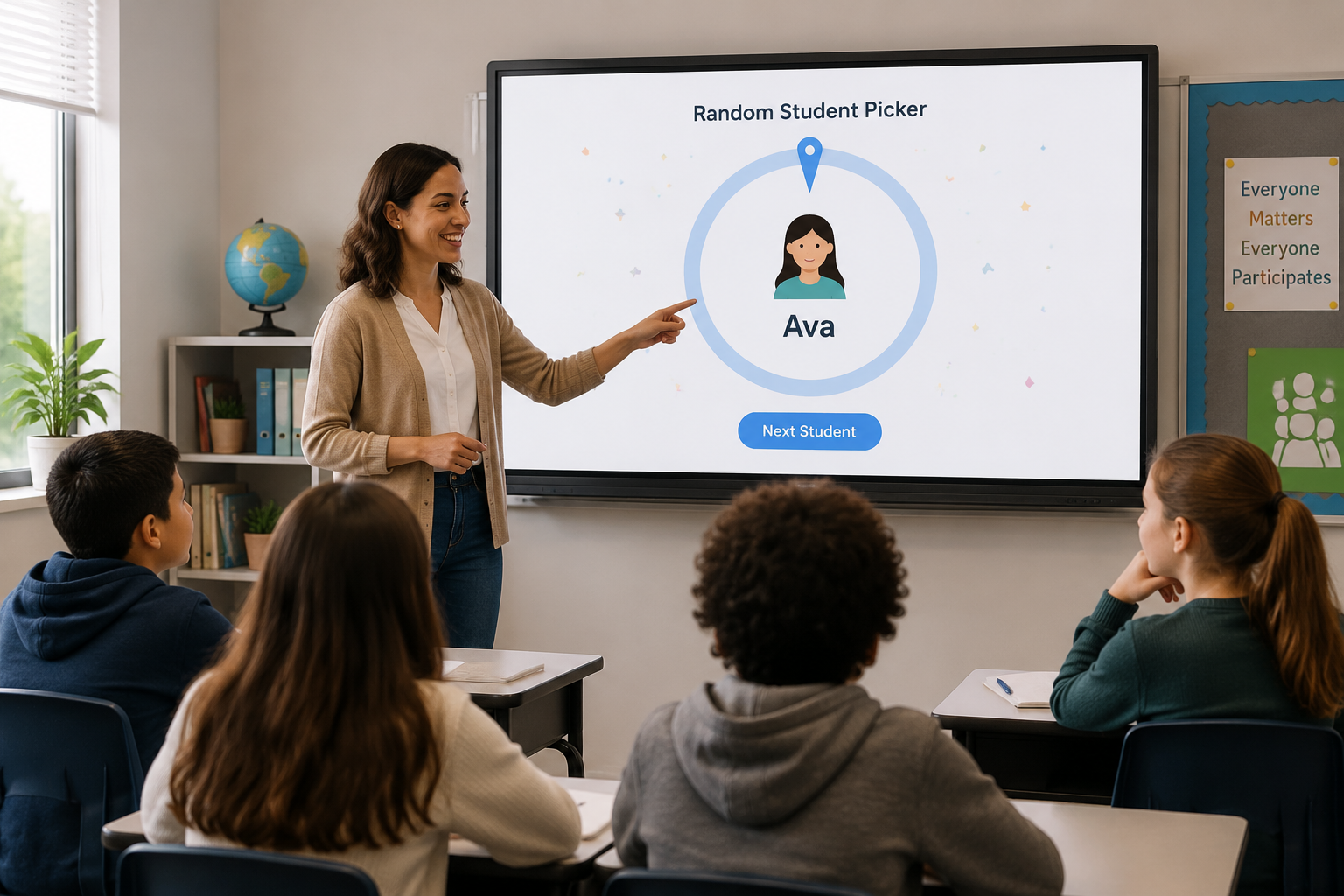
Why Fairness Matters in Classroom Participation
Fairness in participation is not just about equal speaking time—it directly impacts learning outcomes, confidence, and student motivation. Research in educational psychology suggests that students who feel overlooked are less likely to engage in future discussions.
In many classrooms, participation is often dominated by a small group of students. This can create an imbalance where quieter students are less likely to be called on, even if they understand the material just as well.
A random student picker classroom system helps address this imbalance by removing subjective choice from the selection process. Instead of teachers relying on memory or visibility, every student has an equal statistical chance of being chosen.
Key fairness challenges in classrooms include:
- Unequal participation due to confidence levels
- Teacher unconscious bias in selecting students
- Dominance of discussion by a small group
- Lack of accountability for disengaged students
By addressing these challenges, random selection becomes a practical fairness tool rather than just a novelty.
What Is a Random Student Picker Classroom Tool?
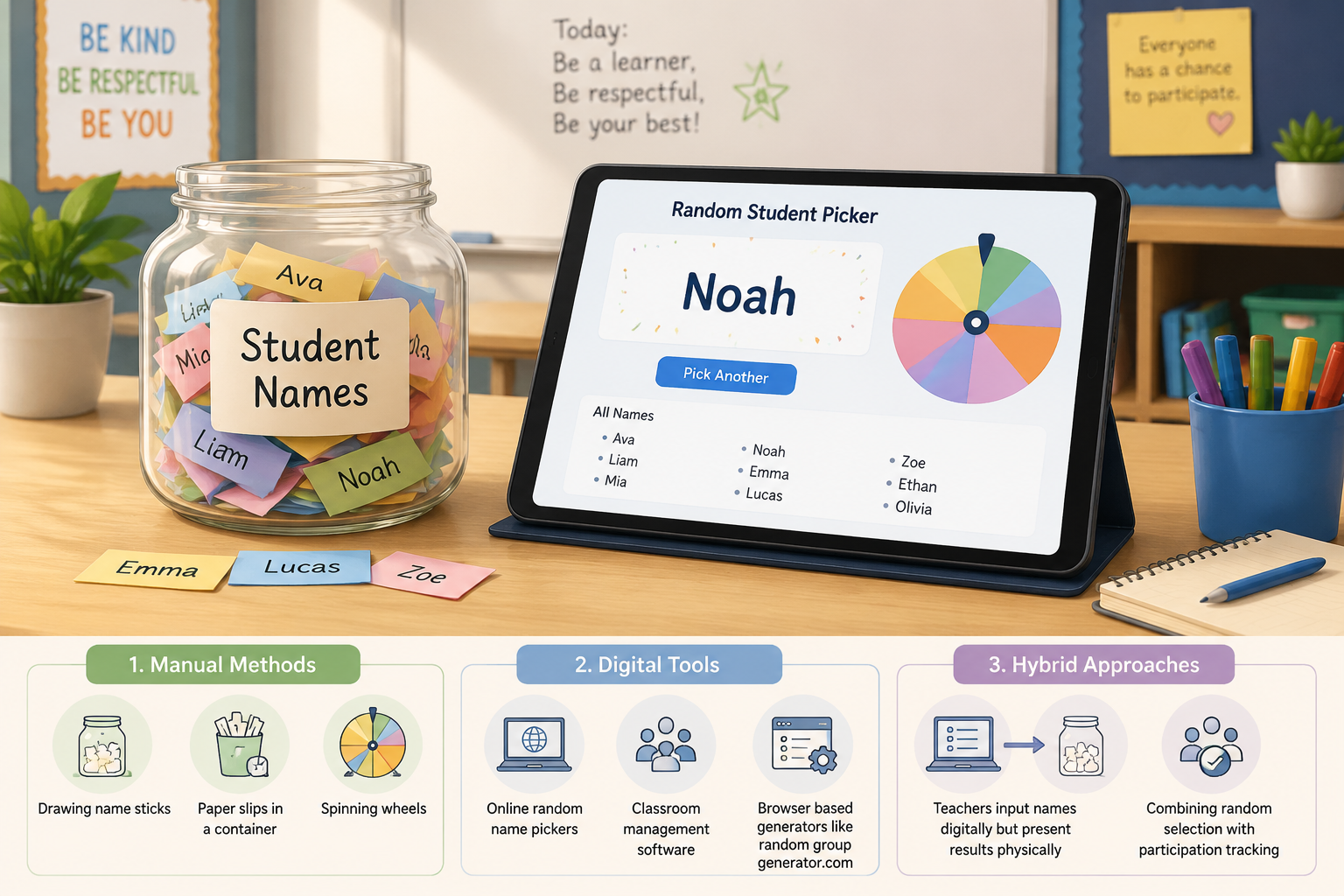
A random student picker is a method or tool that selects students randomly from a list of names. This can be done manually (drawing names from a jar) or digitally using online tools such as the random group generator system available at https://random-group-generator.com.
The goal is simple: ensure that student participation is unbiased and unpredictable.
Types of random selection methods:
- Manual Methods
- Drawing name sticks
- Paper slips in a container
- Spinning wheels
- Digital Tools
- Online random name pickers
- Classroom management software
- Browser-based generators like random-group-generator.com
- Hybrid Approaches
- Teachers input names digitally but present results physically
- Combining random selection with participation tracking
Benefits of Using a Random Student Picker
The adoption of a random student picker classroom strategy offers several educational and behavioral benefits.
1. Increased Engagement
Students are more likely to stay alert when they know they could be selected at any time. This encourages active listening during lessons.
2. Improved Fairness
Every student has an equal chance of being called on, reducing favoritism and unconscious bias.
3. Reduced Anxiety Over Participation
Surprisingly, structured randomness can reduce anxiety for some students because expectations are clear and consistent.
4. Better Classroom Equity
Students who rarely volunteer still get opportunities to contribute, helping teachers assess understanding more accurately.
5. Efficient Classroom Management
Teachers spend less time deciding who to call on and more time focusing on instruction.
How to Implement a Random Student Picker in the Classroom
Implementing a random selection system is straightforward, but it should be done thoughtfully to ensure positive outcomes.
Step 1: Prepare a Student List
Start by listing all student names. This list should be updated regularly to reflect class changes.
Step 2: Choose Your Method
Decide whether to use a manual or digital system. Digital tools are often preferred for speed and transparency.
Step 3: Set Clear Expectations
Explain to students how and why the system is being used. Transparency helps build trust.
Step 4: Integrate Into Lesson Flow
Use random selection for:
- Answering review questions
- Group discussions
- Exit tickets
- Warm-up activities
Step 5: Rotate Participation Types
Avoid using random selection for every interaction. Balance it with voluntary participation.
Practical Classroom Scenarios
Scenario 1: Reviewing Homework
Instead of calling on volunteers, the teacher uses a random picker to select students to explain answers. This ensures everyone prepares consistently.
Scenario 2: Classroom Discussions
During a literature lesson, students are randomly selected to share interpretations of a text, encouraging broader perspectives.
Scenario 3: Quick Knowledge Checks
At the end of a science lesson, the teacher uses a random selector to ask questions about key concepts.
Common Mistakes to Avoid
While a random student picker classroom system is powerful, improper use can reduce its effectiveness.
Overuse of Random Selection
Using randomness too frequently can create stress or disengagement.
Lack of Transparency
If students don’t understand the system, they may perceive it as unfair.
Ignoring Student Needs
Some students may require accommodations or alternative participation methods.
Treating It as Punishment
Random selection should never feel like a disciplinary tool.
Ethics and Inclusivity in Random Selection
Fairness does not mean uniform treatment in all cases. Ethical classroom management requires balancing randomness with inclusivity.
Teachers should consider:
- Students with anxiety or speech difficulties
- Language learners who may need extra time
- Special education accommodations
A well-designed system ensures that randomness supports inclusion rather than overriding individual needs.
Internal Learning and Tool Integration
Educators interested in implementing structured randomness can explore additional classroom tools available through https://random-group-generator.com, including grouping features and selection customization.
These tools can be combined with lesson planning systems to create more dynamic participation structures.
FAQ
1. Is a random student picker fair for all students?
Yes, when implemented correctly, it ensures equal opportunity for participation. However, teachers should still consider individual learning needs and accommodations.
2. Can a random picker increase student anxiety?
For some students, unpredictability may initially increase anxiety. Over time, many students adjust because expectations become consistent and transparent.
3. Should I use a random student picker every day?
Not necessarily. It is most effective when balanced with voluntary participation and other engagement strategies.
4. What is the best tool for random student selection?
Both manual and digital tools work. Digital tools such as online random generators are faster and more transparent, especially in larger classrooms.
5. Can random selection replace traditional calling methods?
It should complement, not replace, traditional teaching methods. Teachers still need flexibility to adapt to lesson needs.
Conclusion
A random student picker classroom strategy is a simple but powerful way to improve fairness, engagement, and participation equity. When used thoughtfully, it helps ensure that every student has an equal voice while supporting more dynamic and inclusive learning environments.
The key is balance—combining randomness with teacher judgment, inclusivity, and structured lesson design.
Sources
Sources
- Selection bias — how unrepresentative assignment processes skew outcomes
Related guides
- How to Reduce Classroom Calling Bias with a Random Student Picker — Discover how a random student picker can eliminate bias in classroom cold-calling, increase participation, …
- How Teachers Use Random Pickers to Reduce Cliques in the Classroom — Discover how teachers use random pickers to break up classroom cliques, foster inclusivity, and ensure ever…
- How Teachers Can Integrate a Random Student Picker Tool into the Classroom — Learn how to use a random student picker to boost classroom engagement, ensure fair participation, and save…
- The Ultimate Random Student Picker Tutorial: Fair Classroom Calling in Seconds — Learn how to use the free online Random Student Picker for fair student selection.
Related Tools
Pick the right generator for the job — every tool runs free in your browser.