
random student picker
How Teachers Can Integrate a Random Student Picker Tool into the Classroom
Learn how to use a random student picker to boost classroom engagement, ensure fair participation, and save time. Step-by-step guide with practical examples for K-12 and higher ed.

Many teachers struggle with calling on students fairly—some students dominate discussions while others stay silent, whether out of shyness or by habit. A random student picker eliminates bias, keeps every learner on their toes, and adds an element of surprise that boosts engagement. In this guide, you’ll learn how to integrate a free online random student picker into your daily classroom routines, from quick warm-ups to remote lessons. No more deciding whom to call on or rummaging through popsicle sticks; a few clicks create a fair and lively classroom environment.
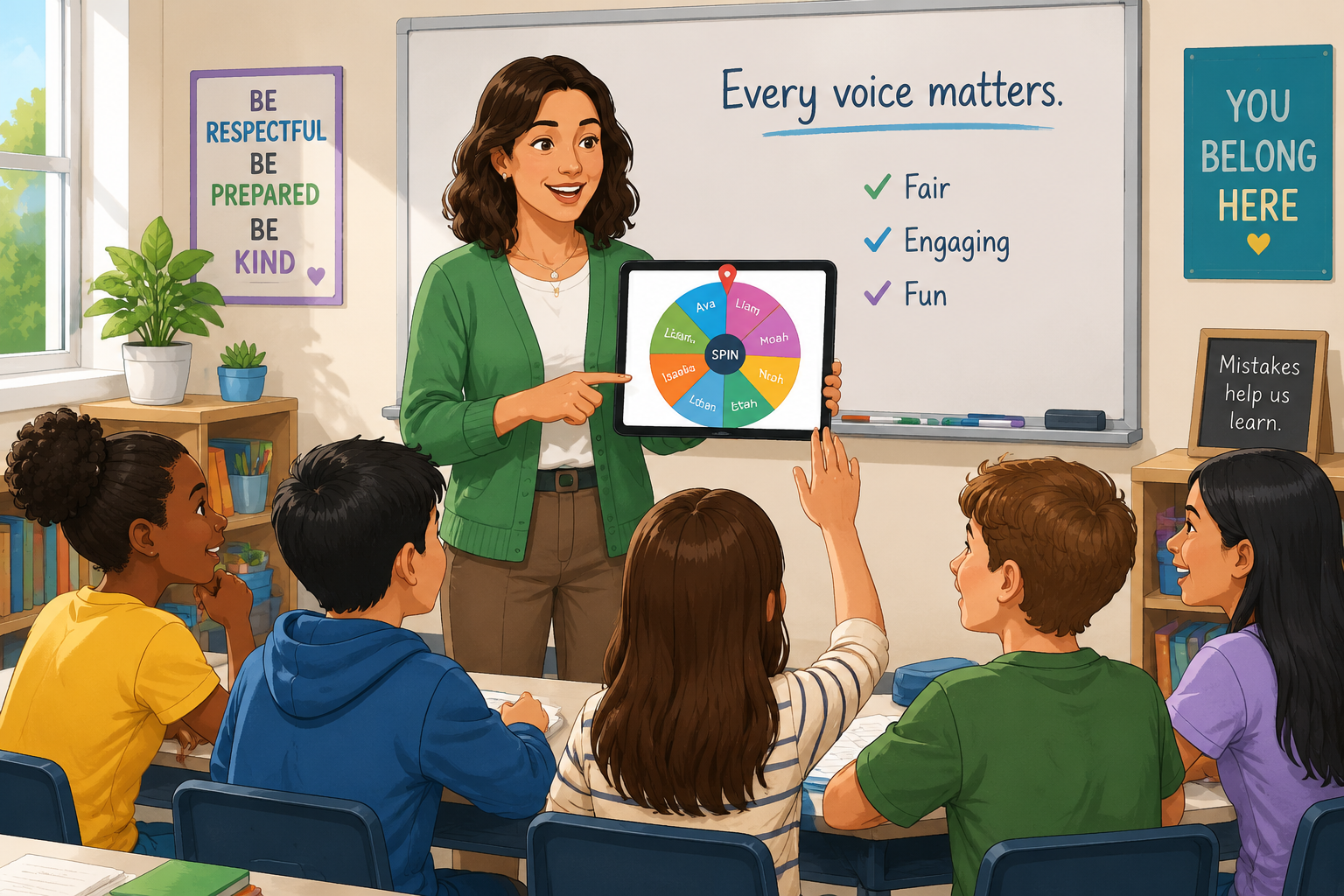
Why Use a Random Student Picker?
A random student picker does more than just select a name. It transforms participation dynamics. First, it promotes equity: every student has the same probability of being chosen, regardless of where they sit or how loudly they raise their hand. This is especially valuable for introverted students who know the answer but hesitate to volunteer. Over time, consistent random selection normalizes the expectation that any student might be called upon, encouraging all to stay prepared.
Additionally, the tool reduces teacher cognitive load. Instead of tracking who has spoken recently, you can focus on the question’s quality and the student’s response. It’s also a time-saver: while a jar of popsicle sticks works, a digital picker is faster, never runs out of sticks, and can be projected for the whole class to see, adding transparency. Plus, many random student pickers, including the one at Random Group Generator, allow you to temporarily remove a picked student from the pool so no one is called twice in the same session.
The element of gamification also plays a role. When students see their names spinning or flashing on the screen, anticipation builds. That brief moment of tension often makes the activity more memorable and fun, which can increase willingness to participate in future lessons.
How to Get Started with the Random Student Picker
Getting started takes less than five minutes. Follow these steps:
- Visit the tool – Go to the Random Student Picker page. No sign-up is needed.
- Enter your student list – Type or paste a list of names into the input box, with one name per line. You can also copy directly from a spreadsheet or a class roster document.
- Configure options – Choose whether to allow repeated picks, set a short animation style (like a wheel or flashcard reveal), and decide if you want the selected name to be removed from the active pool after being chosen.
- Pick a student – Click the “Pick a Student” button. The tool randomly selects one name and displays it prominently, often with a visual effect.
- Repeat or reset – Continue picking until all have been called, or reset the list to start a fresh round.
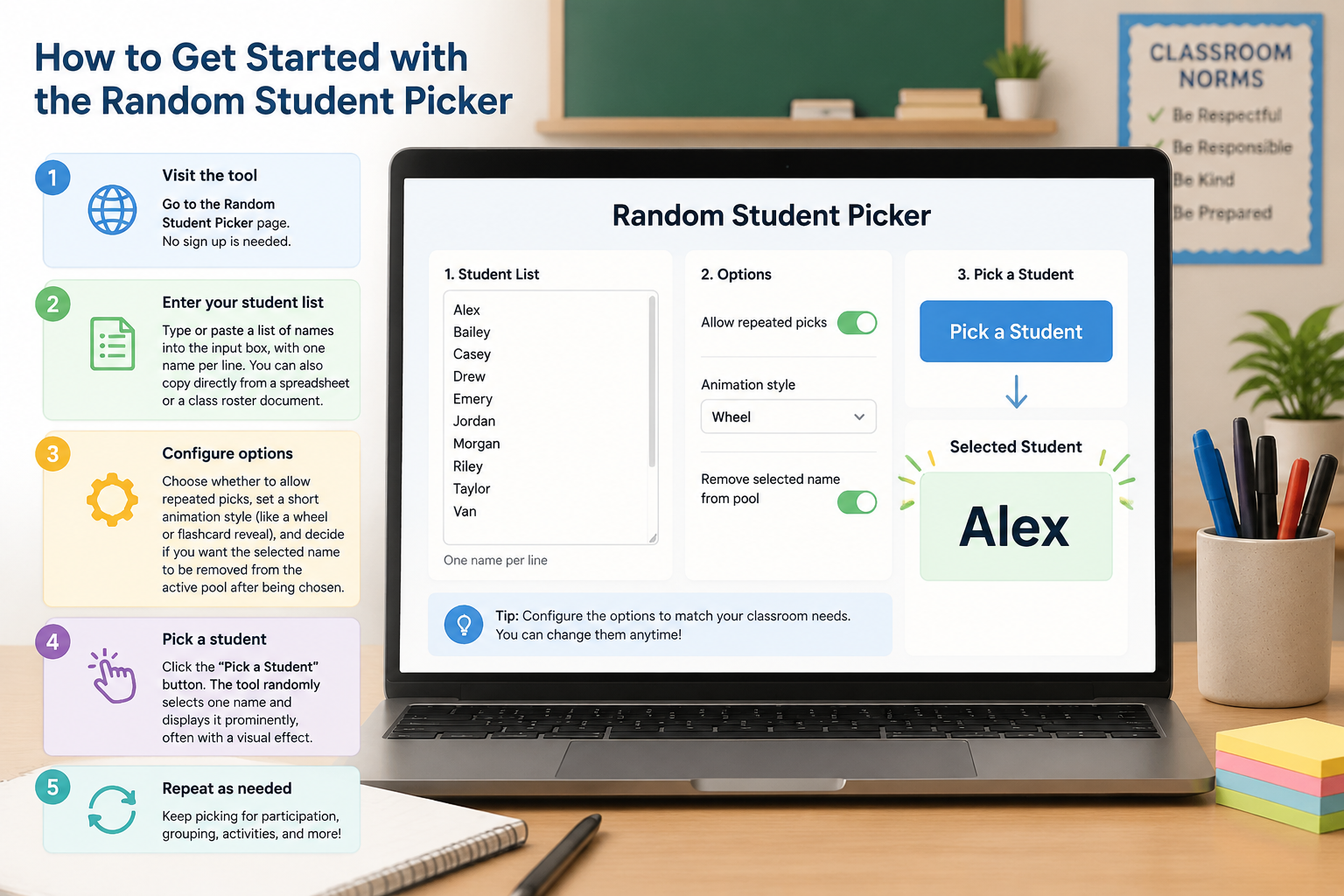
For example, a middle school science teacher might project the picker on the interactive whiteboard at the start of class to choose who will recap the previous day’s material. Because the list can be saved as a simple text file, you can reuse the same roster across multiple periods.
Practical Classroom Integration Ideas
The random student picker is versatile. Here are some concrete ways to embed it into your teaching:
Daily warm-up questions – Right after the bell, display a starter problem and use the picker to select the student who will solve it on the board. This not only checks understanding but also motivates everyone to complete the warm-up quickly.
Choosing presenters or discussion leaders – When it’s time for group presentations, pick a random student from each group to present. This ensures every group member stays accountable for understanding the material, because they might be the one called on.
Cold calling during direct instruction – Intersperse your lecture with brief comprehension checks. Instead of asking for volunteers, let the picker choose a student. This keeps the class alert and provides immediate feedback on whether your explanation is landing.
Assigning classroom jobs – Use the picker to assign weekly roles like line leader, materials distributor, or tech assistant. This removes the burden of choosing and makes the process transparently fair.
Review games and exit tickets – Turn a review session into a game. After a round of a quiz game, use the picker to choose the next contestant. For exit tickets, randomly select two or three students to share their takeaways aloud, ensuring a broad sample of feedback.
A concrete example: Mrs. Ramirez, a 7th grade history teacher, uses the random student picker at least three times per lesson. She passes a cordless microphone around the room after the picker selects a name, ensuring the whole class can hear the student’s response. She reports that students are now more attentive because they know they could be next, and the sense of unpredictability makes the class more dynamic.
Using Random Student Picker with Remote and Hybrid Classes
The shift to online learning hasn’t made a random student picker any less relevant—if anything, it’s even more useful. Many digital random pickers work seamlessly with video conferencing platforms. You can share your screen or use a browser tab during a Zoom or Microsoft Teams meeting, and the whole class sees the selection in real time.
For hybrid settings where some students are in the room and others at home, a digital picker unifies the experience. Instead of physically drawing a name and then verbally announcing it to remote attendees, you simply click and the result appears on everyone’s screen. Some teachers even integrate the tool with Google Classroom by keeping the picker open in a pinned tab. The Random Group Generator site works on any modern browser, so it’s accessible from Chromebooks, iPads, and phones.
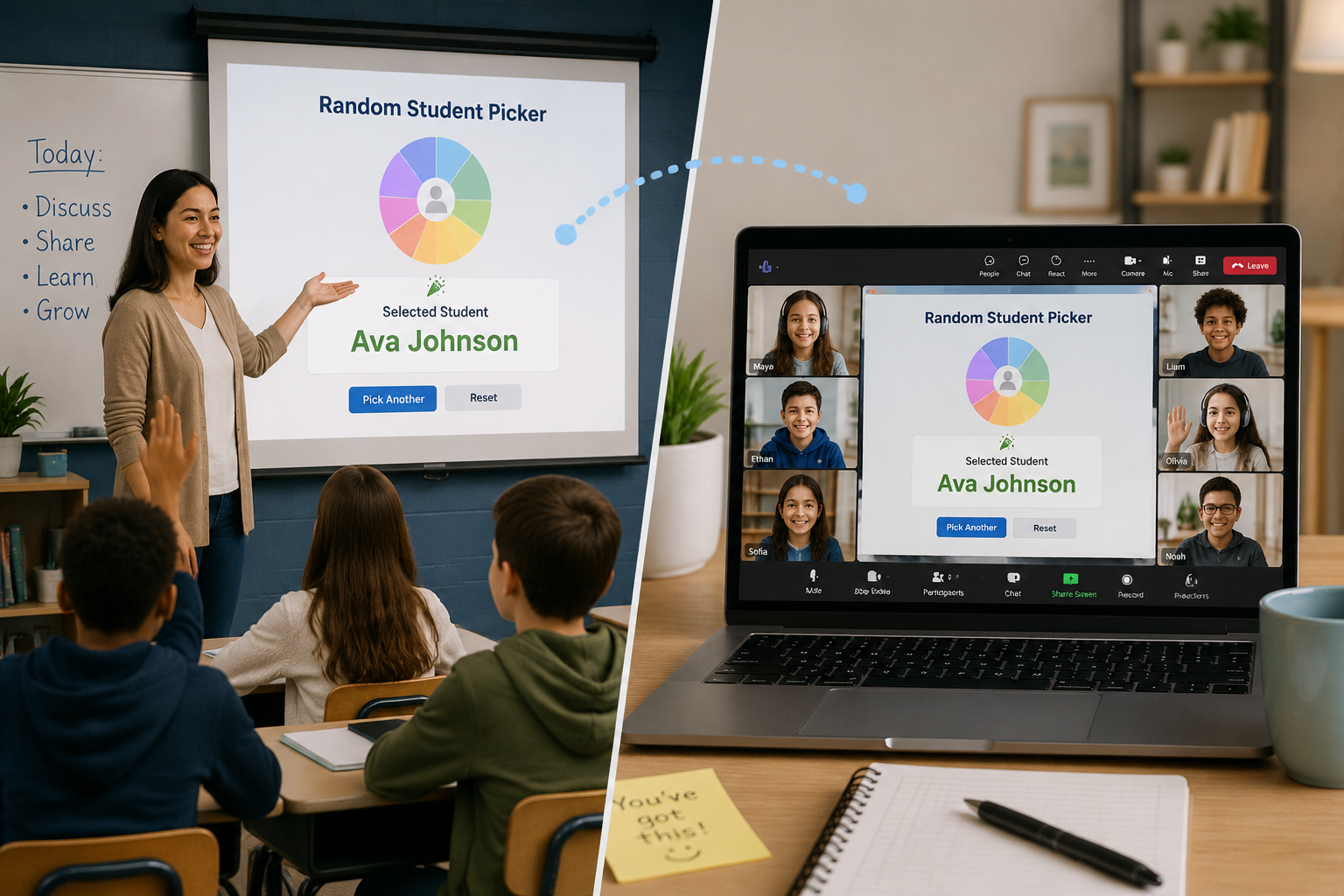
A university lecturer using breakout rooms can first pick a student randomly, then move that student to a breakout room to lead a small-group discussion. The tool’s ability to remove a selected name from the pool ensures no one is overburdened.
Best Practices for Using a Random Student Picker Effectively
While the tool is straightforward, a thoughtful approach will maximize its benefits and avoid potential pitfalls.
Set clear expectations early – On the first day, explain that the random student picker is used to give everyone a voice, not to catch students off guard. Emphasize that it’s okay to say “I’m not sure” and ask for help. This makes the environment safe.
Use supportive questioning – When a student is picked, ask a question that matches the task’s difficulty. For a shy student, perhaps start with a simple check-in like “What’s one thing you remember from yesterday?” before moving to harder content. Celebrate effort, not just correctness.
Blend with other methods – Random picking is powerful, but it shouldn’t be the only strategy. Alternate with volunteer-based discussions and think-pair-share so that students experience different modes of participation. The picker is a tool, not a replacement for professional judgment.
Reflect and adjust – After a week, ask for student feedback. Some classes enjoy the randomness immediately; others might need a warmer introduction. You can also customize the picker’s behavior: for high-stakes quizzing, you might allow repeated picks; for distributing tasks, ensure no student is picked twice until everyone has had a turn.
Be mindful of anxiety – For students with severe presentation anxiety, consider a private heads-up or an alternative way to participate, such as submitting a written response. The goal is inclusion, not humiliation. When used with empathy, the random picker becomes a tool for building confidence over time.
Comparing Random Student Picker with Manual Methods
Teachers have been selecting students randomly long before digital tools existed. Popsicle sticks, numbered cards, dice, and even a deck of cards have served this purpose. How does an online random student picker stack up?
| Method | Fairness | Speed | Transparency | Reusability |
|---|---|---|---|---|
| Popsicle sticks | High (if shuffled) | Medium (physical handling) | Medium (can be shown) | Low (need new sticks each year) |
| Dice/random number lists | High | Medium (matching numbers) | Low (hard for students to verify) | Medium |
| Digital random student picker | High (algorithmic randomness) | Very high | High (can be projected) | Very high (save/edit lists) |
Digital pickers offer clear advantages in speed and transparency. You can project the selection onto a screen, and the animation builds anticipation. You can also save multiple class rosters and switch between them instantly—impossible with physical objects.
However, digital tools require reliable internet and a device. In low-tech environments or outdoor activities, popsicle sticks might still be the better option. The key is using the right tool for the context. For technology-equipped classrooms, the random student picker at Random Group Generator is a robust, free alternative that requires no installation.
FAQ
Can I import my class roster directly?
Yes, you can copy and paste your student list from a spreadsheet, Google Classroom, or any text document. There’s no file upload needed; just paste a list of names, one per line, and the tool will read them.
Is the random student picker truly random?
The tool uses a pseudorandom number generator that is sufficient for classroom use. It does not favor any position in the list, and you can test fairness by running many trials.
Can I avoid picking the same student twice?
Absolutely. Enable the option to remove a chosen name from the pool. Once a student is selected, they won’t be called again until you reset the list or finish all names.
Does it work on mobile devices?
Yes. The Random Student Picker is web-based and responsive, so it works on smartphones, tablets, and Chromebooks. This makes it handy for impromptu activities in the hallway or during outdoor learning.
How is this different from a random group generator?
A random student picker selects one student at a time, while a random group generator divides a class into groups. If you need to form teams or pairs, use the group or pair generator tools. You can even combine them by first picking a student, then assigning them to a group.
Ready to Make Every Voice Count?
Integrating a random student picker into your classroom is a small change that can dramatically increase participation, fairness, and engagement. Whether you teach kindergarten or college, in person or online, a quick, transparent selection process ensures no student goes invisible. Visit the Random Student Picker now, paste your roster, and try it out during your next lesson. You may be surprised at how such a simple tool reshapes the dynamic of your classroom.
Sources
Sources
- Selection bias — how unrepresentative assignment processes skew outcomes
Related guides
- How to Reduce Classroom Calling Bias with a Random Student Picker — Discover how a random student picker can eliminate bias in classroom cold-calling, increase participation, …
- How Teachers Use Random Pickers to Reduce Cliques in the Classroom — Discover how teachers use random pickers to break up classroom cliques, foster inclusivity, and ensure ever…
- Random Student Picker: Fairness in the Classroom — A comprehensive guide to using a random student picker in the classroom to promote fairness, engagement, an…
- The Ultimate Random Student Picker Tutorial: Fair Classroom Calling in Seconds — Learn how to use the free online Random Student Picker for fair student selection.
SponsoredExplore more resources