
selector aleatorio de estudiantes
Cómo Reducir el Sesgo al Preguntar en Clase con un Selector Aleatorio de Estudiantes
Descubre cómo un selector aleatorio de estudiantes puede eliminar el sesgo en el aula, fomentar la participación equitativa y mejorar la dinámica de aprendizaje. Guía paso a paso y ejemplos prácticos.

¿Alguna vez has notado que ciertos estudiantes siempre levantan la mano mientras otros nunca participan? Como docente, es fácil caer —sin querer— en el hábito de preguntar a los mismos alumnos una y otra vez. Esto crea un sesgo silencioso que afecta la confianza y el aprendizaje de quienes quedan al margen. Aquí es donde un selector aleatorio de estudiantes se convierte en un aliado eficaz: elimina las decisiones subjetivas y garantiza que todos tengan las mismas oportunidades de ser elegidos.
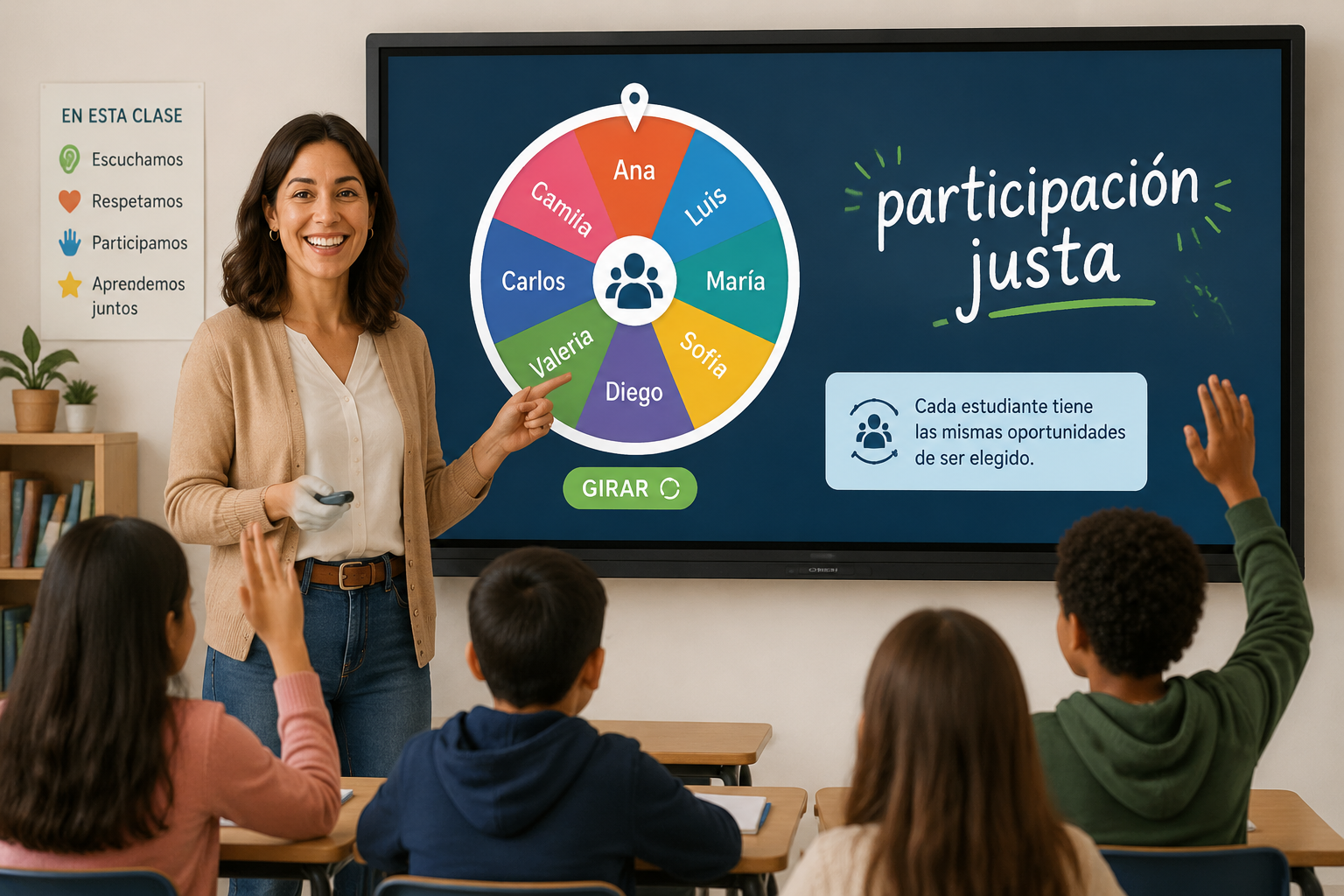
¿Por Qué es Importante Evitar el Sesgo al Preguntar en Clase?
El sesgo en la selección de estudiantes no siempre es intencional. Los profesores suelen dirigirse a quienes parecen más atentos, a los que saben la respuesta, o incluso a aquellos que están sentados en primera fila. Sin embargo, esta dinámica tiene consecuencias reales. Los alumnos que rara vez son llamados pueden sentir que su opinión no importa, lo que reduce su motivación y su capacidad para expresarse oralmente. Además, los estudiantes con dificultades de aprendizaje o introvertidos pueden pasar desapercibidos, perpetuando una brecha de participación.
Por otro lado, el aula ideal debería ser un espacio donde cada alumno sepa que puede ser preguntado en cualquier momento. Esto eleva la atención general, mejora la retención de los contenidos y fomenta un clima de equidad. Investigaciones en pedagogía señalan que una participación balanceada aumenta el rendimiento colectivo y disminuye la ansiedad relacionada con hablar en público. En lugar de confiar en la memoria o en la intuición, usar un sistema aleatorio elimina el factor humano del sesgo y convierte la participación en una experiencia predecible y justa.
Por ejemplo, imagina una clase de historia donde la profesora siempre elige a los mismos cinco voluntarios para debatir. Los demás dejan de preparar la lección porque saben que nunca les tocará. Al integrar un selector aleatorio, todos deben estar listos, y muchos descubrirán que son capaces de contribuir más de lo que creían.
¿Cómo Funciona un Selector Aleatorio de Estudiantes?
Un selector aleatorio de estudiantes es una herramienta digital que toma una lista de nombres y, mediante un algoritmo de aleatoriedad, elige a uno o varios participantes. Aunque existen muchos métodos tradicionales —como palitos con nombres o números—, la versión digital ofrece ventajas clave: rapidez, imposibilidad de manipulación y opciones de personalización.
Crear una lista y configurar el selector
- Sube tu lista de alumnos: puedes escribir los nombres manualmente, pegar una lista desde una hoja de cálculo o importarlos directamente desde Google Classroom. Algunos selectores también permiten añadir fotos, lo que es especialmente útil en grupos de primaria.
- Elige el modo de selección: la mayoría de las herramientas permiten seleccionar un solo alumno, varios a la vez, o incluso ir descartando a los ya elegidos para no repetir hasta que todos hayan participado.
- Ajusta la experiencia visual y sonora: animaciones de ruleta, barril de lotería o simplemente un nombre que aparece con un efecto. Esto mantiene la atención de la clase y genera expectación positiva.
- Usa el selector en clase: comparte la pantalla con un proyector o pizarra digital durante las sesiones presenciales, o transmite la ventana de tu navegador si trabajas con videollamadas en Zoom o Microsoft Teams.
En nuestro sitio puedes probar el selector aleatorio de estudiantes gratuito que funciona sin necesidad de registro y está diseñado específicamente para entornos educativos.
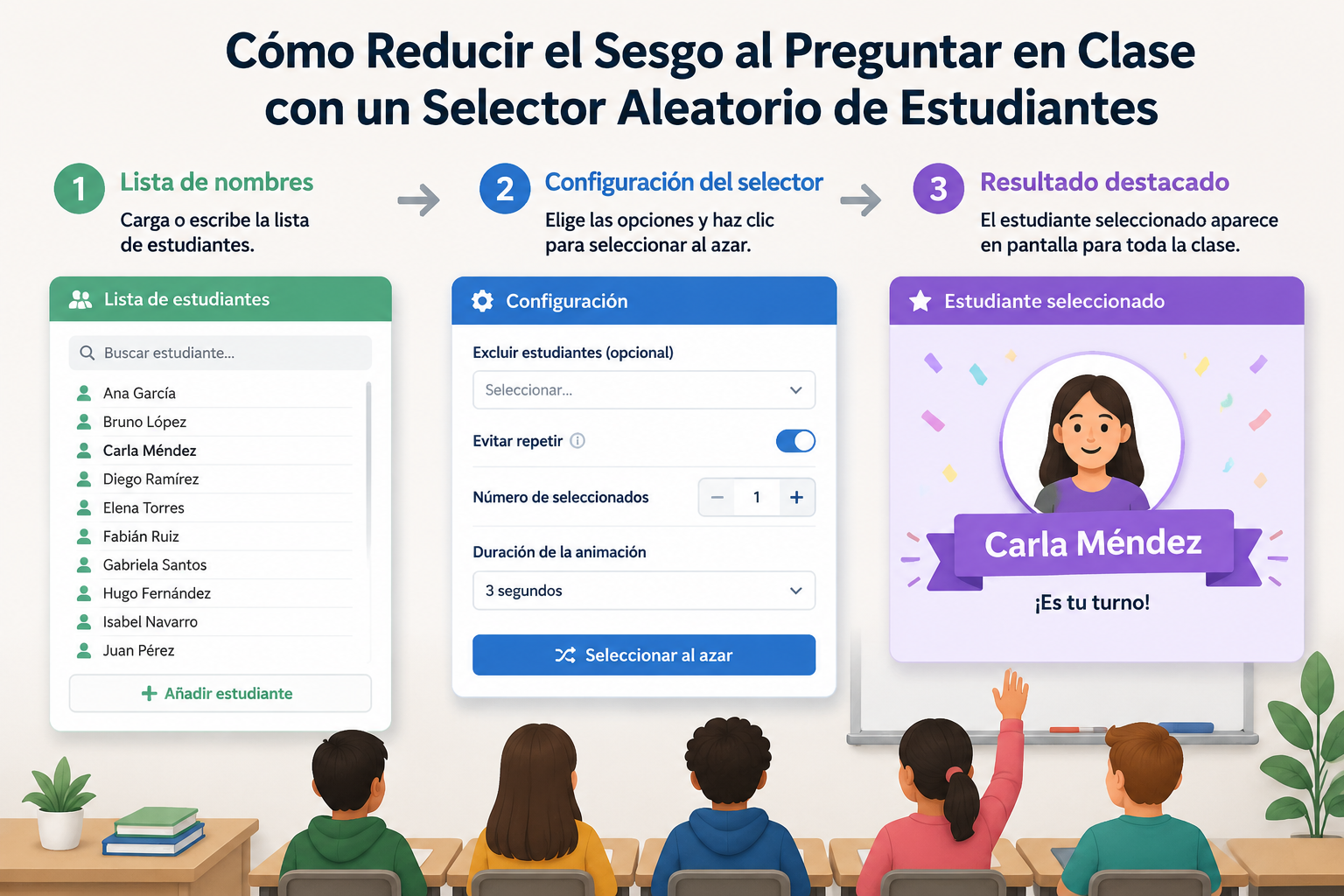
Pasos para Implementar un Sistema de Preguntas Aleatorias Justas
Integrar el selector en tu rutina diaria es más fácil de lo que parece. A continuación te comparto una guía paso a paso basada en la experiencia de docentes que lo utilizan.
1. Prepara tu lista de estudiantes de forma permanente
Carga la lista de la clase una sola vez. Si usas Google Classroom, puedes sincronizarla automáticamente y el selector reflejará cualquier alta o baja nueva. Guarda la configuración en tu cuenta (si la herramienta lo permite) para acceder rápidamente en todas tus clases.
2. Define las reglas del juego con tus alumnos
Dedica cinco minutos el primer día para explicar cómo funciona. Di algo como: “A partir de ahora usaremos este selector para elegir quién responde. De esta forma todos tendrán turno y nadie sentirá que lo ignoro o que siempre pregunto a los mismos.” Establece que, cuando el nombre aparezca, el alumno deberá responder en un máximo de 15 segundos. Si no sabe la respuesta, puede pedir ayuda a un compañero que también será elegido aleatoriamente. Esto reduce la presión y fomenta la colaboración.
3. Utiliza el selector en momentos clave de la lección
No es necesario usarlo para cada pregunta. Alterna entre momentos de debate abierto y rondas de selección aleatoria. Por ejemplo, durante la fase de activación de conocimientos previos (5 minutos al inicio), usa el selector para elegir a tres estudiantes que compartan lo que recuerdan del tema anterior. Luego, durante la práctica guiada, vuelve a usarlo para elegir quién sale a la pizarra o resuelve un ejercicio.
María, profesora de matemáticas en secundaria, cuentó: “Al principio los alumnos se quejaban porque ya no podían esconderse, pero a la tercera clase todos estaban más atentos y participaban mejor. Incluso aquellos que nunca levantaban la mano empezaron a ofrecerse voluntarios después de ser elegidos algunas veces.”
4. Complementa con otras funciones de agrupamiento
Muchos selectores aleatorios de estudiantes forman parte de plataformas más amplias que también permiten crear grupos aleatorios o generar parejas. Aprovecha esto: después de una ronda de preguntas aleatorias, organiza una actividad en la que los propios alumnos formen parejas al azar para discutir una idea. Así la aleatoriedad no solo equilibra la participación individual, sino que también rompe los grupitos fijos y favorece la integración.
Comparación con Otros Métodos de Participación
¿Por qué no seguir usando una lata con palitos de helado o una lista en papel? Analicemos las diferencias.
- Palitos con nombres: son económicos y no requieren tecnología, pero tienen varias limitaciones. Si un palito ya salió y se deja a un lado, el alumno sabe que no volverá a ser preguntado y puede relajarse el resto de la clase. Además, es fácil que algún palito se pierda o que un profesor olvide revolverlos bien, introduciendo sesgo involuntario. El selector digital resuelve esto con modos de “sin repetición hasta completar ciclo” o “totalmente aleatorio en cada extracción”, configurable a gusto.
- Generadores de números aleatorios online: requieren que cada alumno tenga un número asignado y que el docente los tenga que mirar en una tabla. Si la clase es numerosa, se pierde agilidad y espontaneidad. El selector de estudiantes muestra el nombre directamente, lo que acelera la dinámica y reduce errores.
- Levantar la mano o voluntarios: perpetúa el sesgo y discrimina a los introvertidos. Varios estudios muestran que los alumnos de grupos minoritarios o con necesidades especiales participan menos cuando la selección depende solo de ellos. El aleatorio elimina esa barrera sin forzar a nadie de manera violenta; al ser una “regla del sistema”, los estudiantes lo aceptan mejor.
- Lista en orden de asistencia: es predecible y los estudiantes pueden anticipar su turno, dejando de prestar atención cuando ya pasaron. El factor sorpresa mantiene la atención continua.
En definitiva, el selector aleatorio digital ofrece versatilidad, transparencia y opciones de integración con plataformas como Zoom, Teams u Google Classroom que los métodos tradicionales no pueden igualar. Además, la posibilidad de personalizar la animación o el sonido convierte el momento en un pequeño juego que baja la ansiedad.
Consejos para Sacar el Máximo Partido al Selector Aleatorio en el Aula
1. Combínalo con estímulos positivos
Celebra cuando el sistema elija a alguien que no suele participar. Un simple “¡Bien, le tocó a Laura, a ver qué opina!” con una sonrisa puede cambiar la actitud de esa alumna durante toda la semana. Refuerza las respuestas correctas y aproxima las incorrectas con una redirección amable: “Casi, ¿alguien puede ayudar a Juan con esta idea?” seleccionando ahora con el mismo selector a un ayudante aleatorio.
2. Aprovecha la aleatoriedad para otras dinámicas
No limites la herramienta a las preguntas. Utiliza el selector para:
- Repartir tareas de clase (borrar la pizarra, repartir hojas).
- Formar equipos de debate o de trabajo en proyectos con la función de generador de grupos aleatorios.
- Elegir al estudiante que presentará primero en una exposición.
- Asignar roles en juegos educativos.
Cuantos más contextos encuentres, más normalizada y aceptada resultará la aleatoriedad.
3. Adapta la velocidad y la repetición según la necesidad
Algunos días querrás que todos participen una sola vez; configura un ciclo completo. Otros días necesitarás múltiples respuestas rápidas y no importa que alguien repita; entonces desactiva el filtro. Juega con estas opciones en función del objetivo de la clase. La herramienta selector aleatorio de estudiantes que ofrecemos te permite hacer estos cambios con un solo clic.
4. Úsalo tamién como espejo de la asistencia
Un beneficio colateral es que, al pasar lista con nombres reales de forma aleatoria, detectas rápidamente quién no está conectado (en clases virtuales) o quién se ausentó. Si el nombre aparece y no hay respuesta, puedes marcarlo en tu registro y continuar. Esto agiliza tu gestión diaria.
Preguntas Frecuentes
¿El selector aleatorio funciona tanto para clases presenciales como en línea?
Sí. El selector es una aplicación web que solo necesita un navegador. Para clases presenciales, basta con proyectar la pantalla en un monitor grande o pizarra digital. En entornos virtuales, puedes compartir la ventana del navegador durante una videollamada en Zoom, Microsoft Teams o Google Meet. También puedes integrar listas con Google Classroom para mantener la sincronización en ambos formatos.
¿Es realmente aleatorio el resultado?
Absolutamente. Los selectores digitales de nuestra plataforma utilizan algoritmos de aleatoriedad criptográfica, similares a los empleados en sorteos oficiales, que garantizan que cada estudiante tenga exactamente las mismas probabilidades de ser elegido en cada extracción. No hay patrones ocultos ni favorecimientos.
¿Puedo evitar que un alumno sea elegido dos veces seguidas?
Sí. Puedes activar el modo “no repetir hasta que todos hayan participado”. De esa forma, una vez que un nombre aparece, queda temporalmente excluido hasta que se complete el ciclo con todos los integrantes de la lista. Esto asegura que todo el grupo tenga su turno antes de que alguien repita.
¿Funciona en tabletas y celulares?
Sí, la versión web está optimizada para dispositivos móviles. Puedes operar el selector desde una tableta mientras la reflejas en un proyector, o incluso usarlo directamente desde el celular si necesitas improvisar sin computadora.
¿Puedo importar mis listas desde Google Classroom?
Por supuesto. El selector aleatorio de estudiantes incluye la opción de conectarse con Google Classroom. Solo tienes que iniciar sesión, elegir la clase y el sistema importará automáticamente los nombres actualizados. Así no tendrás que teclear listas manualmente cada semestre.
Eliminar el sesgo al preguntar en clase es un paso sencillo que transforma la participación y la equidad en tu aula. Con un selector aleatorio de estudiantes podrás lograrlo de forma consistente y casi sin esfuerzo. Pruébalo ahora con tu propia lista de alumnos y descubre cómo cambia la dinámica de tus clases.
PatrocinadoExplorar más recursos