
fair draw in sports
Fair Draw in Sports: Rules, Examples, and How to Run One
Learn what makes a fair draw in sports, how random selection and seeding work, and how to organize transparent, balanced tournament groups and matchups.
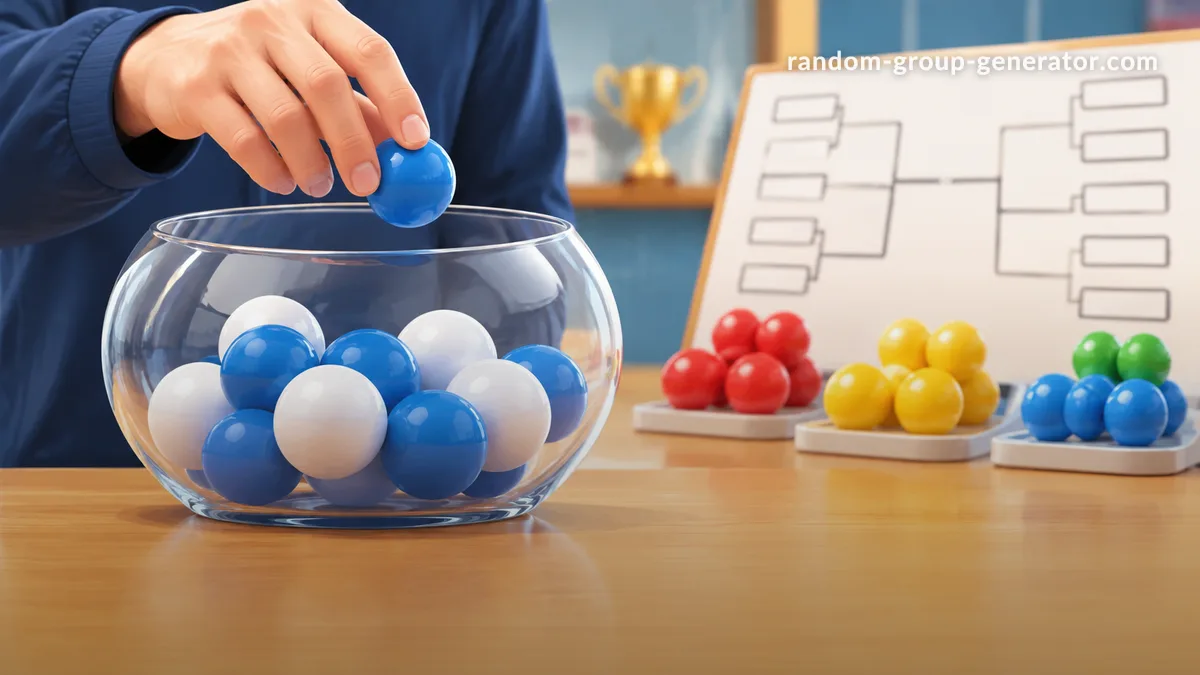
Imagine organizing a school football tournament with 16 teams. Everyone wants a competitive event, but several teams are concerned about getting an unfairly difficult opponent in the opening round. Some participants suspect that the organizers might favor certain teams. How can you make the selection process trustworthy? A fair draw in sports uses clear rules and impartial randomization to assign teams or players to groups, positions, or matchups. Whether you are organizing a school competition, a community league, or a corporate sports event, understanding how fair draws work can help prevent disputes and make the tournament easier to manage.
A good draw is not simply about putting names into a container and picking them out. It also requires decisions about eligibility, seeding, group sizes, restrictions, and transparency. This guide explains the main principles and shows how to organize a practical sports draw.
What Is a Fair Draw in Sports?
A fair draw in sports is a selection process that follows predetermined rules and gives eligible participants an impartial opportunity to receive available positions. Depending on the tournament format, a draw might determine which teams meet in the first round, which groups they enter, or where players appear in a knockout bracket.
The important principle is that organizers should not manipulate the selection to favor a particular participant. If two teams have the same eligibility and are competing for an available position, the selection method should treat them consistently. A transparent process also allows participants to understand how the outcome was produced.
However, fairness does not always mean that every possible arrangement must be equally likely. Some competitions use seeding to prevent the strongest teams from meeting too early. Others apply geographic restrictions, eligibility rules, or scheduling requirements. These conditions can be legitimate when they are established in advance and applied consistently.
For example, a school basketball tournament with eight teams might use a completely random draw to create four opening matches. Alternatively, organizers might separate the two strongest teams into opposite halves of a knockout bracket. Both approaches can be fair, provided the selection rules are clear and the draw is conducted impartially.
The key distinction is between a random outcome and a fair procedure. Randomness is one useful way to support fairness, but the complete process matters just as much.
What Makes a Sports Tournament Draw Fair?
A trustworthy sports draw usually depends on several connected principles. Organizers should consider them before selecting teams, because problems with the rules can make even a technically random draw appear unfair.
1. Equal treatment: Participants with the same eligibility should be subject to the same selection rules. Organizers should not quietly give one team a better opportunity than another.
2. Transparent rules: Explain the draw format, number of groups, seeding arrangements, and any restrictions before the selection begins. Participants should know what can influence the result.
3. Impartial randomization: When positions are determined randomly, use a consistent method that does not allow organizers to choose preferred outcomes. A random selection tool or a properly managed physical draw can help.
4. Appropriate balance: If the competition uses seeded groups, the rules should distribute stronger participants according to a consistent ranking or rating method. Balance should not be confused with secretly changing results after the draw.
5. Accountability: Keep a record of the eligible participants, selection rules, and final allocation. This makes it easier to explain the result if someone questions it.
Consider a company sports day with 24 employees divided into four teams. If managers personally choose participants, employees might suspect favoritism. A documented random allocation gives everyone a clearer understanding of how the teams were formed. If the organizers also want balanced teams, they can first agree on a skill-based allocation policy and then randomize within the permitted categories.
These principles provide a practical foundation for a fair draw in sports, whether the event involves children, experienced athletes, or recreational participants.
Random Draw vs. Seeding: Understanding the Difference
One of the most common sources of confusion in tournament organization is the difference between random draws and seeding. They are related, but they solve different problems.
A random draw determines positions through chance. For example, eight equally eligible teams can be randomly assigned to eight bracket positions. This approach reduces the opportunity for organizers to influence who plays whom.
Seeding uses information about participant strength, such as rankings, previous results, or an established rating system. Organizers place stronger teams in designated positions so they are less likely to meet in the opening rounds. Seeding therefore limits some of the possible random outcomes.
Neither approach is automatically better. A friendly school competition might benefit from a fully random draw because participation and enjoyment matter more than competitive ranking. A regional championship might use seeding because the organizers want to recognize established performance and avoid unusually difficult opening matches between the strongest competitors.
A useful comparison is shown below:
| Feature | Random draw | Seeded draw |
|---|---|---|
| Main purpose | Impartial allocation by chance | Competitive distribution |
| Selection basis | Random selection | Rankings or performance information |
| Early matchups | Can include strong opponents | Strong participants are generally separated |
| Preparation | Requires eligible entries and selection rules | Requires reliable ranking information and selection rules |
| Best suited for | Recreational and informal events | Ranked and competitive tournaments |
The two methods can also work together. Organizers can create ranking-based pots and randomly select participants from each pot. This preserves an element of chance while supporting a more balanced tournament structure.
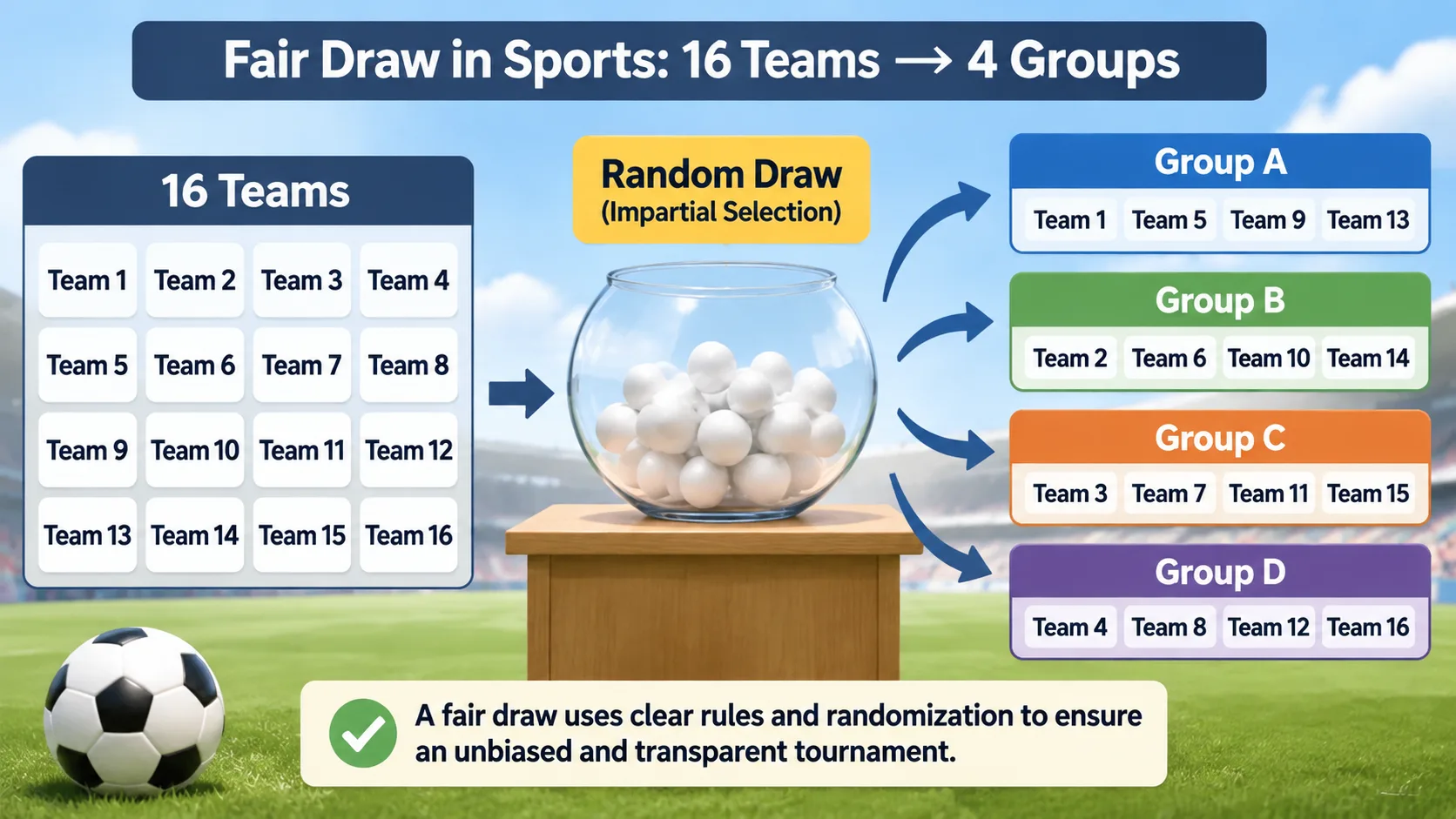
For example, suppose a 16-team volleyball tournament has four groups. Organizers can divide the teams into four performance pots, with four teams in each pot. They then randomly assign one team from each pot to every group. The result is a draw that uses both performance information and random selection.
The FIVB Event Regulations provide an example of formal tournament procedures. They describe drawing lots under official supervision and connect the process with established team-distribution and seeding principles. This illustrates why major competitions define their draw procedures before the event rather than relying on informal decisions.
How to Organize a Fair Draw in Sports Step by Step
You do not need a complicated system to organize a reliable draw for a small tournament. What matters is choosing the format first, preparing accurate participant information, and applying the same procedure to everyone.
Follow these steps to organize your own sports draw.
Step 1: Confirm the participants
Create a complete list of eligible teams or players. Check registrations, confirm team names, and remove duplicate entries. If late registrations are possible, establish a deadline and explain how replacements will be handled.
For example, if 12 school football teams have registered, verify that all 12 are eligible before starting. Do not add or remove teams simply because the initial draw produces an inconvenient result.
Step 2: Choose the tournament format
Decide whether participants will compete in knockout matches, round-robin groups, or a combination of both.
A knockout tournament eliminates participants after a loss. A round-robin format allows each participant to play against the other members of their group. The format affects the number of positions required and the type of draw you need.
For 12 teams, you might create three groups of four, followed by a knockout stage. Alternatively, you might organize a 16-position knockout bracket with four byes. Choose the format before randomizing the participants.
Step 3: Establish the fairness rules
Decide whether the draw will be completely random or use seeding. If you have restrictions, such as separating teams from the same school or ensuring that participants meet venue requirements, write them down before selection.
Explain these conditions to participants. A restriction should serve a genuine competition or logistical purpose, not provide an advantage to a preferred team.
Step 4: Prepare the draw
Enter every eligible participant into a random selection process. For a small event, numbered slips in an identical container may be sufficient. For a larger event, a digital randomization tool can make the process easier to repeat and document.
If you are creating groups, decide the number and maximum size of each group in advance. If you are creating a knockout bracket, prepare the bracket positions before assigning teams.
Step 5: Conduct the draw consistently
Apply the agreed selection method without changing the rules midway. If the process involves several stages, such as drawing from different seeding pots, complete each stage in the published order.
For example, a four-group tournament might assign one participant from each performance pot to each group. The same selection procedure should apply to every pot and every group.
Step 6: Publish and check the results
Display the final groups or matchups in a format participants can easily understand. Check that every eligible team appears once, no team is missing, and all group-size restrictions are satisfied.
If an administrative error is discovered, explain what happened and follow the correction policy established before the draw. Do not quietly rearrange teams to create a preferred outcome.
Real-World Examples of Fair Sports Draws
Different sporting situations require different approaches. The best method depends on the number of participants, the competitive level, and the purpose of the event.
School sports competitions
A physical education teacher organizing a school football tournament may have 20 teams from different classes. The goal is to give students an enjoyable competition without spending too much lesson time arranging fixtures.
The teacher can create five groups of four teams using random allocation. Each team plays the others in its group, and the leading teams advance according to the published rules. If the teacher has no reliable performance rankings, a completely random group draw may be more appropriate than inventing a seeding system.
A digital Random Group Generator can help distribute the teams into groups without manually moving names between lists. The teacher should still verify the final group sizes and explain the selection rules before the activity begins.
Community football tournaments
A community league may have 16 teams competing in a knockout competition. Organizers can prepare a bracket with 16 positions and randomly allocate the eligible teams.
If the league has established rankings and wants to separate the strongest teams, it can introduce seeding. The organizers should explain how rankings are determined and how seeded positions are assigned. Random selection can then be used for the remaining eligible positions.
The important point is that seeding and randomization should follow a consistent policy. A draw should not become an opportunity to adjust the bracket whenever organizers dislike a matchup.
Corporate sports days
A company might organize a volleyball or badminton event with employees from different departments. The organizers want people to meet colleagues they do not normally work with, rather than allowing existing friendship groups to dominate team formation.
Random allocation can help create mixed teams. If the event includes doubles matches, a Random Pair Generator can help assign participants to pairs. Organizers should first confirm that the participants are available and eligible to compete.
For these informal activities, the purpose is often participation and variety rather than ranking-based competitive balance. A simple random process is usually easier to explain than a complicated selection system.
Multi-group youth competitions
A youth sports organizer may need to divide 32 teams into eight groups of four. A random draw is a practical starting point, but the organizer may also need to account for age divisions, safety requirements, or established competition rules.
The correct approach is to apply mandatory eligibility restrictions first, then randomize within the eligible pool or use an approved seeding procedure. This prevents the draw from placing participants into unsuitable competition categories.
These examples show that a fair draw in sports is not one fixed formula. It is a process that combines suitable tournament rules with impartial selection.
Common Mistakes That Can Make a Sports Draw Unfair
Even well-intentioned organizers can create problems when they rush the selection process. The most common mistake is deciding the rules after seeing the results. This makes it difficult for participants to trust that the draw was impartial.
Another mistake is confusing equal group sizes with competitive balance. Four groups containing four teams each may be structurally equal, but one group might contain several highly experienced teams while another contains mostly beginners. If competitive balance matters, organizers should decide whether to use a transparent seeding system before the draw.
Organizers should also avoid relying on incomplete participant lists. Duplicate names, late withdrawals, and incorrectly entered teams can change the result. Always verify the entries before randomization and check the final allocation afterward.
Finally, remember that a random generator does not automatically understand sporting rules. A general-purpose tool can distribute names randomly, but it cannot determine whether a particular competition requires age categories, geographical separation, rankings, or special eligibility conditions unless those requirements are incorporated into the process.
For example, a school tournament with separate age divisions should not place all 24 teams into one unrestricted random draw if younger participants are only permitted to compete against teams in their own division. Organizers must establish eligible pools first.
The best way to avoid these problems is to publish the rules, verify the participant list, use a consistent selection method, and keep a record of the final result.
Can a Digital Random Group Generator Help With Sports Draws?
A digital random group generator can be a useful option when you need to divide participants into groups quickly. Instead of writing names on slips of paper and repeatedly checking group sizes, you can enter the participant list and use random allocation to organize the teams.
This approach is particularly helpful for teachers, school sports coordinators, community organizers, and corporate event facilitators who run several activities. A digital tool can reduce manual sorting and make it easier to prepare different group arrangements for different sessions.
However, there are important limitations. A general-purpose group generator should not be treated as an official tournament-management or ranking system. It does not replace governing-body regulations, eligibility checks, professional seeding decisions, or specialized tournament software. If your competition has complex restrictions or requires a mathematically uniform draw across all valid tournament configurations, you should use a method designed and verified for those requirements.
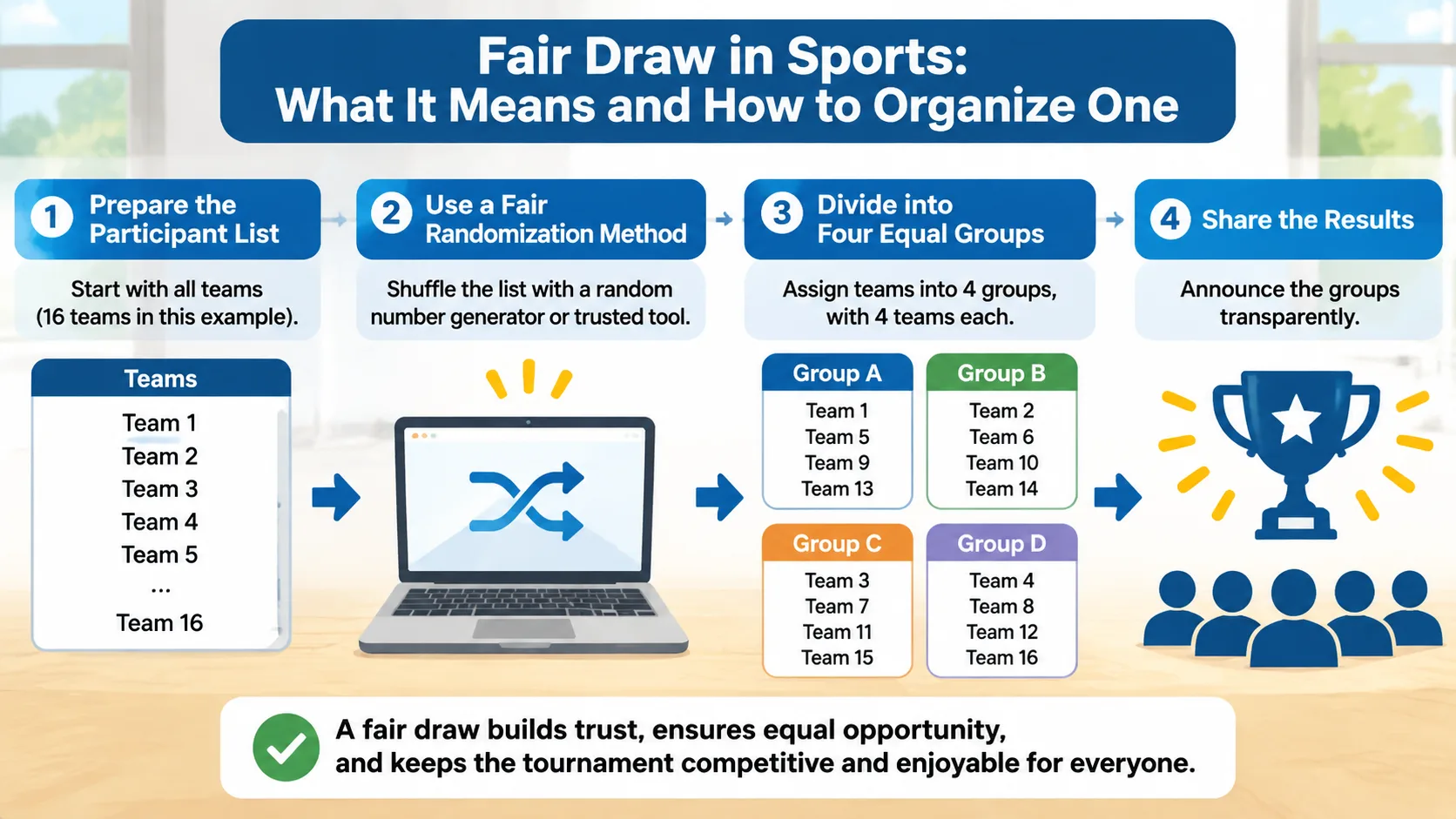
For an informal competition, a practical workflow looks like this:
- Prepare a list of eligible teams or participants.
- Remove duplicate entries and confirm the final number.
- Decide how many groups you need and whether the groups should be equal in size.
- Enter the participant names into the Random Group Generator.
- Generate the groups and check the output against your tournament rules.
- Share the final allocation with participants before the competition begins.
For competitions that require individual selection rather than team allocation, a Random Student Picker can also be useful in educational activities. However, for sports tournaments, choose the tool according to the actual task: selecting a participant, creating pairs, or allocating complete teams are different operations.
A digital tool is most useful when it supports a clear process. It should make the selection easier, not replace the organizer's responsibility to establish fair rules.
Frequently Asked Questions About a Fair Draw in Sports
What is the main purpose of a fair draw in sports?
The main purpose is to assign teams or players to groups, matchups, or positions using consistent and impartial rules. A fair draw reduces the opportunity for organizers to favor particular participants. It also makes the selection process easier to explain and trust.
Does a fair sports draw have to be completely random?
No. Some competitions use seeding, eligibility restrictions, or other predetermined conditions. A draw can still be fair when these conditions are transparent, relevant to the competition, and consistently applied. The important thing is that the rules are established before the selection begins.
What is the difference between a random draw and a seeded draw?
A random draw uses chance to assign available positions, while a seeded draw uses rankings or performance information to separate stronger participants. Some tournaments combine both methods by placing teams into performance-based pots and randomly assigning teams from each pot to groups.
How can teachers organize a fair sports draw for students?
Teachers should first confirm the eligible participants, decide the competition format, and establish any age or skill restrictions. They can then use numbered slips or a digital random group generator to allocate teams. Before publishing the results, they should verify that every participant appears once and that all group sizes meet the rules.
Is a digital random group generator suitable for tournament draws?
Yes, for straightforward activities such as dividing participants into equal-sized groups or creating random team allocations. It can save preparation time and reduce manual sorting. However, competitions with complex seeding, eligibility restrictions, or specialized draw requirements may need dedicated tournament software or an officially approved procedure.
Can organizers change the results after a sports draw?
Organizers should not change results simply because they dislike particular matchups. Corrections may be necessary when there is a genuine administrative error, an ineligible entry, or a withdrawal. Any correction should follow a policy established in advance and be clearly communicated to participants.
Organize Your Next Sports Draw With Confidence
A fair draw in sports starts with clear rules, accurate participant information, and an impartial selection method. Whether you are arranging a school competition, a recreational league, or a company sports day, the right process helps participants understand how groups and matchups are determined.
For simple team allocation, you can make the process easier with a digital tool instead of sorting every name manually. Prepare your participant list, decide on your group structure, and check the results against your competition rules.
Ready to organize your teams? Try the free Random Group Generator to create random groups for your next sports event, classroom competition, or team activity.
Related Tools
Pick the right generator for the job — every tool runs free in your browser.