
team name generator
Team Name Random Generator: Create Fair and Creative Team Names
Learn how a team name random generator helps teachers, trainers, and facilitators quickly create balanced team identities for classrooms, workshops, and events.

When teachers, trainers, or event organizers create new groups, one small task often slows down the entire process: choosing team names. A team name random generator helps solve this problem by creating quick, fair, and creative names for groups without requiring everyone to brainstorm or compete for ideas. It is useful for classrooms, workshops, corporate activities, and online collaboration sessions where teams need clear identities.
A good team name can make a group activity feel more organized and engaging. Instead of spending several minutes deciding between ideas, facilitators can generate names instantly and keep attention focused on the activity itself. The approach works especially well when combined with fair group assignment tools, such as the Random Group Generator, which helps create balanced teams before naming them.
Why use a team name random generator?
Choosing team names manually sounds simple, but it can create unexpected challenges. In a classroom, some students may quickly suggest ideas while quieter students do not participate. In a workplace workshop, one team may spend too much time debating names while another finishes immediately. A random generator removes that delay and gives every group the same opportunity to receive a name.
A team name random generator is designed around convenience and fairness. The facilitator can create names in seconds, avoid repeating the same ideas, and provide a consistent experience for every team. This makes it a practical tool for situations where time management matters.
For example, a teacher running a science project with six groups might not want students to spend ten minutes choosing names before starting research. The teacher can generate six creative names, assign them to groups, and begin the lesson with more time available for learning.
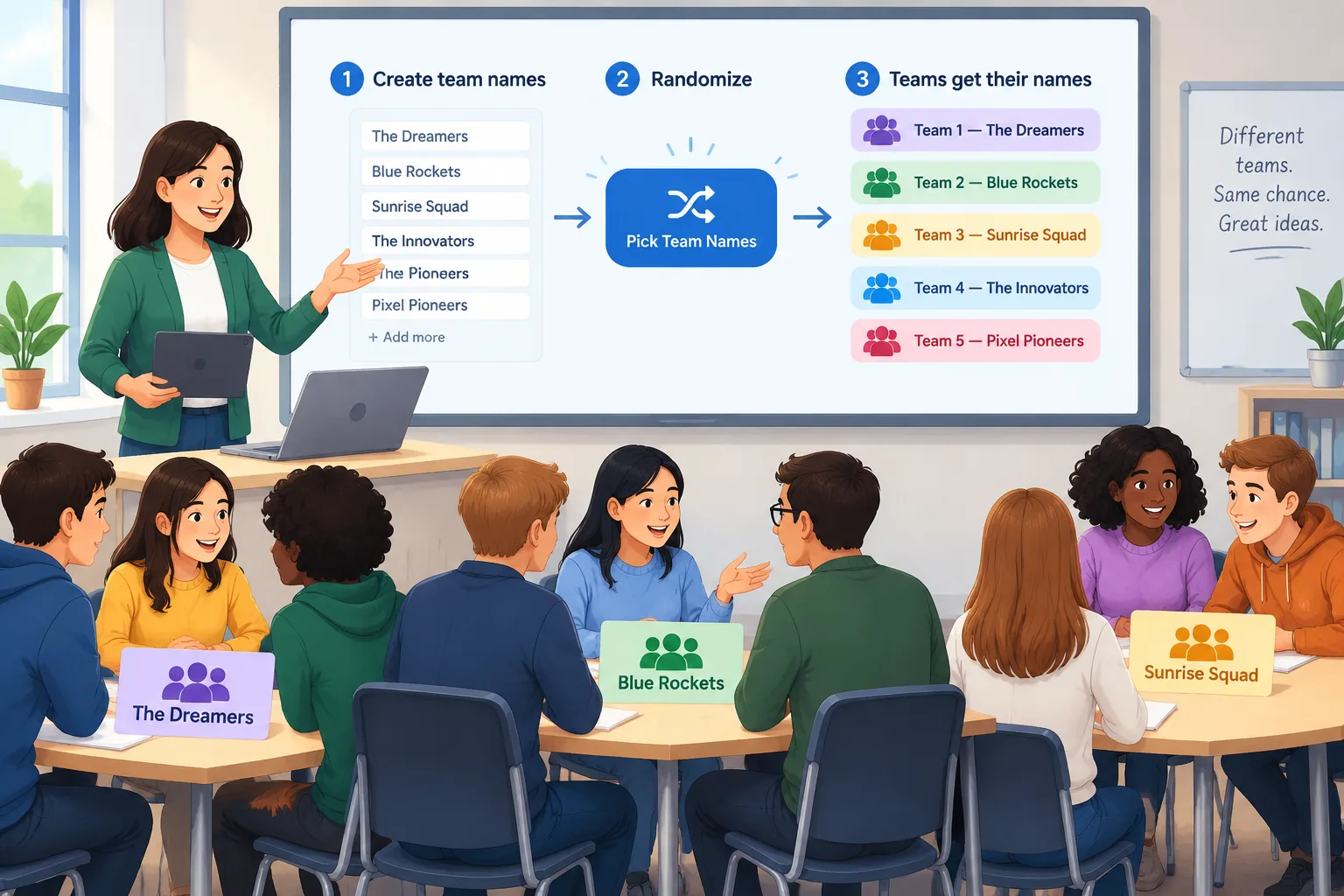
The tool is also useful for remote activities. During a video meeting, participants can receive team names before entering breakout rooms. Trainers using platforms such as Zoom or Teams can prepare names in advance and make virtual sessions feel more structured.
How to use a team name random generator step by step
Using a team name generator is usually a simple process. The exact options may differ between tools, but the workflow is generally the same.
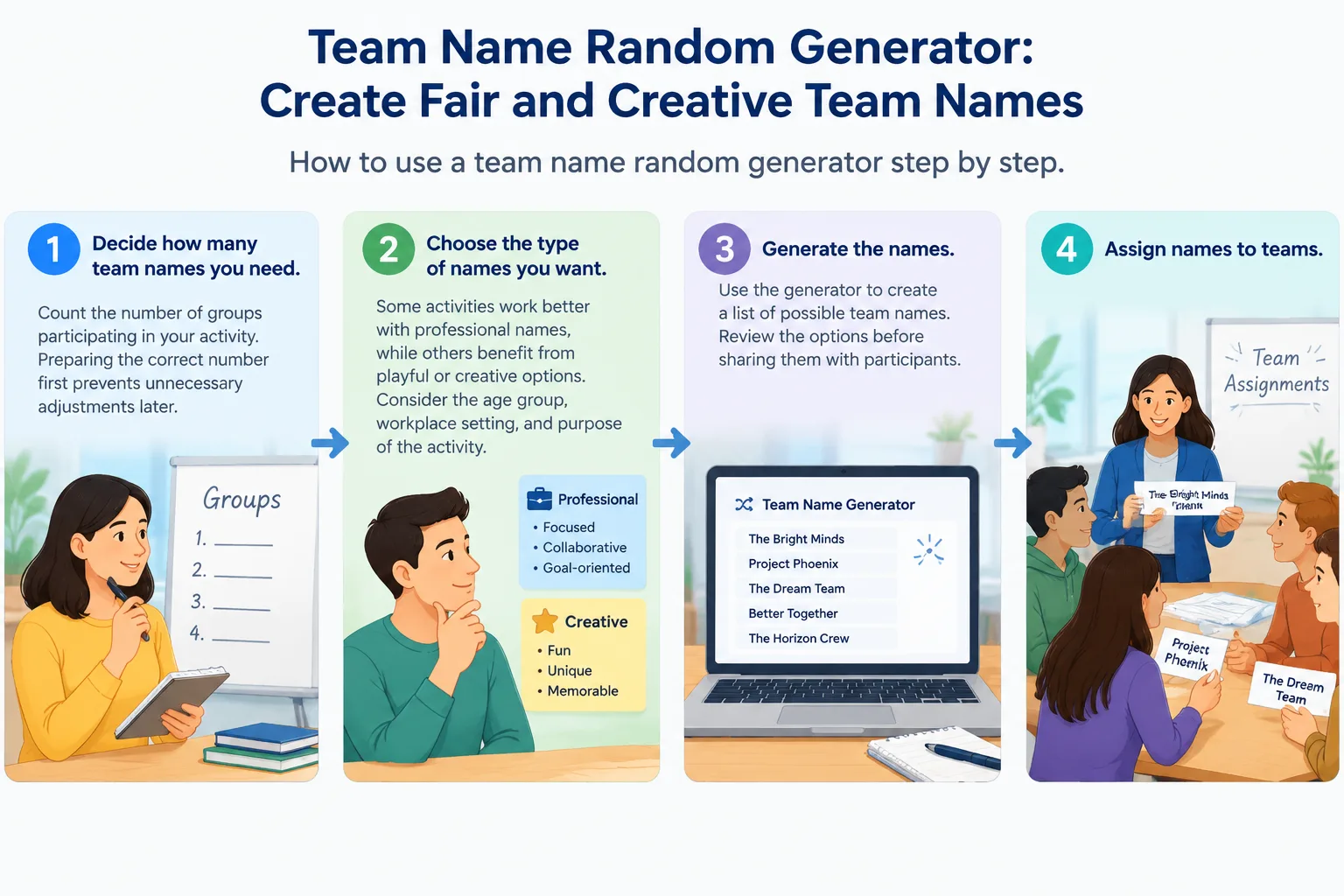
- Decide how many team names you need. Count the number of groups participating in your activity. Preparing the correct number first prevents unnecessary adjustments later.
- Choose the type of names you want. Some activities work better with professional names, while others benefit from playful or creative options. Consider the age group, workplace setting, and purpose of the activity.
- Generate the names. Use the generator to create a list of possible team names. Review the options before sharing them with participants.
- Assign names to teams. You can assign names randomly for a completely neutral process or allow groups to select from an approved list.
- Start the activity. Once teams have names, move directly into the lesson, training exercise, or event.
For example, a corporate trainer preparing a leadership workshop with eight groups might create eight names before the session begins. During the workshop, each breakout group receives a name such as a theme-based team title, making it easier for the facilitator to track discussions and collect feedback.
Creative ways to use random team names in classrooms and workshops
Team names are more than labels. They can help participants feel connected to their group and make activities easier to manage. Teachers and facilitators can adapt generated names to match the purpose of an event.
In classrooms, team names can support collaborative learning. A history teacher might create groups for a debate activity and assign themed names related to the lesson. A language teacher might use creative names as conversation prompts. These small additions can make ordinary group work feel more interactive.
In professional training, team names can help organize competitions, discussions, and problem-solving exercises. For example, during a customer service workshop, each group could receive a different team name before analyzing a scenario. The facilitator can then say, “Team A, share your solution,” without repeatedly describing each group by location or member names.
Event organizers can also use team names for games, challenges, and networking activities. A random name system can prevent early assumptions about which teams are more important and gives every participant the same starting point.
Team name generator ideas for different situations
Different environments need different styles of names. A classroom for younger students may need fun and imaginative names, while a professional training session may require names that feel more suitable for business communication.
For educational settings, consider names connected to learning themes, animals, exploration, or creativity. For example, groups in an environmental science lesson might use names inspired by nature. The names become part of the lesson experience rather than just a label.
For workplace activities, choose names that support teamwork and a positive atmosphere. Workshop facilitators may prefer names connected to innovation, collaboration, or shared goals. The important point is that names should fit the activity and audience.
A team name random generator works best when the facilitator understands the group context. Random selection provides speed and fairness, but human review is still useful. If a generated name does not match the audience or contains a meaning that could confuse participants, replace it with another option.
Combining team names with fair group creation
Many activities require two separate steps: creating groups and naming them. A balanced workflow starts by forming teams fairly and then assigning names. This prevents participants from focusing too much on friendships, existing roles, or previous group patterns.
For example, a teacher may first use the Random Group Generator to divide students into project teams. After the groups are created, the teacher can use a naming process to give each team an identity. This keeps the focus on collaboration instead of popularity.
For activities involving pairs, a facilitator may use a Random Pair Generator before creating team names for larger follow-up tasks. For classroom participation, the Random Student Picker can help teachers choose speakers or participants fairly.
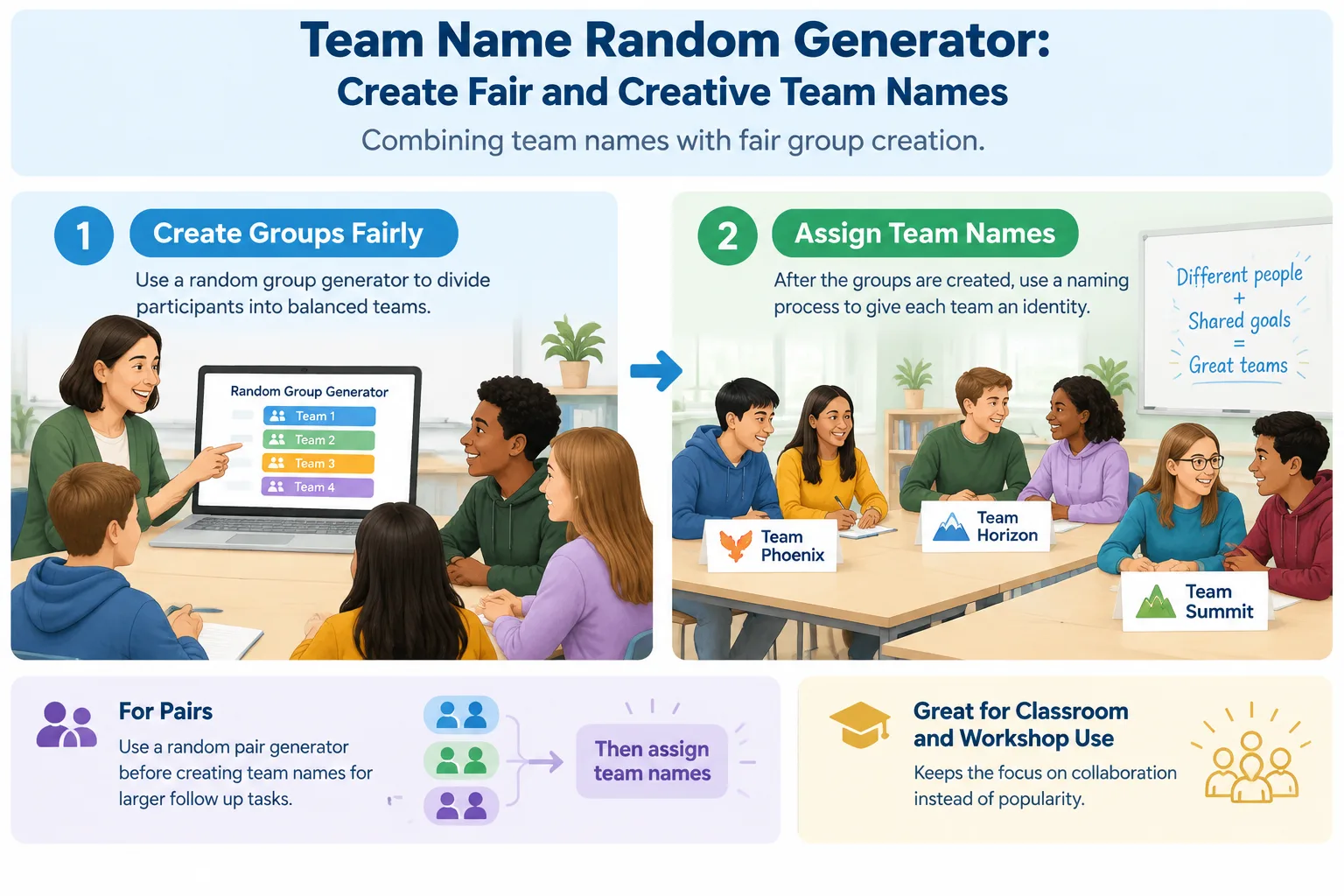
This combined approach is useful because names and groups serve different purposes. Group creation answers “who works together,” while team naming answers “how do we identify this group.” Keeping these steps separate creates a clearer process.
When a team name random generator may not be the right choice
A random generator is helpful, but it is not suitable for every situation. Some teams need carefully selected names because the name represents a long-term project, a brand, or a public competition. In those cases, a discussion process may be more appropriate.
It is also important to review generated names before using them with a specific audience. A classroom with young learners, an international team, and a formal business event may all have different expectations. Facilitators should consider cultural context, accessibility, and the purpose of the activity.
For short-term activities, however, speed and fairness are usually the main goals. In these situations, a random generator provides a practical way to reduce preparation time while keeping the process simple.
Frequently asked questions about team name random generators
What is a team name random generator?
A team name random generator is an online tool that creates random names for groups or teams. It helps teachers, trainers, and organizers quickly assign identities to teams without spending time brainstorming names manually.
How can teachers use a team name generator in class?
Teachers can use generated names for projects, competitions, discussions, and collaborative activities. A teacher can create names before class, assign them after forming groups, and use them to make group management easier.
Are random team names suitable for workplace events?
Yes, random team names can work well for workshops, training sessions, and team-building activities. Organizers should choose names that match the tone of the event and review options before sharing them.
Can I create names after making random groups?
Yes. Many facilitators first create balanced groups and then assign names. This keeps the grouping process fair while still giving teams an easy way to identify themselves.
Should every generated team name be used?
No. A generator provides ideas, but facilitators should use judgment. Reviewing names helps ensure they fit the audience, activity, and communication style.
Create team names faster for your next activity
A team name random generator can save preparation time and make group activities easier to manage. Whether you are organizing a classroom project, employee workshop, or online event, random naming provides a simple way to give every team an identity.
Try creating names alongside your group setup process with the Group Name Generator and build a smoother workflow for your next activity.
SponsoredExplore more resources