
random group spin wheel
Random Group Spin Wheel: A Fair Way to Create Teams
Learn how a random group spin wheel helps teachers and facilitators create fair teams, avoid bias, and organize activities with simple steps and examples.
When a teacher or facilitator needs to divide people into teams quickly, choosing names by hand can create delays, repeated groups, or concerns about fairness. A random group spin wheel provides a simple way to randomly assign participants to groups while reducing manual work. It is useful for classrooms, training sessions, workshops, and team activities where balanced group creation matters.
A random group spin wheel works by taking a list of names or options and using random selection to create groups or assignments. Instead of asking people to choose partners or relying on the same volunteers, facilitators can use a consistent process that everyone understands. This guide explains how to use a random group spin wheel, examples of real situations where it helps, and what to consider before using one.
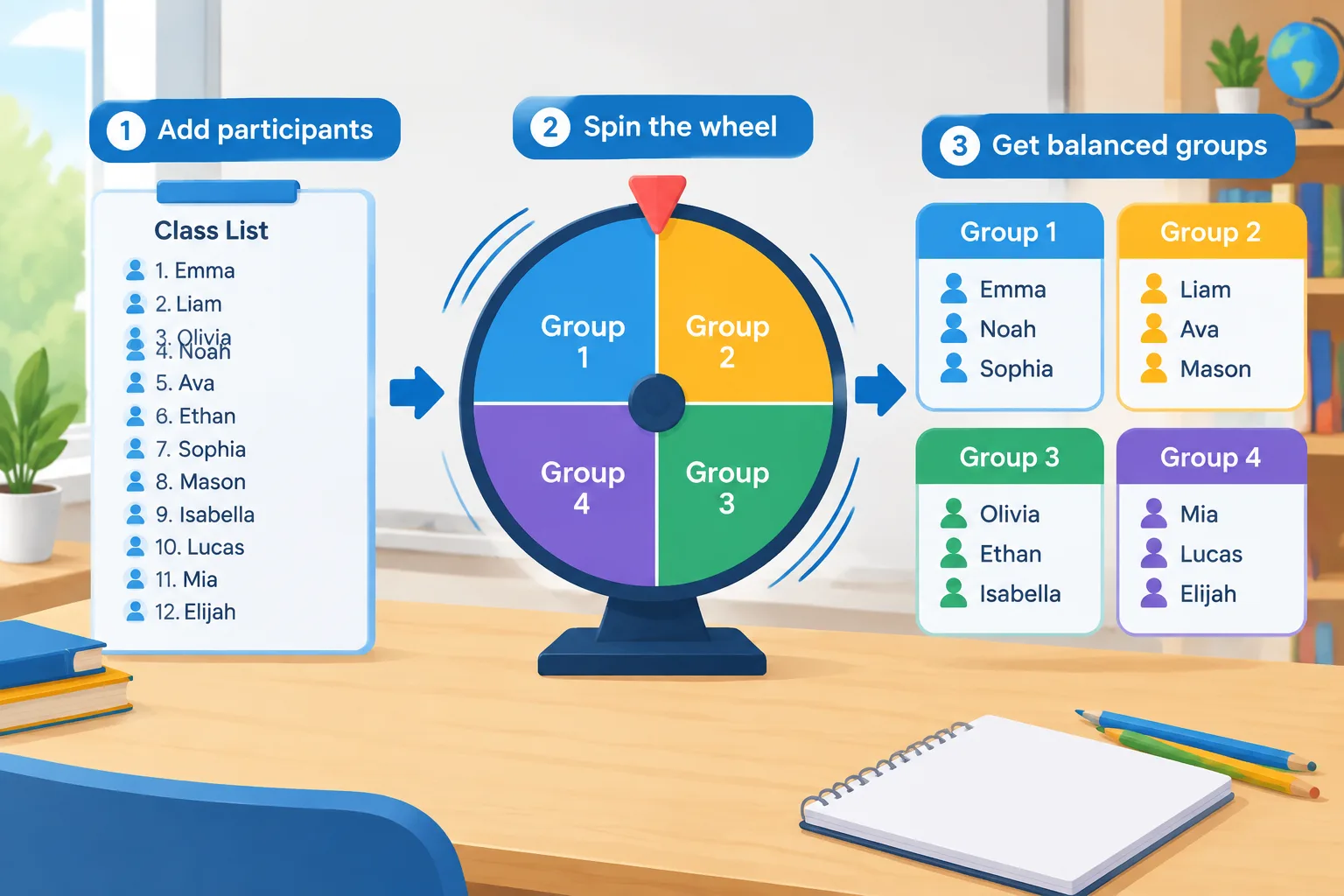
Why use a random group spin wheel for teams and activities?
Group selection can seem like a small classroom or workplace task, but it affects how activities begin. When people choose their own groups, some participants may always work together while others may feel left out. Manual assignment can also take valuable time, especially when there are many participants or frequent activities.
A random group spin wheel creates a visible and repeatable process. Teachers and facilitators can explain that names are being selected through the same method for everyone. This can help build trust because participants see that the selection is not based on personal preference or favoritism.
For example, a middle school teacher preparing a science project with 30 students may need six teams of five. Instead of spending several minutes moving names around, the teacher can enter the student list, run the selection, and begin explaining the project while students move into their assigned teams.
Random selection is also useful outside education. A corporate trainer running a problem-solving workshop can use a random team assignment method to mix employees from different departments. This encourages participants to work with colleagues they may not normally choose.
How a random group spin wheel works
Most random group spin wheel tools follow a simple process. The facilitator provides names, categories, or participants, then the tool selects results randomly according to the chosen setup. The exact options depend on the tool, but the general workflow is similar.
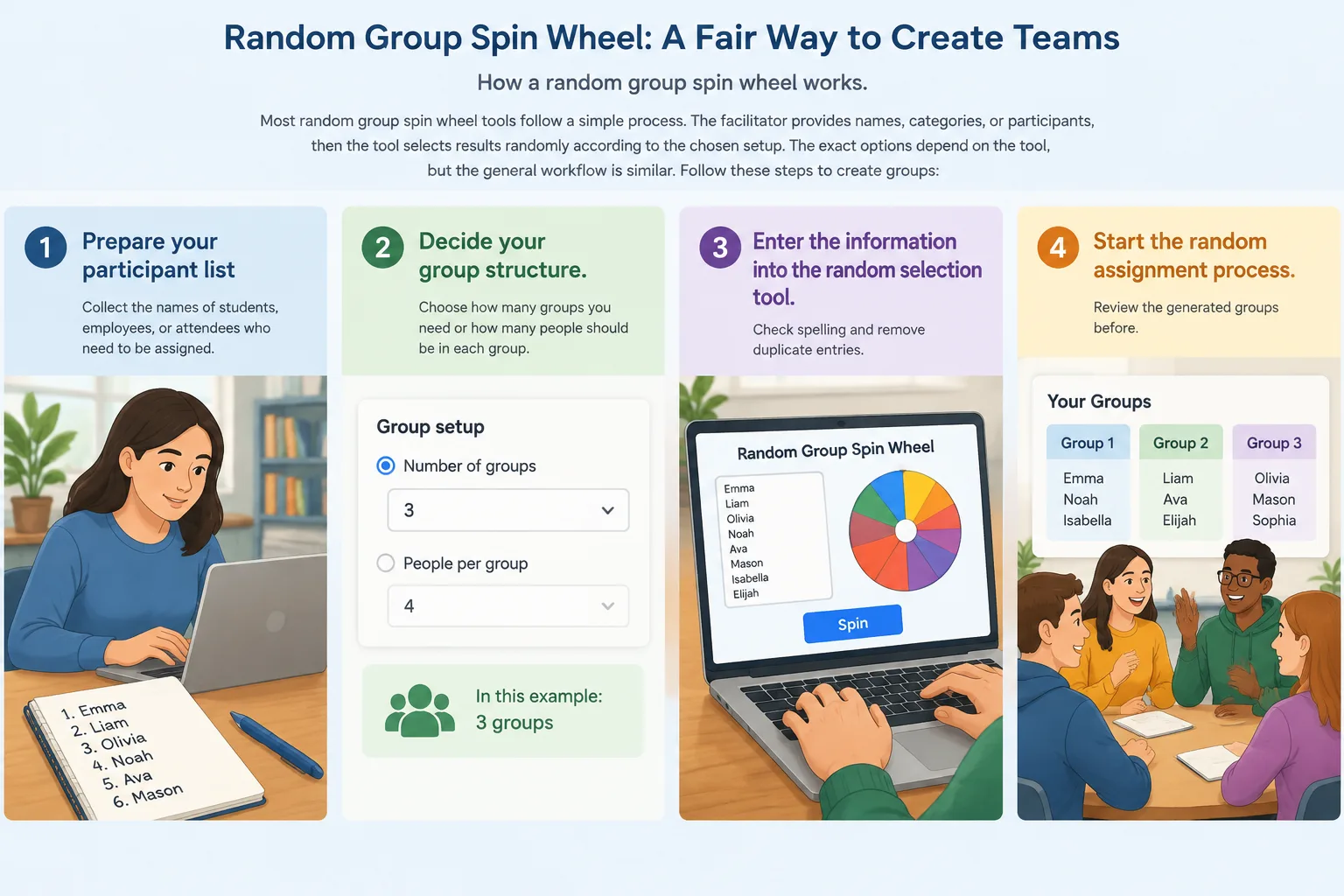
Follow these steps to create groups:
- Prepare your participant list. Collect the names of students, employees, or attendees who need to be assigned.
- Decide your group structure. Choose how many groups you need or how many people should be in each group.
- Enter the information into the random selection tool. Check spelling and remove duplicate entries.
- Start the random assignment process. Review the generated groups before sharing them.
- Share the results and begin the activity. Give participants clear instructions about where to move or what task to complete.
For example, a workshop leader has 24 attendees and wants eight teams of three for a communication exercise. The facilitator enters all names, creates the groups, and displays the results on a screen. Participants can immediately join their assigned teams without waiting for manual organization.
A random group spin wheel is especially helpful when the same facilitator creates groups often. Instead of preparing a new spreadsheet or drawing names from paper each time, the process becomes part of the regular activity routine.
Classroom examples for using a random group spin wheel
Teachers can use random group selection in many learning situations. The goal is not simply to mix students, but to create a smoother transition into collaborative work. Random assignment can support activities where students need new partners, different viewpoints, or equal opportunities to participate.
One example is a language class discussion. The teacher may want students to practice speaking with different classmates each week. A random group spin wheel can create new pairs or small groups without requiring students to repeatedly find partners themselves. For pair activities, a dedicated Random Pair Generator can also help create quick partner assignments.
Another example is project-based learning. A teacher planning a history presentation may want groups of four with different combinations of students. Random assignment can provide a starting point, and the teacher can make small adjustments if there are specific learning needs, scheduling issues, or accessibility considerations.
Random tools should support teacher judgment rather than replace it. If a class activity requires specific skill levels, language support, or carefully designed roles, a fully random approach may not be the best choice. In those cases, teachers can use random grouping as a first step and then make thoughtful changes.
Using a random group spin wheel for workplace training
Facilitators in professional settings often face the same challenge as teachers: creating groups quickly while keeping participation balanced. Workshops, onboarding sessions, and team-building events frequently need participants to work with different people throughout the day.
A random group spin wheel can help break familiar patterns. For example, an HR trainer running a leadership workshop may create mixed teams for a case study activity. Random assignment allows employees from different roles to collaborate instead of sitting only with their usual coworkers.
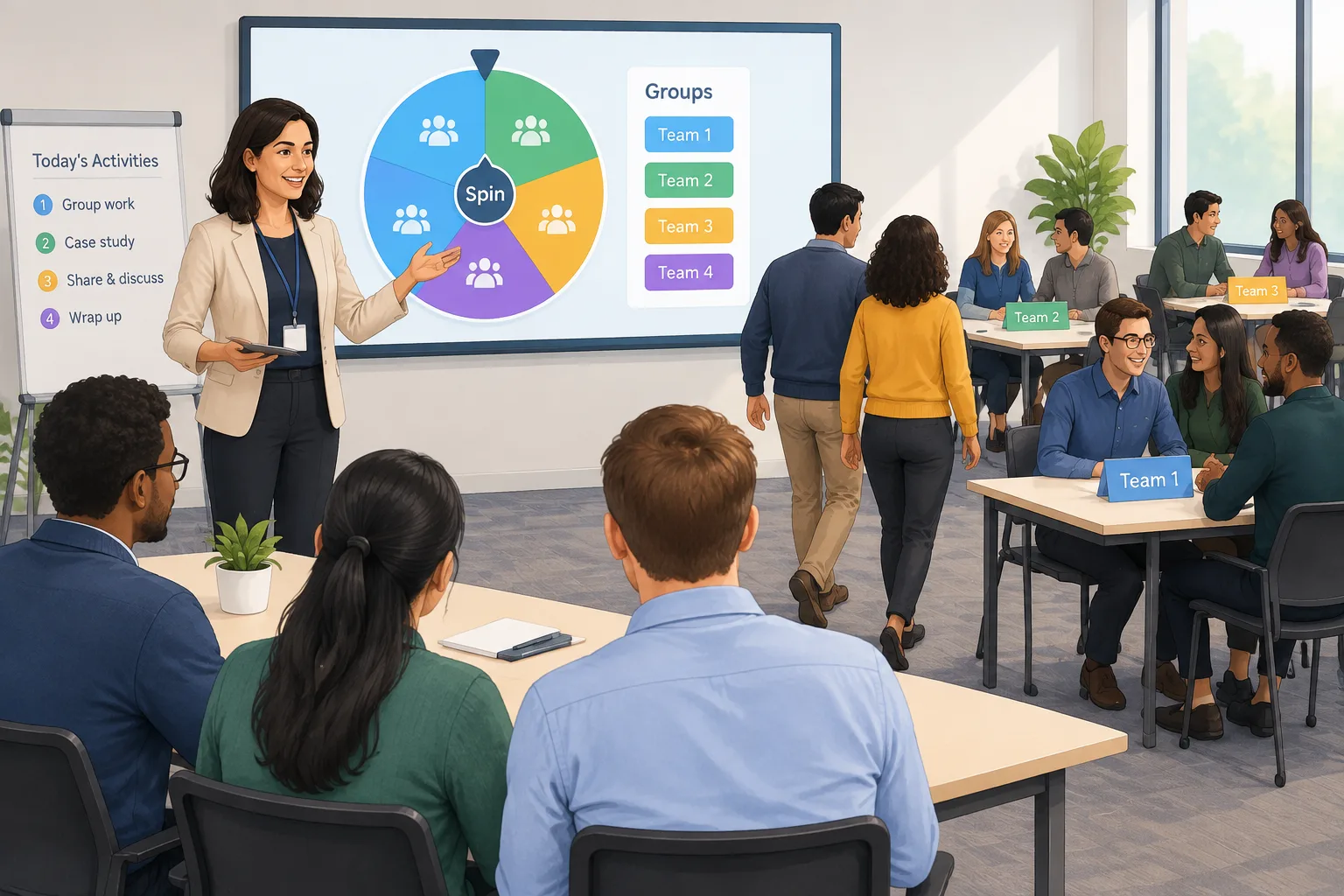
For larger events, facilitators may combine random selection with other planning tools. A session organizer might first create teams, then use a Group Name Generator to give each team an easy identifier for activities and discussions.
The best results come from explaining the purpose of the random process. Participants are more likely to accept new groups when they understand that the goal is to encourage interaction, save time, and give everyone a chance to contribute.
Random group spin wheel compared with manual grouping
Manual grouping still has an important role. A teacher may intentionally create groups based on reading levels, project roles, or specific learning goals. A manager may need teams with particular expertise for a complex business task. In these situations, planned grouping can be more suitable.
However, manual grouping takes more preparation and can introduce unintentional patterns. A facilitator may repeatedly place the same people together or overlook someone when managing a large list. A random group spin wheel reduces these risks by applying the same selection method to every participant.
Random grouping is often best for activities where fairness and speed are priorities. Examples include warm-up discussions, review games, practice exercises, networking sessions, and short collaboration tasks. When the activity requires detailed matching, a hybrid approach works well: use random selection first, then adjust based on clear needs.
Tips for getting better results from random group selection
A few simple practices can make random grouping smoother. First, prepare the participant list before the activity begins. Last-minute typing can slow down the session and create avoidable mistakes.
Second, decide your grouping rules in advance. Consider whether you need equal group sizes, whether repeated combinations should be avoided, and whether participants need special accommodations. Clear rules make the results easier to explain.
Third, keep the process visible. In classrooms and workshops, showing the selection process can make participants feel included. It also helps everyone understand that the groups were created using the same method.
If you need to choose individual participants for questions or activities, a Random Student Picker can be used for a similar fair-selection purpose.
FAQ about random group spin wheels
What is a random group spin wheel?
A random group spin wheel is a digital selection method that helps assign names or participants randomly into groups or activities. It replaces manual drawing methods with a faster and more organized process.
Is a random group spin wheel fair for classrooms?
A random group spin wheel can provide a fair selection process because each participant follows the same random assignment method. Teachers should still consider learning goals, accessibility needs, and classroom situations when deciding whether fully random groups are appropriate.
Can I use a random group spin wheel for online meetings?
Yes. Facilitators can use random group selection during online meetings, training sessions, or virtual workshops. After creating groups, participants can move into assigned breakout rooms or collaboration spaces.
How many people can be assigned with a random group spin wheel?
The suitable number depends on the tool and the activity setup. Small classroom teams, workshop groups, and larger participant lists can all benefit from random assignment when the grouping rules are planned clearly.
When should I not use a random group spin wheel?
A random group spin wheel may not be the right choice when groups must be matched by specific skills, experience levels, or personal support requirements. In those cases, intentional grouping may work better.
Create groups faster with a random group spin wheel
Random group selection helps teachers and facilitators spend less time organizing and more time focusing on the activity itself. Whether you are preparing a classroom exercise, workshop discussion, or team challenge, a simple random process can make group creation easier and more transparent.
Try the Random Group Generator to create balanced teams quickly and bring a fair selection process to your next activity.
Related Tools
Pick the right generator for the job — every tool runs free in your browser.