
random group generator
Spin Group Members: A Fair Way to Randomly Assign Teams
Learn how to spin group members fairly for classrooms, workshops, and teams. Discover practical steps for random grouping and better collaboration.

Teachers, trainers, and event facilitators often face the same challenge: creating groups quickly while making sure everyone has a fair chance to participate. To spin group members means to use a random selection process to assign people into teams, pairs, or activity groups without relying on personal preferences or repeated patterns. This approach can help save preparation time and create a more balanced experience for classrooms, workshops, and workplace sessions.
Random grouping works best when the process is clear and consistent. Instead of manually choosing names, a facilitator can use a random tool to organize participants based on group size, number of teams, or activity needs. This guide explains how to spin group members effectively, when to use random assignment, and how to combine it with practical teaching and team-building workflows.
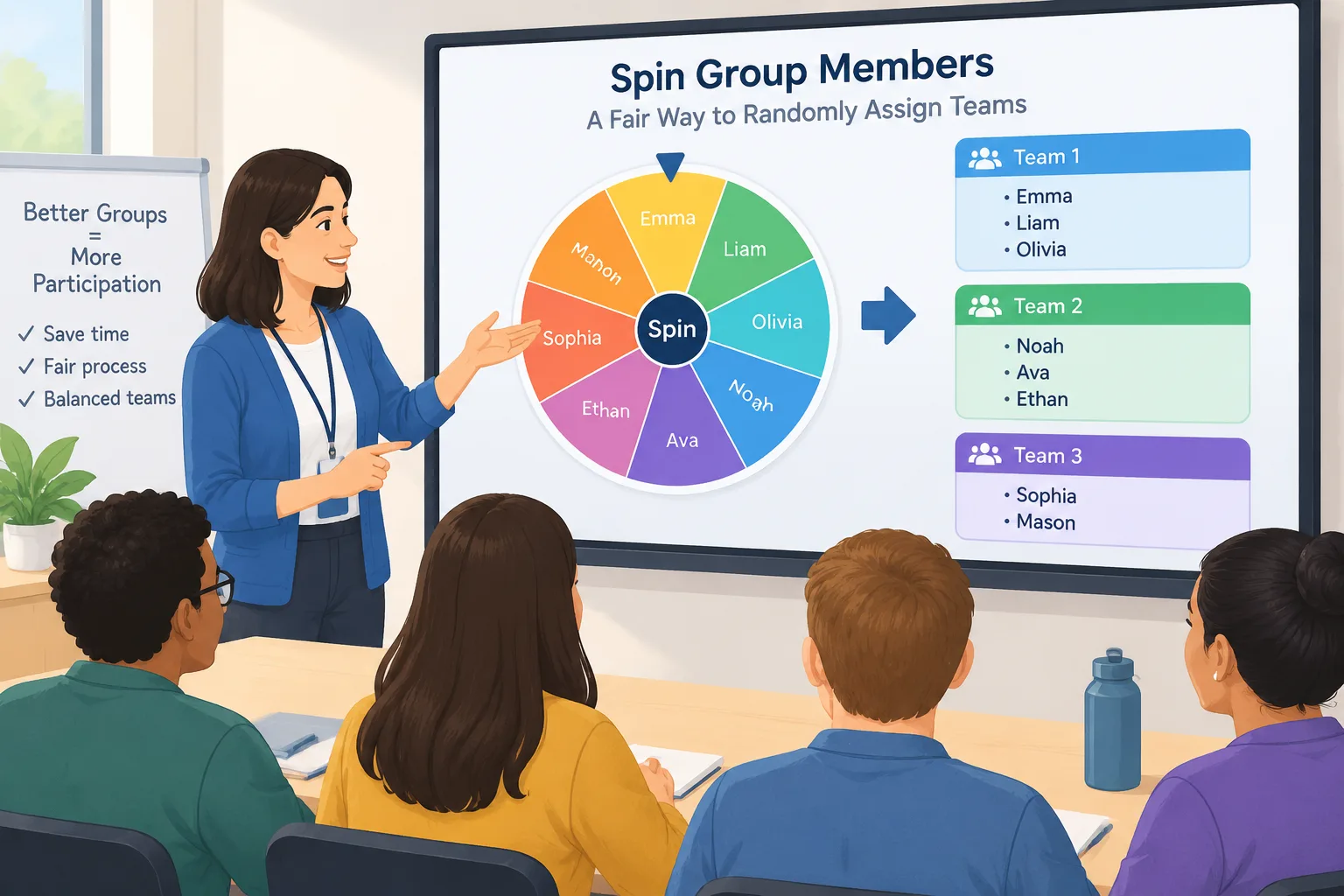
Why spin group members instead of choosing teams manually?
Manual team selection can take more time than expected, especially when a class or workshop has many participants. Teachers may accidentally create the same groups repeatedly, while managers may spend extra effort trying to balance personalities, skills, and availability. A random method creates a clear starting point and reduces the pressure of making every choice yourself.
For educators, random assignment can also encourage students to work with classmates they might not normally choose. For example, a science teacher preparing a lab activity with 30 students can quickly create six groups of five instead of spending several minutes deciding who should work together. The teacher can then adjust groups if there are specific learning needs, such as separating students who need extra support.
A random group process does not mean every situation should be completely random. Some activities require carefully designed teams based on skill levels, accessibility needs, or project roles. The best approach is to understand the goal first and use random selection when fairness, speed, and variety are the main priorities.
Common situations where spinning group members helps include:
- Classroom discussions where students need new conversation partners.
- Training sessions where participants need quick breakout teams.
- Team-building events where organizers want equal participation opportunities.
- Workshops where attendees rotate through different activities.
How to spin group members step by step
A good random grouping process starts with a simple plan. Before selecting names, decide what kind of groups you need and what the activity requires. This prevents confusion and helps the final groups fit the purpose of the session.
Follow these steps:
- Prepare your participant list. Add each student, employee, or attendee who should be included.
- Decide your grouping format. Choose the number of groups or the number of people in each group.
- Run the random selection. Use a random group tool to distribute names fairly.
- Review the results. Check whether any practical adjustments are needed.
- Share the groups. Display the results, announce them, or send them through your normal communication channel.
For example, a corporate trainer running a virtual workshop may have 24 employees and four discussion topics. The trainer can create four random groups of six, assign each group a topic, and then move participants into online breakout rooms. The random step saves preparation time while still allowing the trainer to guide the activity.
The Random Group Generator is designed for this type of workflow. It can help create groups quickly while supporting common classroom and facilitation needs.
Real examples of using random group assignments
Different environments use random grouping for different reasons. In a classroom, the goal may be encouraging communication and participation. In a workplace, the goal may be helping people collaborate across departments. In an event setting, the goal may be helping guests meet new people.
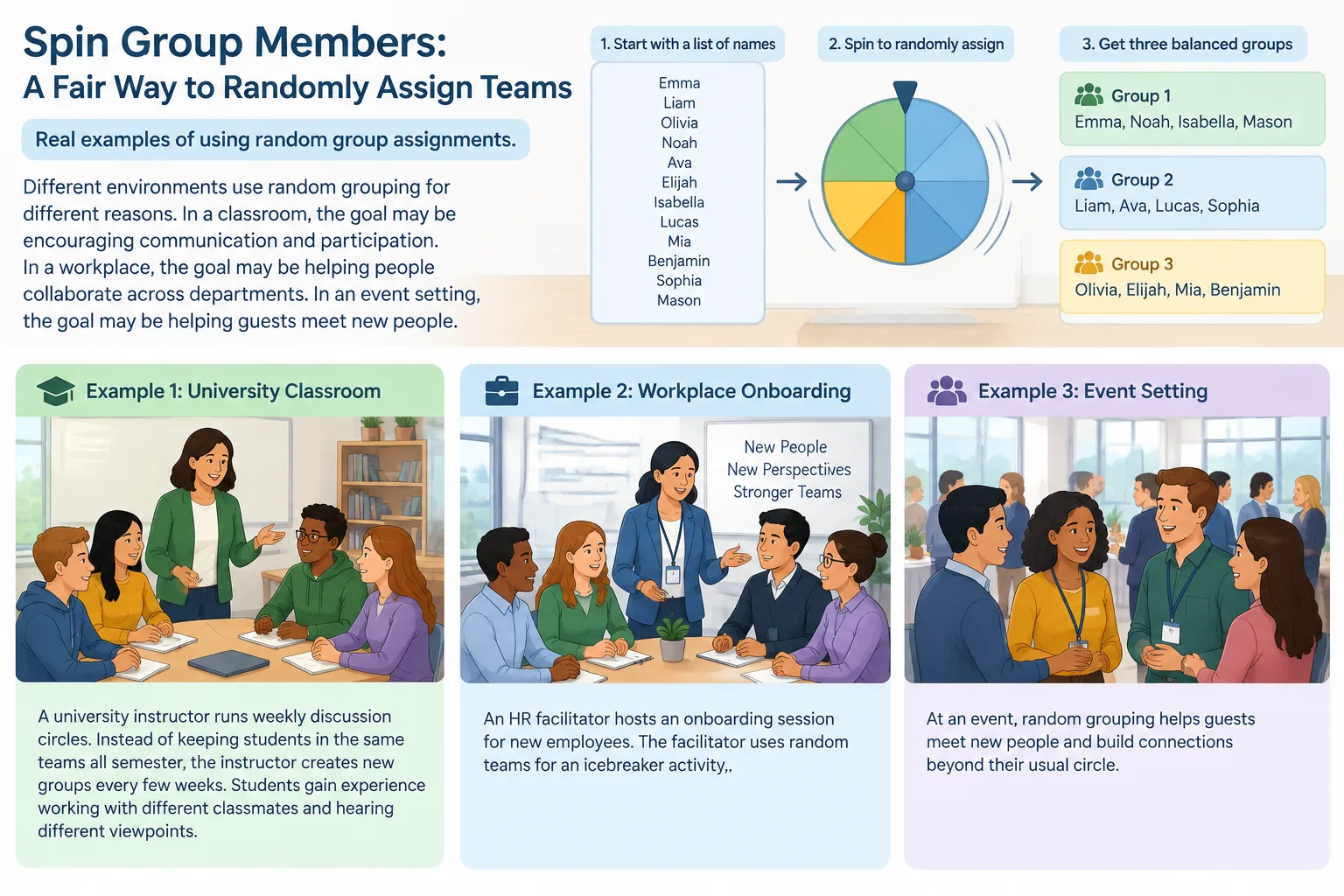
Example 1: A university instructor runs weekly discussion circles. Instead of keeping students in the same teams all semester, the instructor creates new groups every few weeks. Students gain experience working with different classmates and hearing different viewpoints.
Example 2: An HR facilitator hosts an onboarding session for new employees. The facilitator uses random teams for an icebreaker activity, then changes groups for a problem-solving exercise. This keeps participants engaged and prevents the same conversations from happening repeatedly.
Example 3: A conference organizer needs small networking groups during a short session. Random assignment allows attendees to meet new people without organizers manually planning every combination.
For pair activities, a Random Pair Generator can be more suitable than creating larger teams. When the activity requires choosing individuals for questions, demonstrations, or peer review, pairs may create a smoother experience.
How random grouping supports fair participation
Fairness is one of the main reasons educators and facilitators use random assignment. A transparent process helps participants understand that groups were created through a consistent method rather than personal preference. This can reduce complaints about favoritism and make transitions between activities easier.
However, fairness does not always mean identical treatment. A teacher may need to make small changes after a random selection if a student requires a specific partner arrangement or if a group needs a particular skill balance. Random tools should support professional judgment, not replace it.
A useful workflow is to combine random selection with a quick review:
- Generate the groups randomly.
- Check for obvious issues related to the activity.
- Make only necessary adjustments.
- Explain the reason for changes when appropriate.
This approach keeps the benefits of randomness while respecting real classroom and workplace situations.
Choosing the right random tool for your activity
Different activities need different types of random selection. A group generator is useful when you need teams, while other tools may work better for specific tasks.
For example, a teacher who wants to call on students during a lesson may prefer a Random Student Picker. This creates a simple way to select participants without repeatedly choosing the same volunteers.
If your activity needs creative team identities, a Group Name Generator can help create names after teams are formed. This is useful for classroom challenges, workshops, and friendly competitions.
When selecting a tool, consider:
- The number of participants.
- Whether you need groups, pairs, or individual selection.
- Whether the activity happens in person or online.
- Whether you need to repeat the process regularly.
The right tool should fit your workflow instead of adding extra steps.
Practical limits of spinning group members randomly
Random grouping is useful, but it is not the best solution for every situation. Long-term projects, advanced research teams, or tasks requiring specific expertise may need a more deliberate assignment method. A completely random process may not create the best combination of skills for complex work.
There are also accessibility considerations. Some participants may need accommodations, specific communication support, or alternative arrangements. Facilitators should always consider the people involved and the purpose of the activity before finalizing groups.
For example, a teacher creating groups for a five-minute discussion can usually rely on random assignment. The same teacher creating semester-long project teams may want to use random selection as a first draft and then adjust based on learning goals.
Frequently asked questions about spinning group members
What does it mean to spin group members?
Spinning group members means using a random selection process to assign people into groups, teams, or pairs. It helps create assignments quickly and reduces the chance of repeatedly choosing the same combinations.
Is random group assignment fair for classrooms?
Random group assignment can support fairness because every participant has the same chance of being placed in different groups. Teachers should still review results and make adjustments when learning needs or accessibility concerns require them.
Can I use random groups for online meetings?
Yes. Random group assignments can help prepare breakout rooms for online classes, training sessions, and workshops. Facilitators can generate groups before a meeting and then place participants into the appropriate rooms.
When should I avoid random group assignments?
Avoid relying only on random assignment when a project requires specific expertise, carefully matched skills, or long-term collaboration planning. In those cases, random selection can be a starting point rather than the final decision.
How can I create groups faster for repeated activities?
Using a dedicated random grouping tool can reduce setup time. Save your preferred workflow, prepare participant lists in advance, and choose a tool that matches whether you need groups, pairs, or individual selections.
Try a faster way to spin group members
Random group assignment can make classroom activities, workshops, and team sessions easier to organize. With a clear process and the right tool, facilitators can create balanced groups in seconds while keeping control over the final activity setup.
Start creating your next set of teams with the Random Group Generator and make group assignments simpler for your next session.
Related Tools
Pick the right generator for the job — every tool runs free in your browser.