
random team generator
Random Team Generator vs. Manual Team Picking: Which Is Better?
Compare a random team generator vs. manual team picking. Learn the pros, cons, and best approach for creating fair, balanced classroom and workplace teams.
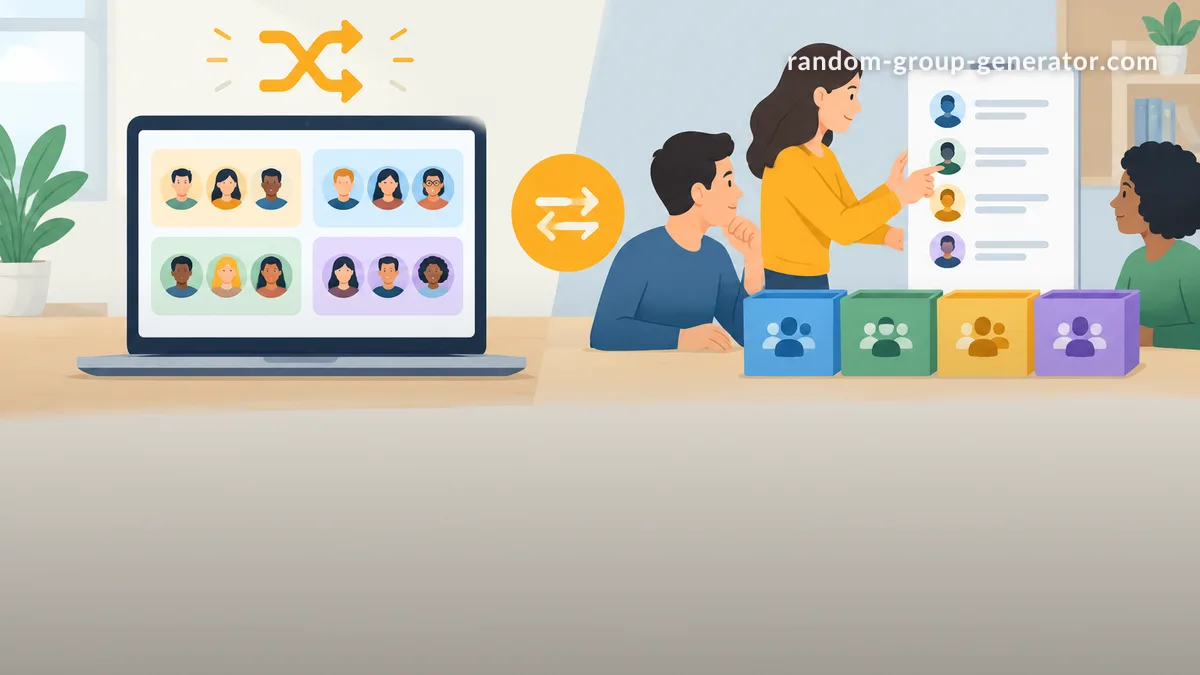
You need to divide a classroom, workshop, or office team into smaller groups, but choosing the right method is not always easy. Should you use a random team generator or manually decide who works with whom? Both approaches can create effective teams, but they serve different purposes. Random selection saves preparation time and reduces personal influence, while manual team picking gives teachers and facilitators more control over group composition. The best choice depends on your activity, participants, and goals. Here is how to compare the two methods and decide which one fits your next group activity.
1. What Is the Difference Between Random and Manual Team Picking?
Random team selection means assigning participants to groups through a random process rather than choosing individual team members yourself. A random team generator automates this process. You provide a participant list, select your preferred group arrangement, and let the tool distribute people into teams.
Manual team picking works differently. A teacher, trainer, or organizer decides which participants belong together. You might consider academic ability, professional experience, personality, communication needs, existing relationships, or specific project requirements. This approach requires more preparation, but it allows you to build teams around clearly defined objectives.
Consider a teacher with 28 students who needs seven groups of four. With random selection, the teacher can generate the teams quickly without deciding every placement. With manual selection, the teacher might review student strengths and deliberately distribute experienced students across all seven groups.
Neither method is automatically better. Random selection prioritizes impartial assignment, while manual selection prioritizes intentional composition. Understanding this distinction makes it easier to choose the right approach instead of relying on habit.
2. Why Use a Random Team Generator?
One of the biggest advantages of a random team generator is convenience. Creating teams manually can become repetitive, especially when you manage several classes, recurring workshops, or large events. An automated tool handles the distribution process and gives you more time to prepare the actual activity.
Random selection also helps reduce the appearance of favoritism. When participants see that everyone is assigned through the same process, they are less likely to question why particular people were placed together. This can be especially useful when students regularly choose their friends or when workplace participants expect equal treatment.
Another advantage is flexibility. You can create new combinations whenever an activity requires a different arrangement. Instead of keeping the same teams throughout a semester or training program, you can introduce participants to different classmates and colleagues.
For example, imagine a corporate trainer running a weekly communication workshop for 32 employees. The trainer wants participants to exchange ideas with colleagues outside their usual departments. Random assignment makes it easier to create eight new teams of four for each session without manually rebuilding the participant list.
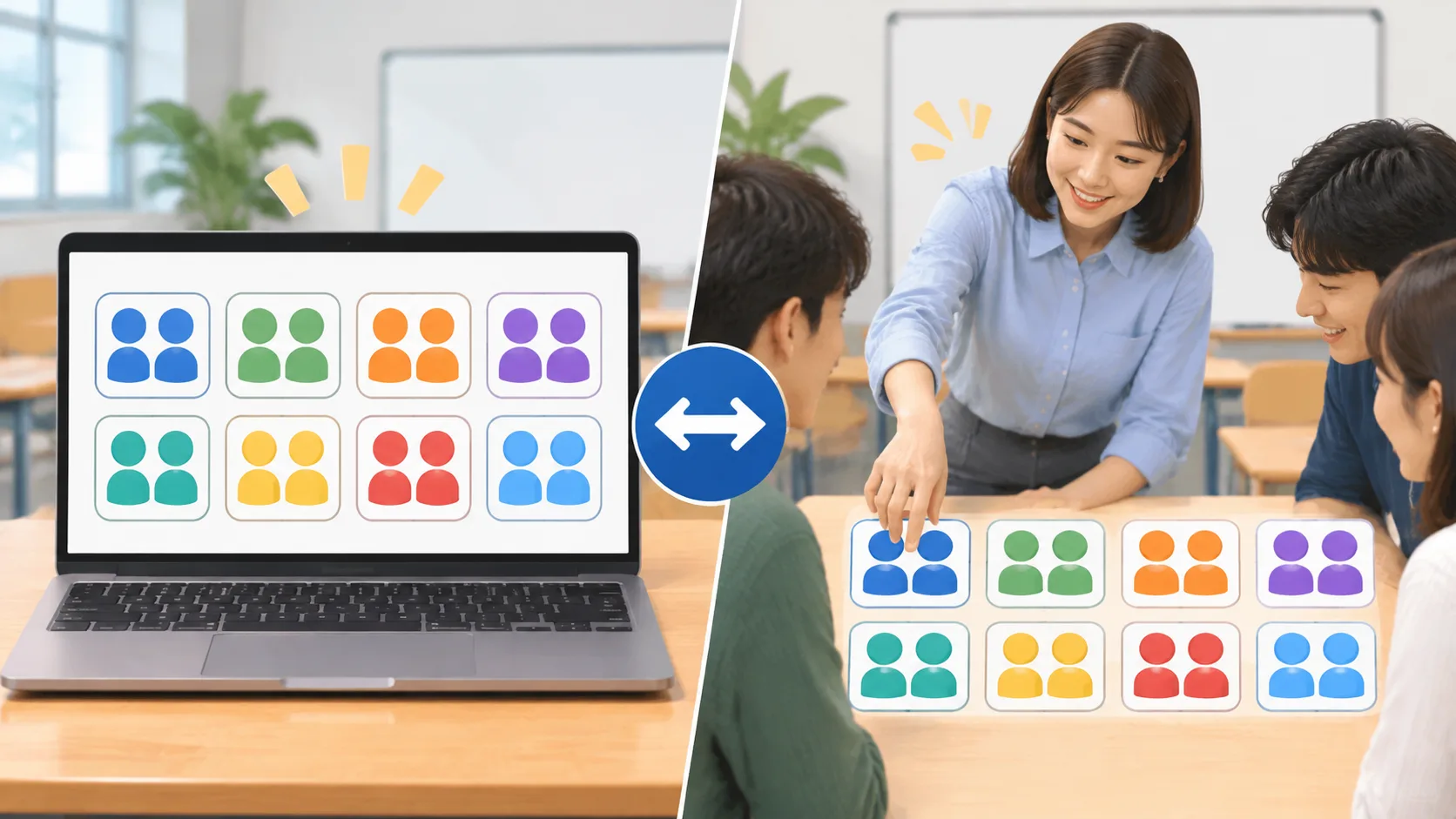
A random team generator is particularly useful when:
- You need to create several groups quickly.
- Participants should have equal opportunities to be selected for different teams.
- You want to prevent people from always working with their usual friends or colleagues.
- You regularly change group membership between activities.
- You need a straightforward process that another teacher or facilitator can repeat.
However, random selection has limitations. It does not automatically understand participants' strengths, learning needs, experience levels, or interpersonal challenges. If your activity requires specific combinations of skills, you may need to review or adjust the results.
3. What Are the Advantages of Manual Team Picking?
Manual team picking gives educators and facilitators control over who works together. This matters when the purpose of an activity depends on the characteristics of each group rather than simply dividing participants into equal numbers.
For example, a science teacher organizing a semester-long research project might want every team to include students with different strengths. One student may be confident with research, another may communicate well, and another may have strong technical skills. Deliberately distributing these abilities can help teams approach the assignment from different perspectives.
Manual selection can also account for practical considerations that an automated random assignment may overlook. You might need to avoid particular working relationships, accommodate scheduling conflicts, consider accessibility requirements, or separate participants who have experienced difficulties working together.
A practical manual grouping process looks like this:
- Define the purpose of the activity and the skills participants will need.
- Review relevant information about participants, using only information appropriate for the task.
- Decide how many people each team should contain.
- Distribute participants according to your chosen criteria.
- Check that the resulting teams meet the activity's requirements.
- Explain the reason for your grouping approach so participants understand the process.
For instance, an HR facilitator planning a cross-functional business challenge might manually place employees from different departments into each team. This creates opportunities for collaboration between people who do not normally work together.
The disadvantage is the amount of time required. Reviewing participant information, making individual decisions, and checking team balance can become difficult with large groups. Manual decisions can also introduce unconscious bias, even when the organizer has good intentions.
Manual selection is therefore most appropriate when you have a clear reason for controlling team composition. Without specific criteria, spending considerable time choosing every participant may provide little practical benefit.
4. Random Team Generator vs. Manual Team Picking: A Practical Comparison
The two methods differ most in preparation time, flexibility, control, and suitability for different activities. Comparing these factors can help you make a decision based on your actual needs.
| Factor | Random team generator | Manual team picking |
|---|---|---|
| Preparation time | Usually faster | Usually takes longer |
| Group composition | Random distribution | Organizer-controlled |
| Personal influence | Reduced | Depends on organizer decisions |
| Skill balancing | Not guaranteed | Can be planned deliberately |
| Repeated activities | Easy to generate new teams | Requires repeated planning |
| Special requirements | May need manual adjustments | Easier to accommodate intentionally |
| Large participant lists | Convenient | Can become time-consuming |
| Transparency | Uses a consistent selection process | Requires clear explanations |
Fairness: Random assignment can make the selection process more impartial because the organizer does not personally choose every placement. However, random does not mean perfectly balanced. Two teams might receive different combinations of experience or ability simply because of chance.
Control: Manual assignment is stronger when you have specific requirements. For example, a facilitator may need every project team to include someone with technical knowledge. A random process cannot guarantee that outcome unless additional grouping rules are available and applied.
Efficiency: For a short classroom discussion or a 15-minute workplace exercise, spending time manually assigning participants may not be worthwhile. Automated assignment provides a practical alternative when the activity does not require carefully selected teams.
Research also suggests that there is no universal winner. A 2017 study published in the Journal of the Scholarship of Teaching and Learning compared instructor-designed, student-selected, and randomly assigned teams in a college course. The researchers reported similar student performance across the three approaches, although instructor-designed teams were more diverse. This illustrates why group formation should be considered in relation to the activity rather than treated as a single formula for success.
5. When Should Teachers and Facilitators Choose Each Method?
The right method depends on the length, complexity, and purpose of the activity. A five-minute discussion does not need the same planning as a semester-long group project. Consider the consequences of team composition before deciding how much control you need.
Choose random selection for short activities. Classroom discussions, brainstorming exercises, review games, and quick problem-solving sessions usually benefit from a simple assignment process. Participants can work with different classmates without the teacher spending valuable instruction time arranging teams.
Choose manual selection for complex projects. Long-term assignments, professional development projects, and cross-functional business challenges may require a deliberate combination of skills, experience, and availability. In these situations, the facilitator should establish clear criteria before assigning participants.
Consider a hybrid approach when both fairness and balance matter. You can use known requirements to create participant categories and then randomly distribute people within those categories. For example, a teacher could first identify students with different project responsibilities and then use random selection to assign people to teams while maintaining the required mix.
Here are three practical examples:
- Elementary classroom: A teacher wants students to discuss a reading passage in groups of three. Random selection is usually sufficient because the main goal is to encourage discussion with different classmates.
- University research project: An instructor wants each team to have access to different research skills. Manual assignment or a carefully planned hybrid method may be more suitable.
- Corporate training: A facilitator wants employees from different departments to solve a short customer-service challenge. Random selection can help introduce new working relationships without extensive preparation.
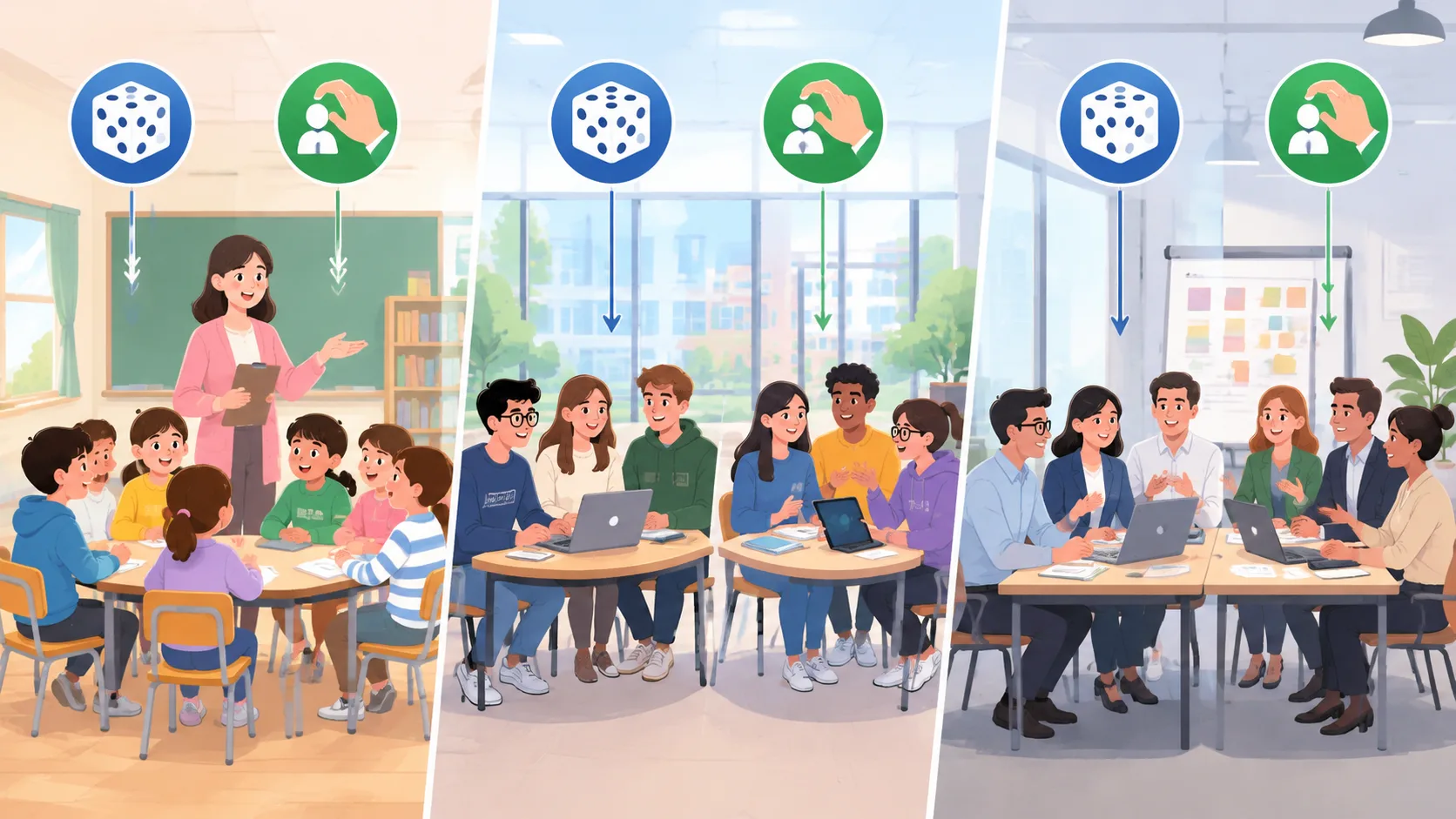
A useful rule is to start with the learning or business objective. If participants simply need to collaborate, random assignment is often practical. If the task depends on specific combinations of knowledge or experience, deliberate assignment deserves more attention.
6. How to Create Random Teams in Less Time
When you decide that random assignment is appropriate, an online random team generator can simplify the process. Instead of writing names on paper, drawing slips, or repeatedly rearranging a spreadsheet, you can use a dedicated tool to organize participants.
Follow these steps:
- Prepare your participant list. Collect the names of everyone who should take part. Check for duplicate names, spelling mistakes, and people who should not be included.
- **Open the Random Group Generator.** Use the main tool to organize your participants into groups.
- Choose your grouping arrangement. Decide whether you want to specify the number of groups or the number of participants per group, depending on the available settings.
- Enter the participant names. Add your list and review it before generating the results.
- Generate the teams. Run the assignment process and check the resulting groups.
- Review the arrangement. Confirm that the team sizes and participant list match your activity requirements. Make any necessary adjustments for accessibility or other known constraints.
- Share the results. Display the assignments or communicate them to participants before the activity begins.
For example, suppose you have 24 students and want six groups. Enter all 24 names, select six groups, and generate the arrangement. You can then review the six teams and prepare the corresponding classroom instructions.
If your activity requires two-person collaboration rather than larger teams, the Random Pair Generator provides a more suitable format. For activities involving individual participation, the Random Student Picker serves a different purpose by selecting one participant rather than forming complete teams.
Remember that automated assignment is only one part of successful group work. Explain the activity, establish expectations, and give participants a clear responsibility. Even a well-organized team can struggle when members do not understand what they are expected to accomplish.
7. How to Make Either Team Formation Method Fairer
Fair team formation involves more than deciding whether assignments should be random or manual. Participants also need a clear understanding of the activity, reasonable opportunities to contribute, and a process for addressing practical concerns.
Start by explaining why you are using a particular method. If teams are random, tell participants that the purpose is to introduce different working combinations. If assignments are manual, explain the general criteria without sharing confidential information about individual participants.
Next, establish responsibilities. For classroom activities, you might rotate roles such as discussion facilitator, note-taker, researcher, and presenter. In workplace workshops, responsibilities could include timekeeping, documenting ideas, coordinating discussion, and presenting recommendations. Rotating these roles prevents the same people from always taking responsibility for the same tasks.
You should also consider group size. Cornell University's Center for Teaching Innovation recommends groups of two to five students for many in-class collaborative activities. Smaller groups can make it easier for everyone to participate, while larger groups can provide more perspectives when the activity requires them. The ideal size still depends on the task and available time.
Finally, review how the groups function rather than assuming that the original assignment was perfect. If one team has an unusually large workload or participants cannot collaborate effectively because of practical constraints, make reasonable adjustments. The objective is to support productive teamwork, not to preserve an assignment method at all costs.
For example, a trainer might randomly assign workshop participants to groups for the first session, then collect feedback and make targeted adjustments before a longer project. This combines the efficiency of random selection with the flexibility of human judgment.
8. Frequently Asked Questions
Is a random team generator fairer than manual team picking?
Random selection can make team assignments more impartial because participants are distributed without the organizer choosing individual placements. However, random groups are not necessarily equal in ability, experience, or other characteristics. Manual selection may be fairer when there are specific accessibility or participation requirements that need to be considered.
Does random team selection create balanced groups?
Not automatically. Random assignment distributes participants without deliberately matching their skills or experience. If balanced teams are essential, consider a hybrid approach in which you establish important requirements before randomizing the remaining placements.
Should teachers let students choose their own teams?
Student-selected teams can work well for short activities or situations where participants already understand each other's working styles. However, allowing students to choose freely may leave some classmates feeling excluded or create groups with similar perspectives. Teachers should consider the social environment and purpose of the activity before using this approach.
How often should I change randomly assigned teams?
There is no universal schedule. For short classroom activities, changing teams regularly can introduce new perspectives and working relationships. For longer projects, keeping teams together may help participants develop familiarity and coordination. Consider the time required to complete the task and whether changing membership would disrupt progress.
Can I combine random and manual team picking?
Yes. A hybrid method is useful when you want both flexibility and some control over group composition. For example, you can distribute participants according to essential skill requirements and randomly assign people within those categories. This reduces the amount of manual work while preserving important team requirements.
What is the easiest way to divide a large class into teams?
An online random team generator is a convenient option when the activity does not require specific combinations of skills or experience. Prepare a clean participant list, select your preferred group arrangement, generate the teams, and review the results before sharing them. For complex assignments, consider making adjustments based on clearly defined educational requirements.
Final Verdict: Choose the Method That Fits Your Activity
The choice between a random team generator and manual team picking does not have to be complicated. Random selection is a practical solution when speed, impartiality, and changing group combinations matter most. Manual selection is more useful when team composition must reflect specific skills, experience, accessibility needs, or project requirements.
For everyday classroom discussions, short training exercises, and informal team activities, automated random assignment is often a sensible starting point. For complex or long-term projects, deliberate planning or a hybrid approach may produce a more suitable arrangement.
The most important thing is to match the grouping method to the task. You do not need to spend valuable preparation time manually assigning every participant when a simple random process will work.
Ready to organize your next activity? Try the free Random Group Generator to divide your participants into teams quickly and spend more time focusing on meaningful collaboration.
Related Tools
Pick the right generator for the job — every tool runs free in your browser.