
random soccer team picker
Random Soccer Team Picker: Create Fair Teams in Seconds
Learn how to use a random soccer team picker to quickly create balanced teams for practices, school activities, and group events with a fair selection process.

Choosing soccer teams can become a challenge when players wait around, captains argue over choices, or organizers need to create groups quickly. A random soccer team picker helps coaches, teachers, and facilitators assign players into teams using a simple and fair process. It is useful for school sports classes, youth practices, workplace tournaments, and casual games where everyone needs a clear team assignment.
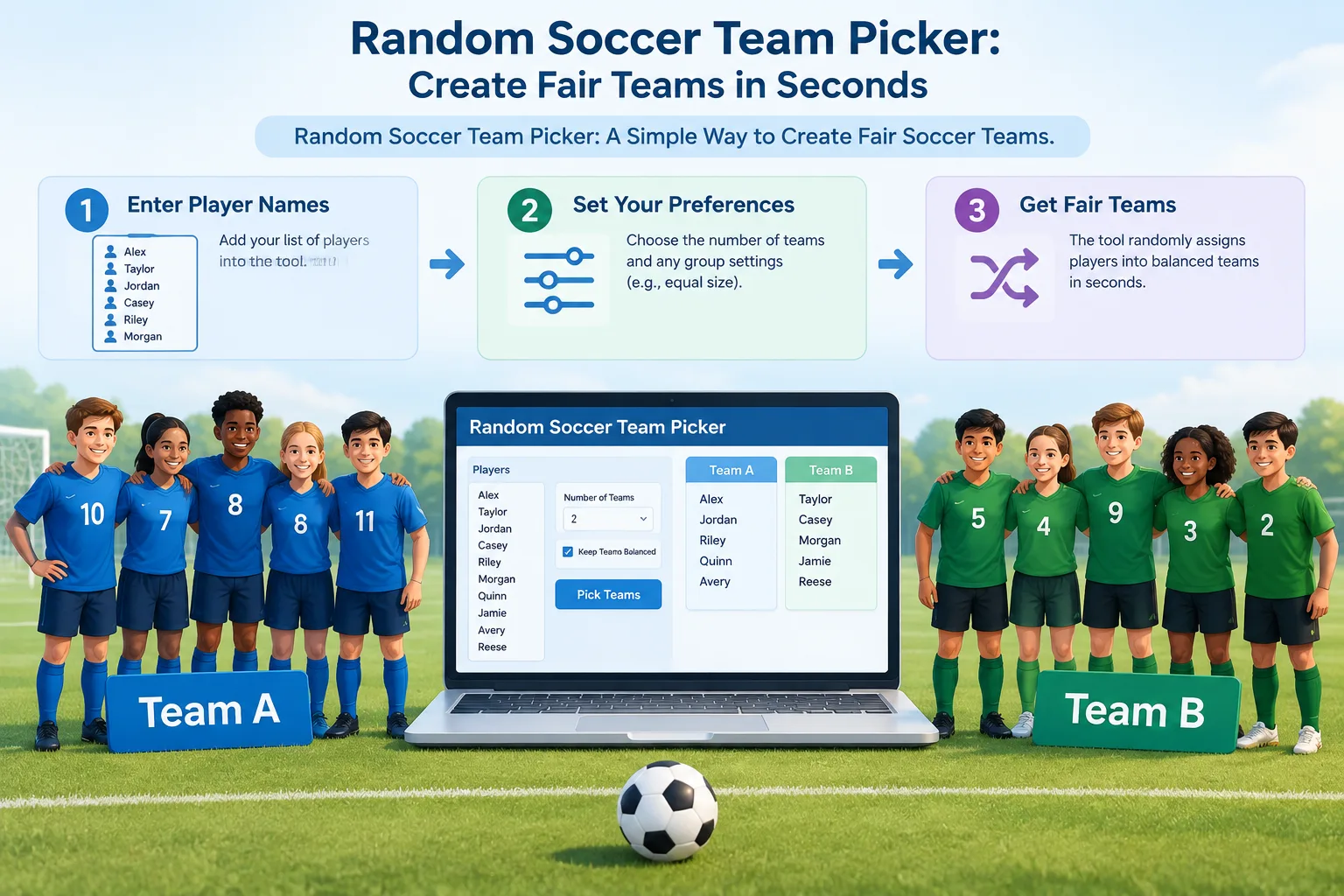
A random soccer team picker removes the pressure of manual selection and gives organizers a repeatable way to divide participants. Instead of spending several minutes writing names on paper or asking people to choose sides, you can enter player names, set your group preferences, and generate teams in a few clicks.
Why use a random soccer team picker?
Creating soccer teams manually often creates the same problems. A coach may accidentally choose stronger players together, students may feel left out during captain selections, or a facilitator may spend valuable activity time organizing instead of playing. Random selection creates a neutral starting point that helps everyone participate.
For educators, a random soccer team picker can support fair classroom activities. Physical education teachers often need quick ways to organize students into groups while keeping the focus on teamwork and participation. For coaches, random assignment can help during practice games where the goal is to develop skills rather than create permanent competitive teams.
The tool is especially useful when the organizer does not need a complex ranking system. For example, a teacher running a five-minute soccer activity may only need to divide 24 students into four groups. A quick random team assignment saves time and avoids repeated discussions about who should be on which side.
However, random selection is not always the only factor to consider. Competitive leagues, tournaments, or advanced training sessions may require coaches to consider skill levels, positions, age groups, or safety needs. In these cases, random selection can be a starting point that is adjusted with professional judgment.
How to create soccer teams with a random picker
Using a random soccer team picker is usually a simple process. The exact options depend on the tool, but most workflows follow the same basic steps.
- Prepare your player list. Write down every participant who needs a team assignment. Include substitutes if they need to be assigned.
- Choose the number of teams or group size. Decide whether you need two teams for a match or several smaller groups for drills.
- Run the random selection. Let the tool mix the names and create assignments automatically.
- Review the results. Check whether the teams meet practical needs, such as having enough players or avoiding a situation that affects safety.
- Share the teams. Display the results on a screen, send them to participants, or use them as the plan for the activity.
For example, a PE teacher has 28 students and wants to run four small-sided soccer games. The teacher enters all student names, selects four groups, generates teams, and posts the results before students move to their fields. The class starts faster because there is no waiting for team decisions.
For larger events, organizers can also combine random selection with other planning methods. They might first separate age groups or skill levels and then use random assignment inside those categories.
Ways a random team generator improves soccer activities
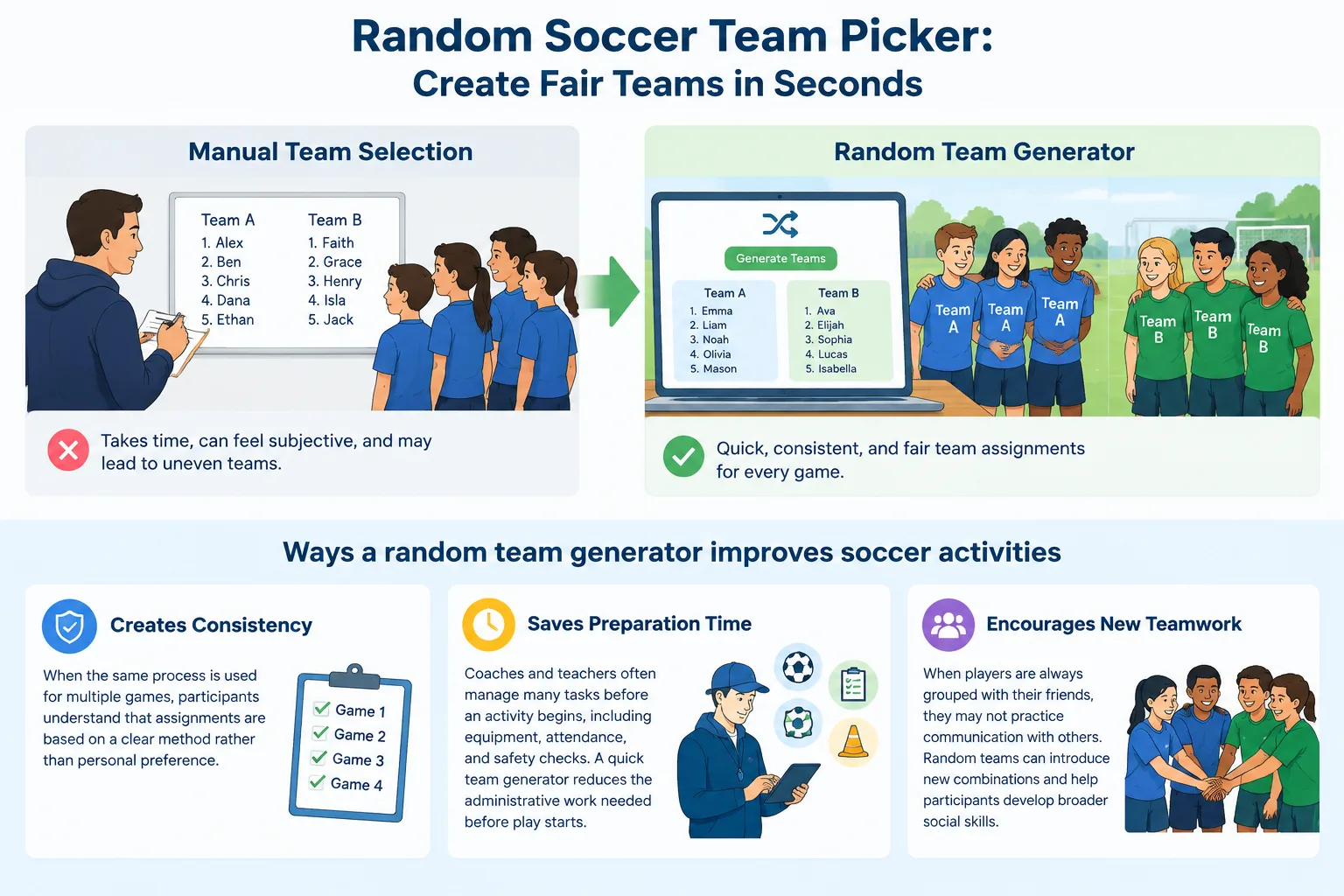
A random soccer team picker is helpful because it creates consistency. When the same process is used for multiple games, participants understand that assignments are based on a clear method rather than personal preference.
One major benefit is saving preparation time. Coaches and teachers often manage many tasks before an activity begins, including equipment, attendance, and safety checks. A quick team generator reduces the administrative work needed before play starts.
Another benefit is encouraging new teamwork. When players are always grouped with their friends, they may not practice communication with others. Random teams can introduce new combinations and help participants develop broader teamwork skills.
Consider a workplace charity soccer event. Employees from different departments attend, but many people do not know each other well. An organizer can use random team assignments to mix participants and create a more social experience. The goal is not professional competition but connection and participation.
Random selection also works well with other activities. If you need pairs instead of teams, a Random Pair Generator can help create partner activities. For classroom sports sessions, a Random Student Picker can help choose participants for demonstrations or turns.
Random teams compared with choosing captains
Many soccer groups traditionally choose captains and let them select players. This method can work well when coaches want players to demonstrate leadership or when skill-based competition is the main goal. However, it can also create long waiting periods and make some participants feel uncomfortable if they are selected last.
A random soccer team picker creates a different experience. It focuses on equal opportunity and speed. Everyone enters the process with the same chance of being assigned to each team, which can be helpful for beginner groups, classrooms, and friendly matches.
The best approach depends on the situation. A youth practice focused on learning may benefit from random groups because players experience different teammates. A championship match may require deliberate team building based on ability and positions.
A practical example is a summer camp. During the first week, counselors may use random teams so children meet different teammates. Later, counselors may adjust groups for specific drills that require certain abilities. Random selection and human decision-making can work together.
Tips for making random soccer team selection work better
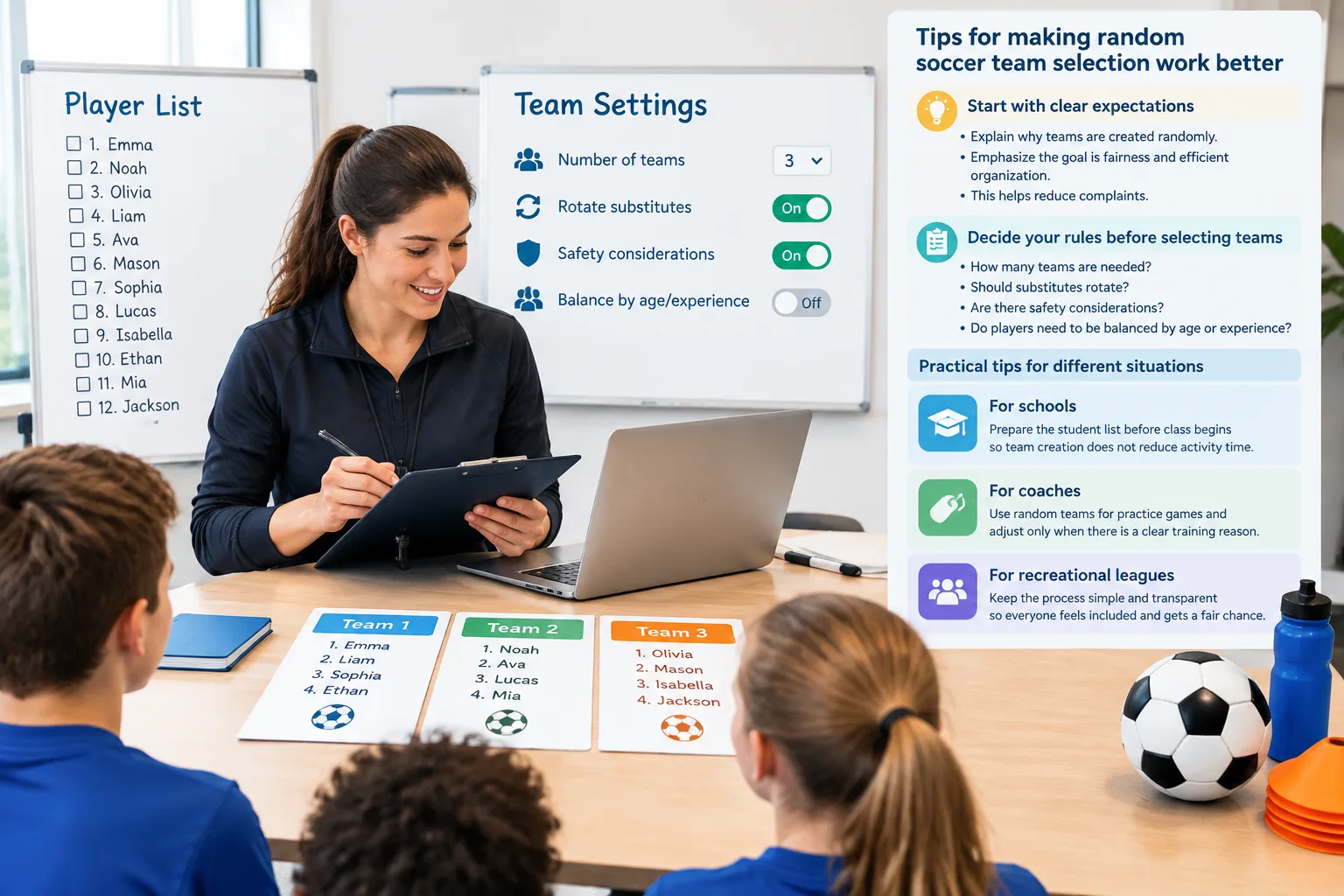
A good random assignment process starts with clear expectations. Tell participants why teams are being created randomly. Explaining that the goal is fairness and efficient organization helps reduce complaints.
It is also useful to decide your rules before selecting teams. Ask questions such as: How many teams are needed? Should substitutes rotate? Are there safety considerations? Do players need to be balanced by age or experience?
Here are practical tips for different situations:
- For schools: Prepare the student list before class begins so team creation does not reduce activity time.
- For coaches: Use random teams for practice games and adjust only when there is a clear training reason.
- For events: Create teams before arrival when possible so participants can begin immediately.
- For recurring sessions: Save a consistent process so each session feels organized and fair.
If your event needs more than soccer teams, a broader Random Group Generator can help divide participants into groups for workshops, activities, and training sessions. You can also use a Group Name Generator to create simple team names after assignments are complete.
Common situations where a soccer team picker helps
A random soccer team picker can support many different activities. Teachers can use it during physical education lessons when they need quick groups. Coaches can use it during practice matches. Event organizers can use it for community games and friendly competitions.
For example, an after-school program has 40 students and limited practice time. The instructor creates eight groups of five players using random assignment. Each group rotates through passing, shooting, and mini-game stations. The process keeps everyone active without spending too much time organizing.
Another example is a corporate sports day. Employees may come from different teams or offices, so organizers want mixed groups. Random team creation helps avoid people staying only with coworkers they already know.
The tool may not be the right solution when teams must meet strict competitive requirements. Professional leagues, official competitions, and advanced coaching programs usually need additional evaluation. Random selection is most effective when fairness, speed, and participation are the main goals.
FAQ about random soccer team pickers
What is a random soccer team picker?
A random soccer team picker is a tool that assigns players into soccer teams automatically. Users enter names, choose group settings, and receive randomized team assignments instead of selecting players manually.
Can a random soccer team picker create balanced teams?
A random picker creates fair random assignments, but it does not automatically understand player skill, position, or experience unless the tool includes those features. Coaches can review results and make adjustments when needed.
Is random team selection useful for schools?
Yes. Teachers can use random team selection to organize physical education activities quickly and reduce time spent choosing groups. It can also help students work with different classmates.
How many players can I add to a random soccer team picker?
The number of players depends on the specific tool and settings. For larger activities, organizers should test their preferred group size and review assignments before starting the game.
Can I use a random soccer team picker for other group activities?
Yes. Many random selection tools can support classroom activities, workshops, and events beyond soccer. For different grouping needs, you can use tools such as a Random Group Generator or a Random Pair Generator.
Create your soccer teams quickly
A random soccer team picker helps teachers, coaches, and facilitators spend less time organizing and more time running the activity. When fairness and speed matter, automated team assignment provides a simple way to create groups while keeping the final decision in the organizer’s hands.
Ready to create teams for your next match or activity? Use the Random Group Generator to organize players and groups in seconds.
Related Tools
Pick the right generator for the job — every tool runs free in your browser.