
random soccer squad generator
Random Soccer Squad Generator: Create Balanced Teams in Seconds
Learn how a random soccer squad generator helps coaches, teachers, and organizers create fair teams quickly with simple steps, examples, and practical tips.
Advertisement
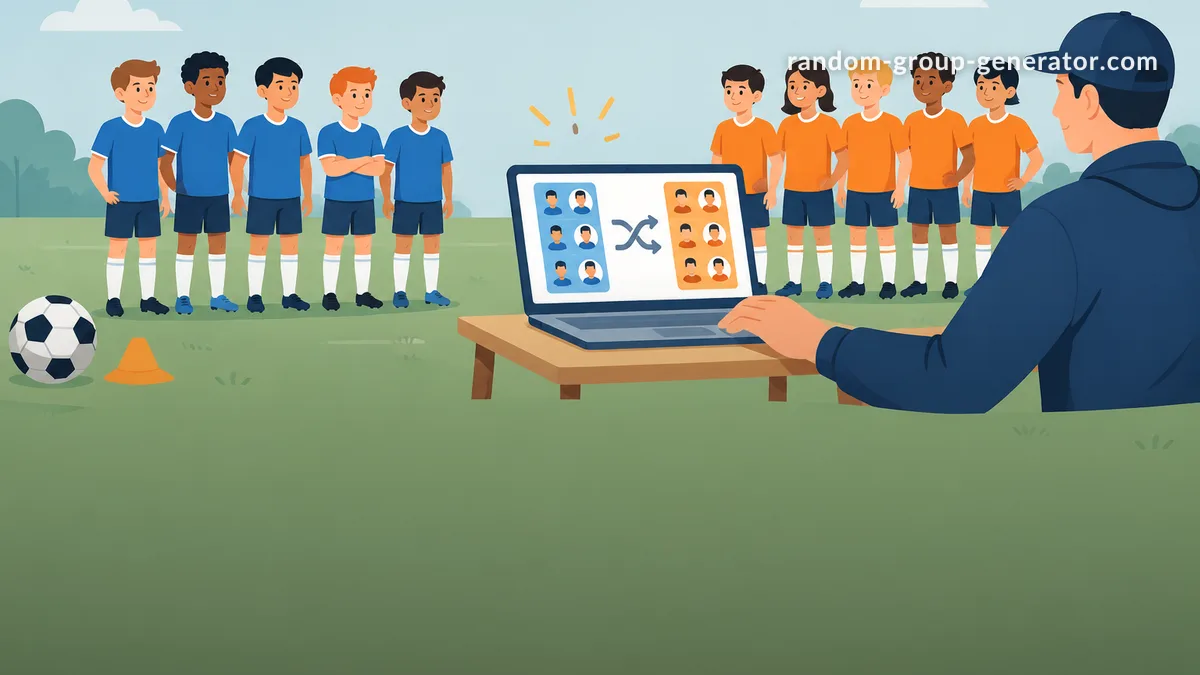
Coaches, teachers, and event organizers often face the same challenge: creating soccer teams that feel fair while saving time. A random soccer squad generator helps divide players into squads quickly by removing manual selection and giving everyone an equal chance to be grouped. It is useful for school sports, training sessions, friendly matches, and team-building activities where balanced groups are needed.
Why manual soccer team selection can be difficult
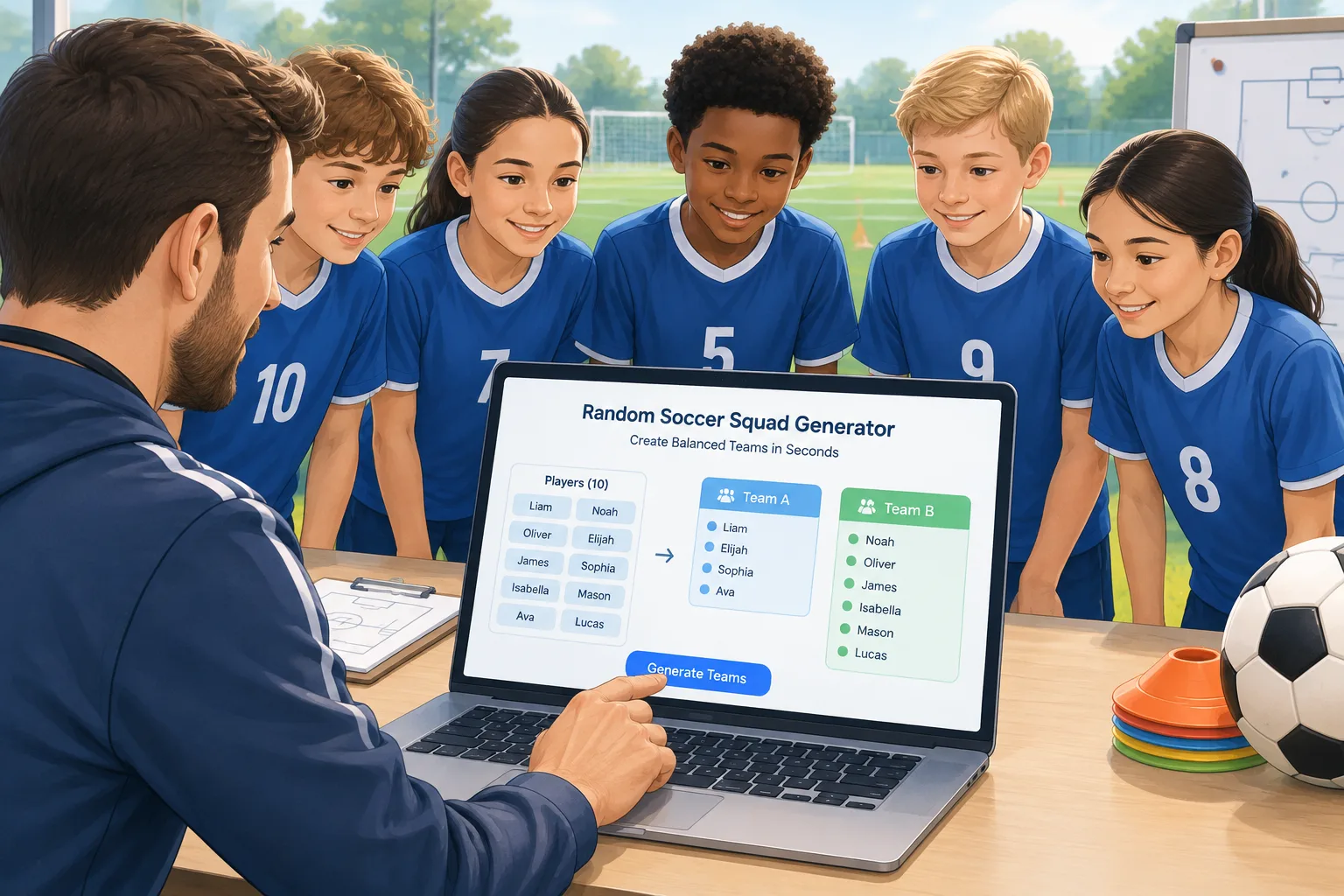
Choosing teams by hand sounds simple, but it often creates problems. A coach may accidentally place friends together, rely too much on memory, or spend valuable practice time deciding who goes where. In classrooms and youth programs, repeated manual selection can also make some participants feel that the same people are always chosen first or last.
A random soccer squad generator provides a more consistent approach. Instead of depending on personal choices, the tool can randomly assign names into groups according to the number of squads or players needed. This creates a clear process that participants can understand.
For example, a PE teacher preparing a five-a-side soccer activity with 25 students can enter the names, select five teams, and generate squads before the lesson begins. The teacher can then focus more time on coaching skills and less time managing team creation.
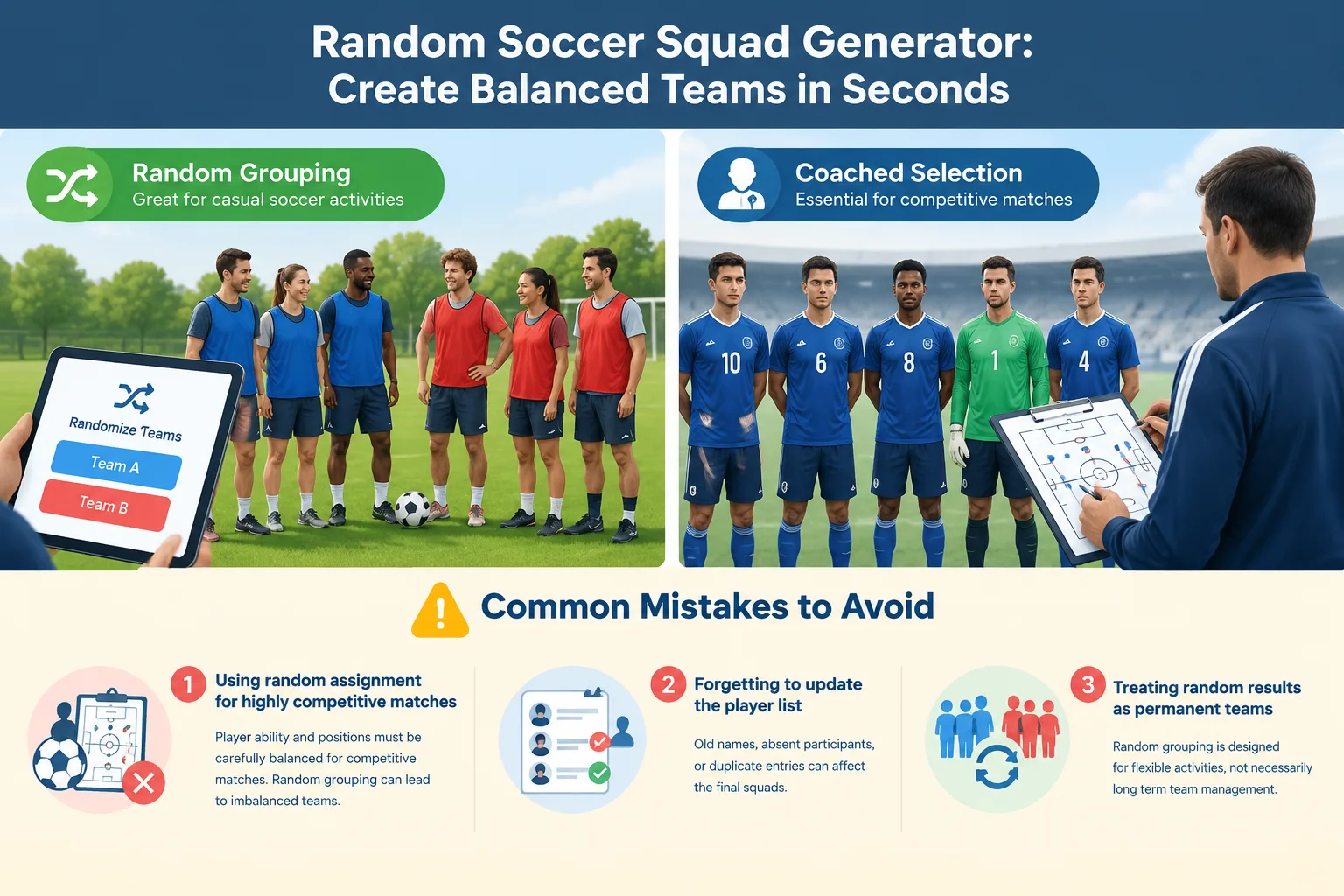
Random selection does not replace coaching knowledge. If a competitive match requires specific skill levels, positions, or experience balancing, a coach may still want to adjust groups afterward. The value of a random tool is that it provides a fair starting point and reduces unnecessary selection pressure.
What is a random soccer squad generator?
A random soccer squad generator is an online tool that automatically organizes a list of players into separate teams or squads. Users usually provide participant names, choose how many groups they want, and let the system create the assignments.
The basic process is simple:
- Prepare a list of player names.
- Enter the names into the generator.
- Select the number of squads or group size.
- Generate the teams.
- Review the results and make any needed adjustments.
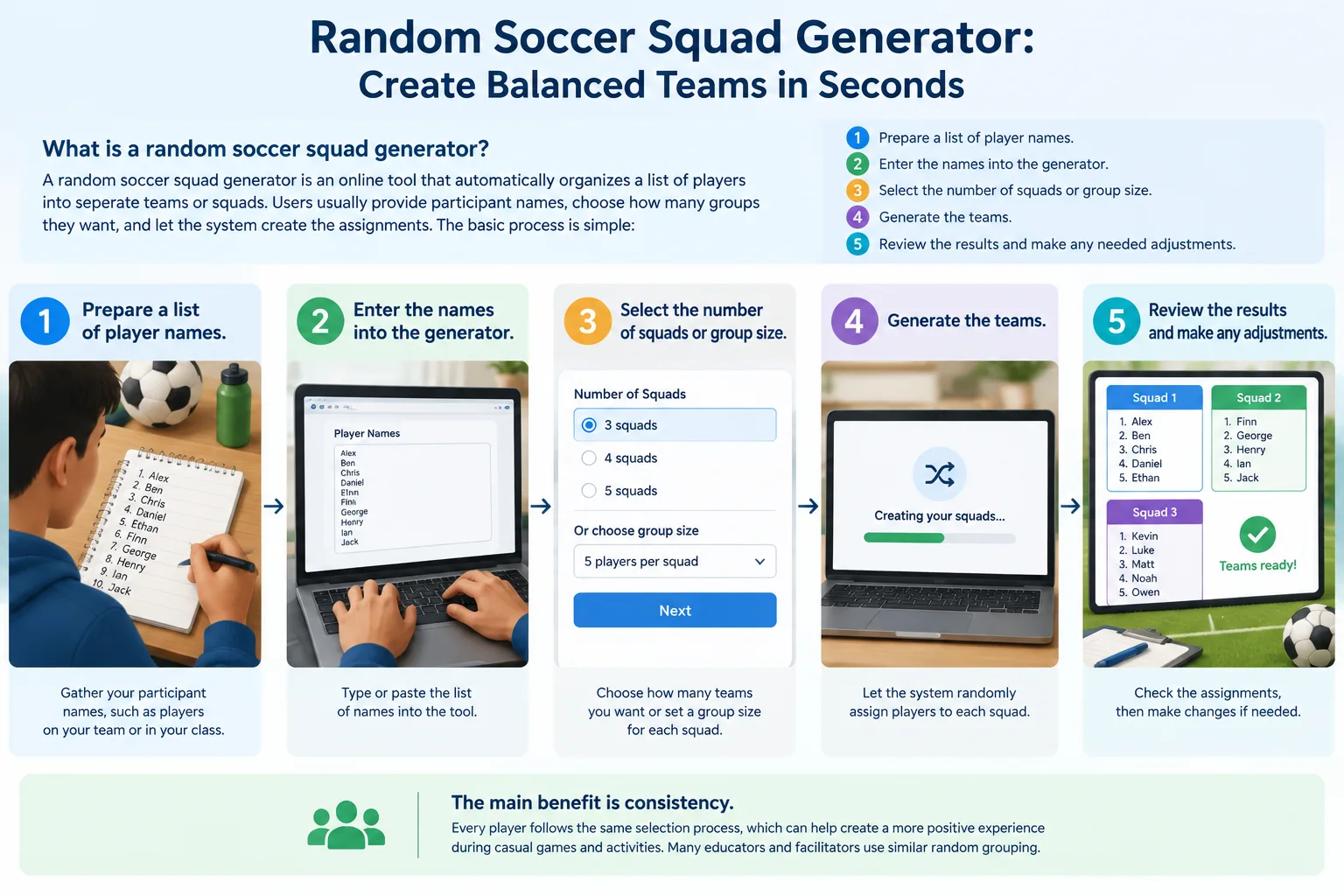
The main benefit is consistency. Every player follows the same selection process, which can help create a more positive experience during casual games and activities. Many educators and facilitators use similar random grouping methods for classroom projects, workshops, and events because they reduce repeated manual work.
For soccer activities, this approach works especially well when the goal is participation, practice variety, or team mixing rather than selecting a permanent competitive roster.
How to use a random soccer squad generator step by step
Using a generator is usually faster than writing names on paper or manually assigning teams. Follow these steps to organize squads effectively.
Step 1: Prepare your player list
Collect the names of everyone participating. Include only players who should be assigned to teams for the activity. If someone is absent, remove them before generating squads.
Example: A community coach has 18 players attending a weekend practice. The coach creates one list with all 18 names before deciding how many groups are needed.
Step 2: Decide your squad format
Think about the activity goal before generating teams. A training drill may need smaller groups, while a friendly match may need larger squads.
Examples:
- 20 players can become four squads of five.
- 18 players can become three squads of six.
- 12 players can become two squads of six.
If you need pairs for passing exercises or partner drills, a Random Pair Generator can be more suitable than creating full squads.
Step 3: Generate and review the squads
Run the generator and check the results. Random assignment creates fairness, but practical situations sometimes require small changes. For example, a goalkeeper may need to be moved if only one player regularly plays that position.
The best workflow is often random first, adjustment second. This keeps the process transparent while allowing coaches to apply their experience.
Step 4: Share the squads clearly
Display the teams on a board, screen, or group message so everyone knows where they belong. Clear communication helps activities start faster and reduces confusion.
Real examples of using random soccer squad generators
Different groups use random squad creation for different reasons. The goal is usually the same: make team organization easier and more predictable.
School physical education classes
Teachers often need to divide students quickly while keeping activities inclusive. A random squad generator can help create temporary teams for soccer drills, tournaments, or skill challenges.
Example: A teacher has 32 students and wants eight groups for rotation stations. The teacher creates eight random squads and assigns each group to a practice area. Students spend more time playing and less time waiting.
For classroom activities beyond sports, teachers can also use the Random Group Generator to create discussion teams or project groups.
Youth soccer training sessions
Youth coaches may want players to work with different teammates throughout a season. Random squads can introduce variety and encourage communication between players who do not usually work together.
Example: A coach runs a weekly practice where players are randomly divided into four groups for small-sided games. The coach can observe different combinations and adjust future training activities based on those observations.
Corporate or community team events
Some organizations use soccer games as team-building activities. In these situations, participants may not know each other well, so random grouping creates an easy way to mix people.
Example: An event organizer hosting a company sports day can generate teams before the event and avoid having employees spend time choosing sides.
Random selection versus manual team creation
Both methods have a place. The right choice depends on the purpose of the activity.
Manual team creation gives organizers more control. A coach can consider skill level, positions, fitness, and experience. This is useful for serious competitions where balance requires detailed knowledge.
Random selection is faster and easier when fairness, variety, or participation matters most. It is especially useful for informal matches, training exercises, and activities where everyone should have a similar chance of joining different groups.
A practical approach is to combine both methods. Start with a random soccer squad generator, then make small changes only when there is a clear reason. This avoids spending too much time arranging teams while still respecting the needs of the activity.
Tips for creating better soccer squads
A random generator works best when combined with good preparation. Consider these tips before creating teams.
First, decide whether you need equal numbers or equal ability levels. A generator can divide names evenly, but it does not automatically understand player skills, positions, or injuries.
Second, explain the process to participants. When people understand that teams were created randomly, they are less likely to feel that selections were based on personal preferences.
Third, save time by preparing lists before the activity begins. Coaches and teachers can keep player names organized and quickly create new groups whenever needed.
If you also need creative team labels, a Group Name Generator can help create simple names for squads, activities, or events.
Common mistakes to avoid
A random soccer squad generator is useful, but it is not perfect for every situation. One common mistake is using random assignment for highly competitive matches where player ability and positions must be carefully balanced.
Another mistake is forgetting to update the player list. Old names, absent participants, or duplicate entries can affect the final squads.
Organizers should also avoid treating random results as permanent teams. Random grouping is designed for flexible activities, not necessarily long-term team management.
Frequently asked questions about random soccer squad generators
Can a random soccer squad generator create equal teams?
A random soccer squad generator can create evenly sized groups, but it cannot measure player ability unless the tool includes specific balancing features. Coaches should review teams when skill balance is important.
Is random team selection fair for soccer practice?
Random selection can be a fair way to decide groups because every player follows the same process. It works well for practice activities, drills, and friendly games where variety is helpful.
How many players can I put into a random squad generator?
The number of players depends on the tool being used. Many online generators support different group sizes, allowing organizers to create small practice groups or larger teams.
Should coaches always use random soccer squads?
No. Random squads are one option. Coaches may prefer manual selection for tournaments or situations requiring specific positions and competitive balance.
Can I use the same type of generator for other activities?
Yes. Random grouping tools can support many situations beyond soccer, including classrooms, workshops, and team events. For student selection activities, organizers can use the Random Student Picker when choosing participants rather than forming teams.
Create your soccer squads faster
A random soccer squad generator helps coaches, teachers, and organizers spend less time arranging teams and more time running meaningful activities. By combining random selection with practical review, you can create groups quickly while keeping the process clear and fair.
Start organizing your next activity with the Random Group Generator and create balanced groups in just a few steps.
Advertisement
Related Tools
Pick the right generator for the job — every tool runs free in your browser.
Advertisement