
random seat assignment
Random Seat Assignment: A Fair Way to Organize Classroom Seating
Learn how random seat assignment helps teachers create fair classroom seating, save time, and build balanced learning environments with practical steps and examples.
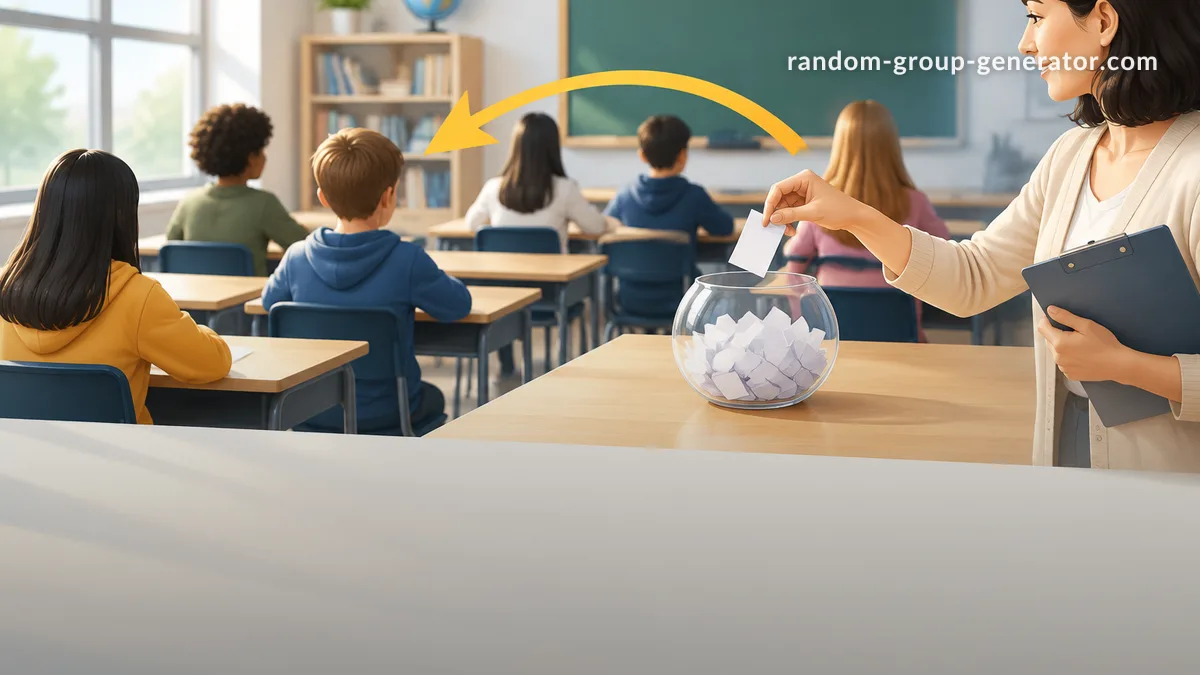
Teachers often face the same challenge at the start of a lesson, semester, or activity: where should everyone sit? A random seat assignment method helps educators create classroom seating plans quickly while reducing repeated choices based on habit or preference. This approach is useful for teachers, trainers, and facilitators who need a practical way to organize people fairly.
A good random seat assignment process does more than shuffle names. It creates a starting point for classroom organization, team activities, and workshops. By using a balanced random approach, educators can save preparation time while still considering important needs such as accessibility, collaboration, and classroom routines.
Why random seat assignment helps teachers and facilitators
Choosing seats manually can become difficult when there are many students, frequent classroom changes, or limited preparation time. Teachers may accidentally place the same students together repeatedly or spend valuable planning time creating seating charts. A random approach provides a neutral starting point that can make classroom organization easier.
Random seat assignment is especially useful when a teacher wants students to interact with different classmates. Changing seating arrangements can encourage new working relationships and prevent a classroom from becoming divided into fixed groups. For example, a middle school teacher starting a new term might use random seating to create a fresh arrangement before learning more about student needs and classroom dynamics.
However, random does not mean ignoring classroom responsibilities. Teachers should review any generated seating plan before using it. Students may need specific placements because of accessibility requirements, hearing or vision needs, behavior support plans, or learning considerations. The strongest approach is usually random first, then thoughtful adjustment when needed.
Facilitators outside schools can use the same idea. A corporate trainer running a workshop can randomly assign tables or discussion seats so participants meet new colleagues instead of staying with familiar coworkers. The method works because it combines fairness with flexibility.
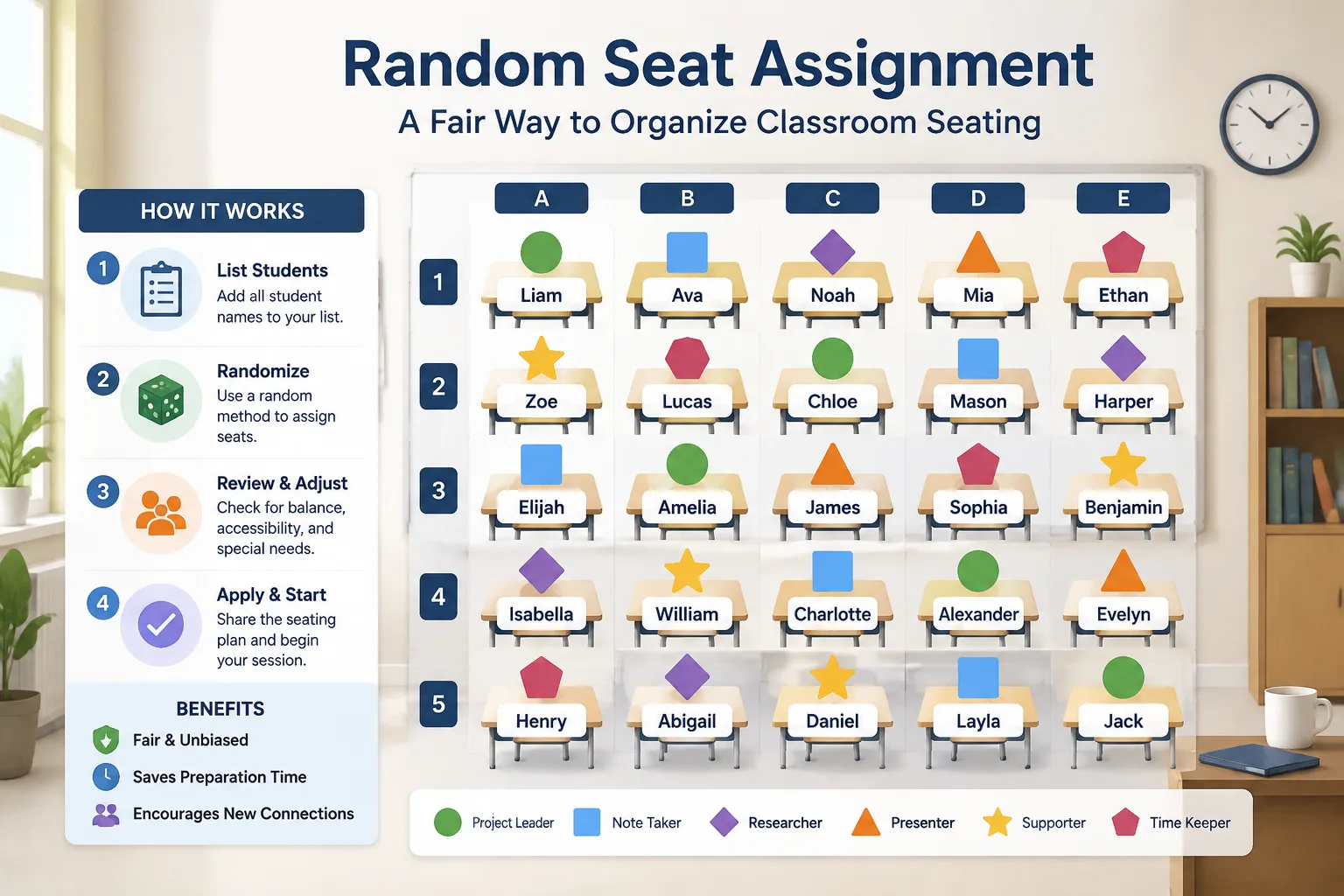
How to create a random seat assignment step by step
Creating a random seat assignment can be completed in a few simple steps. The exact process depends on whether you are arranging a classroom, training room, or event space, but the basic workflow remains similar.
- Prepare your participant list. Collect the names of students, employees, or attendees who need assigned seats. Check that names are spelled correctly and that your list matches the number of available seats.
- Define your seating layout. Decide how many seats exist, where rows or tables are located, and whether some positions should remain reserved. A classroom with 30 desks requires a different setup from a workshop with six round tables.
- Generate a random arrangement. Use a random seat assignment tool or another fair method to match names with positions. A digital tool can reduce manual errors and make repeated arrangements faster.
- Review the result. Check whether the arrangement works for your real situation. Adjust only the placements that need special attention rather than rebuilding the entire plan.
- Share the seating plan clearly. Display the arrangement on a classroom board, learning platform, printed chart, or team communication channel.
For example, a teacher with 24 students and 24 desks can upload the class list, create a seating grid, generate a random arrangement, and quickly review the final chart before the next lesson. This process avoids manually moving names around for several minutes.
Teachers who already use digital classroom workflows can also combine seating activities with other organization tools. For group activities after seating is arranged, a separate Random Group Generator can help create balanced teams without manually dividing students.
Best practices for fair classroom seating arrangements
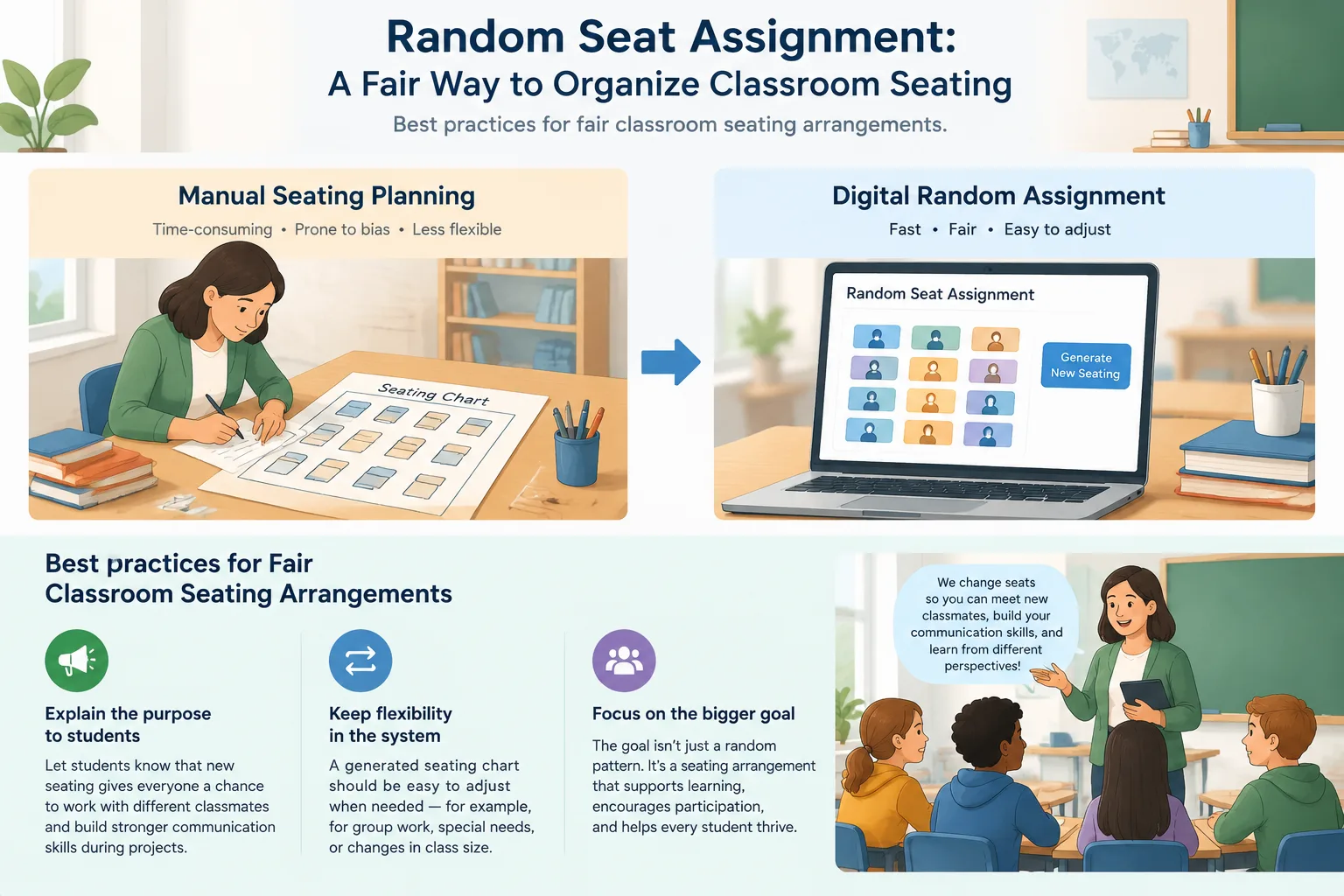
A random seat assignment works best when it is part of a larger classroom management strategy. The goal is not simply to create a random pattern but to create an arrangement that supports learning and participation.
One useful practice is to explain the purpose to students. Some learners may wonder why they are not sitting with friends or why seats change regularly. A short explanation can show that the process is designed to give everyone opportunities to work with different classmates. For example, a teacher might explain that new seating helps the class build stronger communication skills during projects.
Another practice is to keep flexibility in the system. A generated seating chart should be a helpful tool, not a permanent rule that cannot change. If a student cannot clearly see the board, struggles with distractions, or needs a different position, the teacher can make an adjustment while keeping the overall process fair.
It is also helpful to save previous arrangements. If a teacher changes seats every month, keeping old charts makes it easier to avoid repeating the same combinations. This creates variety over time while reducing planning effort.
For example, a high school teacher may create a new random seating chart every four weeks. After generating each chart, the teacher checks that students are not always beside the same partners and adjusts only where necessary. The result is a practical balance between randomness and classroom awareness.
Random seat assignment compared with manual seating charts
Manual seating charts give teachers complete control, but they can require more time and attention. A teacher who knows the class well may intentionally place students together or apart based on learning goals. This can be valuable for specific situations, such as project groups or targeted support.
Random seat assignment has a different advantage: speed and neutrality. It helps reduce the feeling that certain students receive preferred treatment. When everyone starts from the same random process, the seating decision can feel more transparent.
A combined approach often works well. Teachers can generate an initial random arrangement and then make professional adjustments. This avoids starting from an empty chart while still allowing educators to use their experience.
For example, during the first week of a new course, a teacher may not know student relationships yet. A random seating chart provides a quick solution. Later, after observing classroom interactions, the teacher can create more intentional arrangements for specific activities.
Digital tools can also support related classroom tasks. If you need to randomly choose a student for participation rather than assign seats, a Random Student Picker can provide a separate solution. For partner activities, a Random Pair Generator can quickly match participants.
When random seat assignment is not the right choice
Random seat assignment is useful in many situations, but it is not always the best option. Some classrooms require carefully planned seating because of individual learning needs, safety concerns, or specific teaching goals.
For example, a language teacher may intentionally place students together based on conversation practice needs. A science teacher may arrange seats to support equipment access. In these cases, a fully random chart may not meet the lesson requirements.
The method is also less useful when there are frequent changes to room availability. If desks move often or attendance changes daily, teachers may need a simpler manual approach. Random tools work best when there is a clear list of participants and a stable seating structure.
The key is using randomness as a support tool. It helps with organization and fairness, but educator judgment remains important. A thoughtful review after generation ensures the final arrangement fits the actual learning environment.
How organizations can use random seating beyond classrooms
Random seat assignment is not limited to schools. Trainers, event organizers, and workplace facilitators can use similar methods when they want participants to connect with new people.
During a professional development session, for example, a facilitator might assign seats randomly before group discussions. This encourages employees from different departments to communicate instead of sitting with their usual teams. The same idea can work for conferences, workshops, and team-building sessions.
Organizations using online collaboration platforms can also include random organization steps in their workflows. After assigning seats or creating groups, facilitators may coordinate follow-up activities through tools such as Zoom, Teams, Google Classroom, or Slack depending on their existing processes.
For team activities that require names, themes, or creative labels, a Group Name Generator can help complete the setup. The important idea is creating a simple process that reduces administrative work and gives participants a clear structure.
Frequently asked questions about random seat assignment
What is random seat assignment?
Random seat assignment is a method of placing students or participants into available seats using a random process instead of choosing every position manually. It helps create a neutral starting arrangement while saving preparation time.
Is random seat assignment fair for every student?
Random seat assignment can improve fairness because each participant follows the same selection process. However, teachers should still review the final arrangement and make adjustments when classroom needs require them.
Can teachers change a random seating chart after generating it?
Yes. A generated seating chart is a starting point. Teachers can adjust individual placements for accessibility, learning support, or classroom management reasons while keeping the overall process consistent.
How often should classroom seats be changed?
There is no single schedule that works for every classroom. Some teachers change seats weekly, monthly, or only at the start of new units. The best timing depends on classroom goals and student needs.
Can random seat assignment be used for workplace events?
Yes. Trainers and event organizers can use random seating methods to encourage new conversations and prevent participants from always working with the same people.
Create your random seat assignment today
A simple random seat assignment process can help teachers and facilitators organize spaces faster while keeping decisions transparent and flexible. Start with a fair random arrangement, review the result, and adapt it to your real environment.
Use the Random Group Generator to organize participants and simplify your next classroom or team activity.