
random seating arrangement
Random Seating Arrangement: Practical Guide for Teachers
Discover how random seating arrangement creates balanced, mixed groups in your classroom. Step-by-step instructions using our free seating chart tool to improve collaboration and reduce social cliques.

In today's diverse classrooms, creating balanced and mixed groups is essential for effective learning and social development. Random seating arrangement allows teachers to strategically place students who may not normally sit together, fostering better collaboration, empathy, and engagement while reducing social cliques. This guide explains why random seating arrangement matters, how to implement it step by step, and best practices for K-12 and higher education settings.
Why Random Seating Arrangement Matters in Classrooms
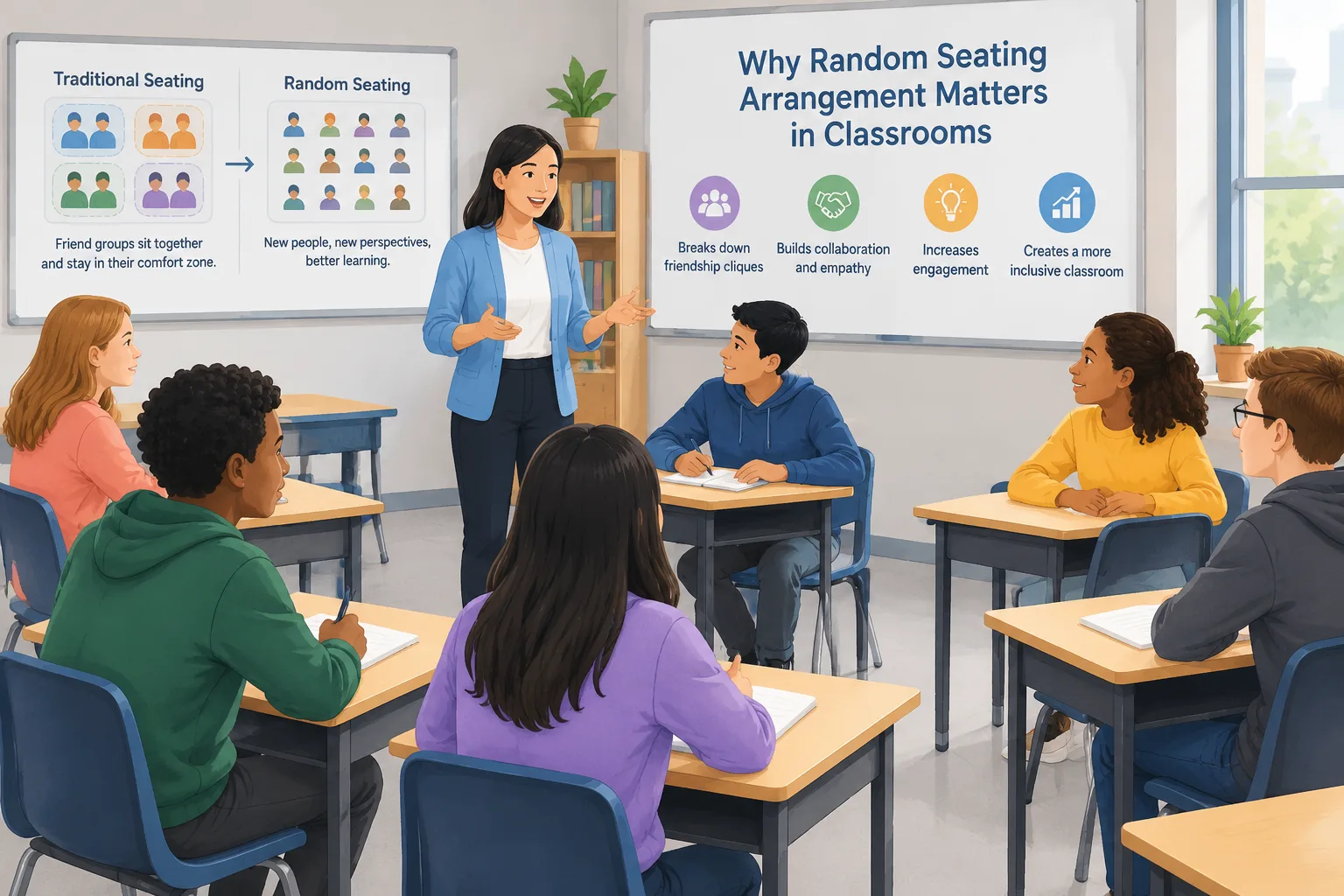
Random seating arrangement breaks down traditional friendship-based seating patterns that often limit student interactions. When students sit with peers from different backgrounds, it promotes empathy and understanding of diverse perspectives. Research from education experts shows that mixed seating can improve academic performance by encouraging richer discussions and more creative problem-solving during group work.
For example, in a high school English class, students who are usually quiet might engage more when sitting with extroverts. This leads to richer discussions and better group projects. Another key benefit is reducing bullying incidents, as students who sit with different groups are less likely to target specific individuals repeatedly.
In corporate training or team-building events, random seating arrangement similarly helps participants mix with new colleagues, improving communication and collaboration from the start. The tool supports fair balanced grouping across various group sizes, making it suitable for educators and facilitators alike.
How to Create a Random Seating Arrangement Step by Step
Using random seating arrangement is straightforward with our free tools. Follow these clear steps to generate a fair seating chart for your class or event:
- Visit the Random Group Generator platform and select the seating chart tool.
- Enter the total number of students or participants in your group.
- Choose any available options such as gender balance, avoiding specific pairs, or other preferences.
- Click generate to instantly create the arrangement.
- Review the output, print the seating chart, or display it digitally for your class.
Here's a concrete example: For a class of 30 students, the tool might arrange them in 5 rows of 6 seats. You can specify constraints like keeping certain friends apart or ensuring balanced gender distribution. The process takes just seconds and produces a clear grid layout ready for use.
To use it effectively:
- Prepare a complete list of students in advance.
- Decide on any constraints like keeping certain pairs apart.
- Review the generated chart for fairness and make adjustments if needed.
This method works well for different activities such as pair work, team projects, or whole-class discussions. For non-default locales, the same process applies with localized interfaces.
Real-World Example from the Classroom
Sarah, a middle school teacher, used random seating arrangement for her science fair project. By mixing students, the groups produced more creative ideas and completed tasks faster. She reported that shy students became more confident in their new groups. The seating chart helped her track progress easily during the event.
In another case, a corporate trainer used the tool for a team-building workshop with 40 participants. Random seating arrangement mixed departments and experience levels, resulting in stronger cross-team collaboration and positive feedback from attendees.
Best Practices for Random Seating Arrangement
To maximize the benefits of random seating arrangement, consider these practical tips:
- Rotate seating every few weeks to maintain variety and prevent new cliques from forming.
- Consider age-appropriate arrangements for younger students, keeping it simple and visual.
- Use the tool for different activities like pair work or team projects.
- Combine with other tools like the random group generator for larger projects.
For higher education, random seating arrangement can help in large lectures by mixing students for breakout sessions. Always check the tool's output for any edge cases, such as very small classes under 10 students.
Common Challenges and Solutions
One common challenge is technical issues with device compatibility. Our tool works on all modern browsers and devices, with clear instructions available in multiple languages. Another issue is privacy concerns when printing charts. Always remind students that the arrangement is for learning purposes only and not for sharing personal details.
For different grade levels, younger students may need simpler visuals. Our seating chart tool adapts easily, and educators can test it with a small group first. If the tool does not fit a specific scenario, it serves as a starting point for manual adjustments.
Integrating Random Seating Arrangement with Other Tools
For even better results, combine random seating arrangement with the random pair generator for activities requiring pairs or the random student picker for selecting representatives. This creates a complete workflow for fair balanced grouping in your classroom or event.
Random Group Generator offers multiple tools in one platform, including the seating chart for quick generation.
FAQ
What is random seating arrangement?
Random seating arrangement is a method where students are placed in seats randomly to mix them up for better collaboration and engagement.
How does random seating arrangement benefit my classroom?
It promotes collaboration, reduces cliques, and improves academic performance through diverse group interactions.
Is there a free tool for random seating arrangement?
Yes, our free seating chart generator at https://random-group-generator.com/tools/seating-chart creates instant arrangements.
Can random seating arrangement be used for different grade levels?
Yes, it works for K-12 and higher education with simple adjustments for age-appropriate layouts.
What if I want to avoid certain students sitting together?
The tool allows custom options for avoiding specific pairs, ensuring fair balanced grouping.
How long does it take to generate a seating chart?
The process is instant with our free tool, giving you a ready-to-use arrangement in seconds.
Can I use random seating arrangement for team events outside school?
Absolutely, our tools support corporate trainers and event organizers with the same fair grouping features.
Want to try it right away? Use the Random Group Generator to split your list into balanced teams, the Group Name Generator to name each team, and the Random Pair Generator when you need one-on-one pairings.
Related Tools
Pick the right generator for the job — every tool runs free in your browser.