
random name generator
Random Name Generator: Create Fair Names for Teams, Classes, and Events
Learn how to use a random name generator to create fair selections for classrooms, workshops, teams, and events with simple steps and practical examples.

Choosing a name at random can become a challenge when a teacher needs to call on students, a trainer needs to assign roles, or a facilitator needs to organize activities quickly. A random name generator helps people select names fairly by removing guesswork and making the process more consistent. This guide explains how educators, team leaders, and event organizers can use random name selection effectively in real situations.
A good random name generator is useful when you need a quick, neutral way to choose participants, create activity groups, or assign turns. Instead of relying on the same volunteers or manually picking names, facilitators can use a digital tool to create a more balanced experience for everyone involved.
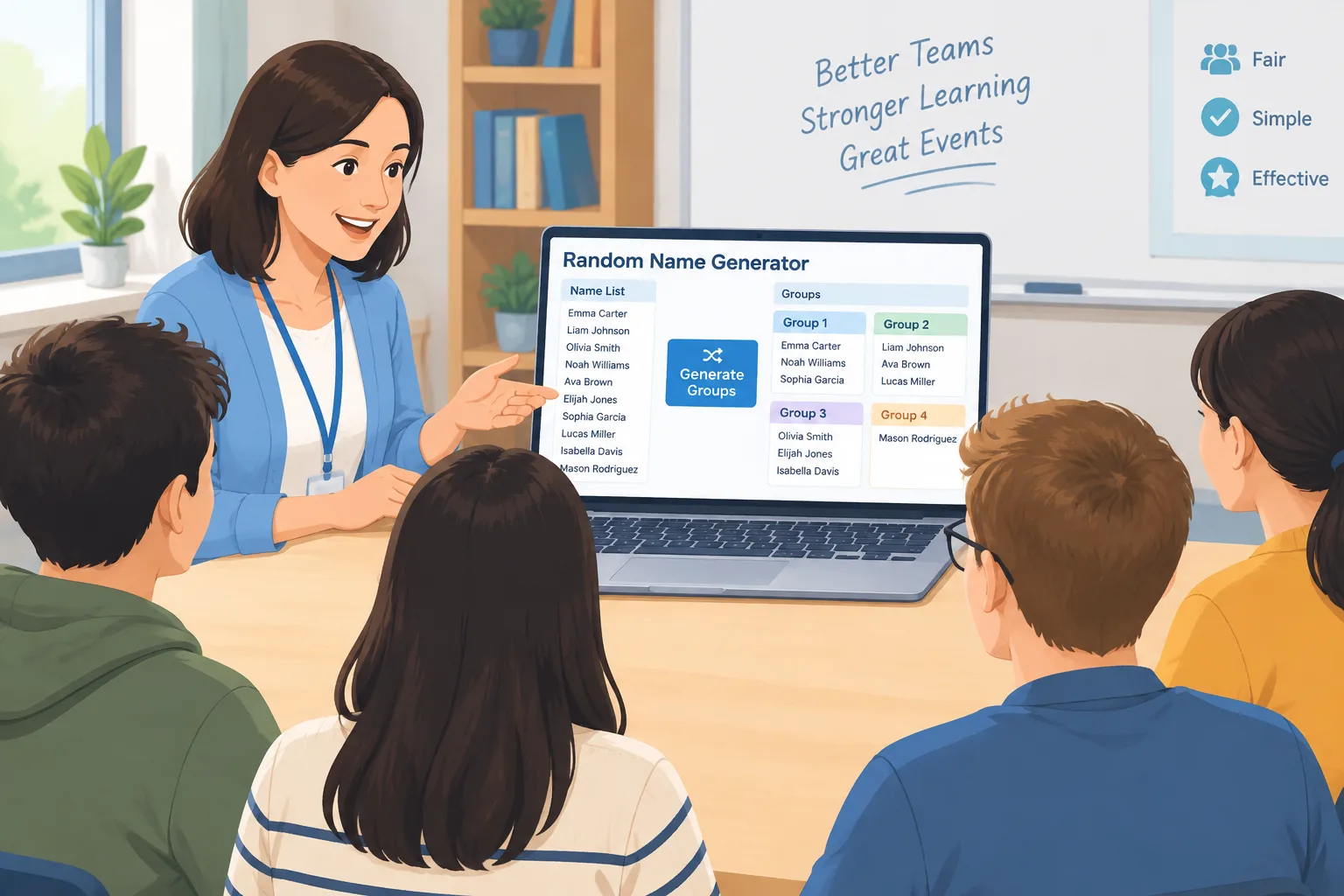
Why use a random name generator?
Many classrooms and workplaces need fair ways to select people. A teacher may want to give every student an equal chance to answer a question. A workshop leader may need to choose discussion leaders. An event organizer may need to assign tasks quickly. In each case, a random name generator can save time and support a transparent process.
Manual selection often creates small problems. A teacher might accidentally choose the same students repeatedly because they are easy to remember. A manager might assign tasks based on familiarity instead of a neutral process. Random selection creates a clear rule: every name in the list has a chance to be selected.
For example, a middle school teacher starting a weekly discussion activity can enter the class roster into a random name generator. Each Monday, the tool can select discussion leaders without requiring the teacher to remember who participated before. The process becomes easier to manage and students understand that selections are not based on preference.
Random selection is also useful outside education. During a company training session, a facilitator can use random names to select breakout speakers. During an event, organizers can choose volunteers or assign activity roles without long discussions.
How to use a random name generator step by step
Using a random name generator usually takes only a few steps. The exact workflow depends on the tool, but most digital name selection tools follow a similar process.
- Prepare your name list. Gather the names of students, employees, participants, or team members you want to include. Check that spelling is correct and remove names that should not be part of the selection.
- Add names to the generator. Copy and paste your list into the tool. For a classroom activity, this may be a student roster. For a workshop, it may be the names of attendees.
- Choose your selection method. Decide whether you need one selected name, several names, pairs, or groups. Different activities require different formats.
- Run the selection. Start the random process and use the result for your activity. Explain the process to participants when transparency matters.
- Adjust for your next activity. Save time by preparing lists for recurring lessons, meetings, or events.
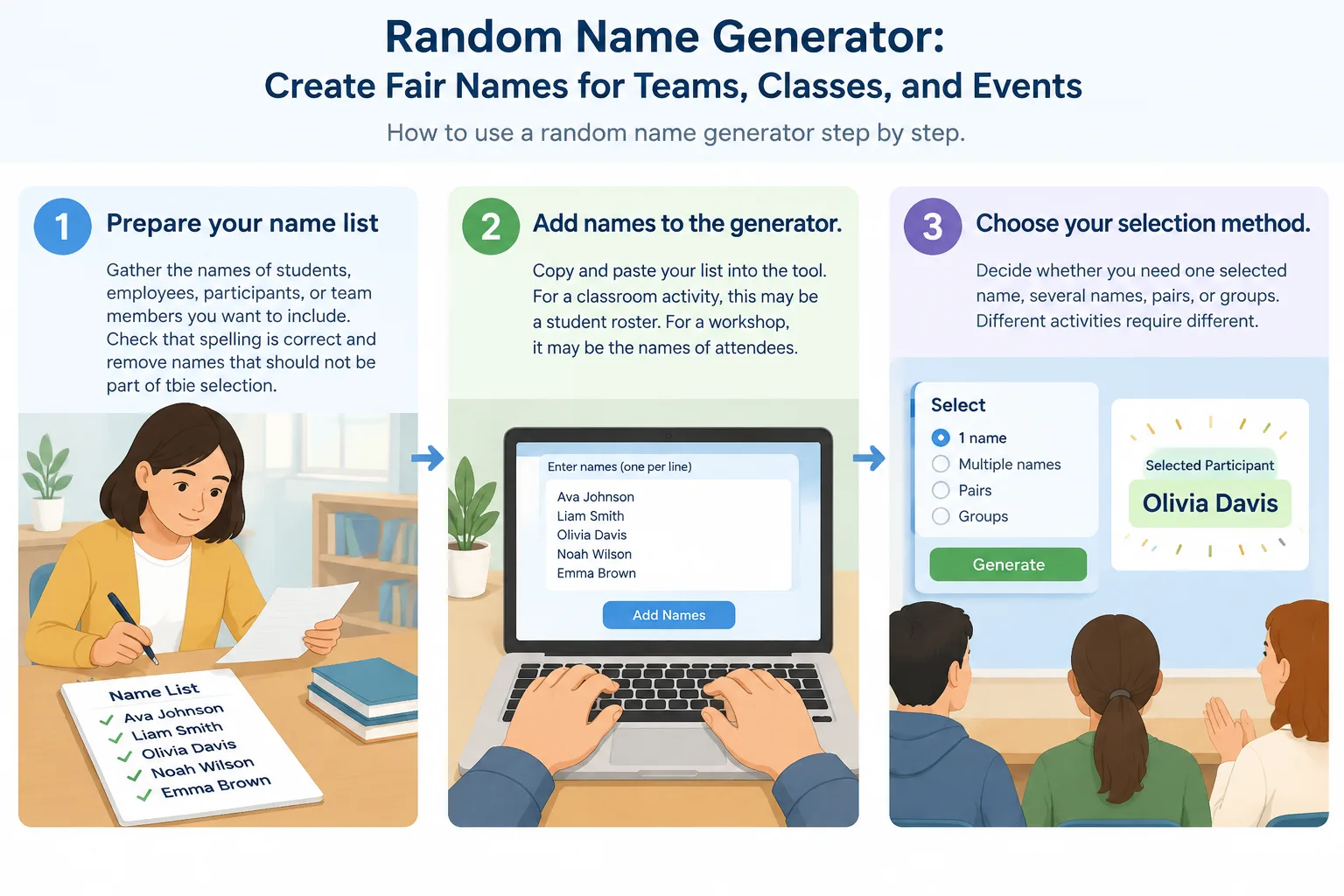
For example, a corporate trainer preparing a communication workshop may need six small discussion teams. Instead of assigning groups manually, they can use a random grouping workflow with participant names and quickly create balanced teams. When pairs are needed, a tool like the Random Pair Generator can simplify partner activities.
Practical examples for classrooms and team activities
A random name generator works best when it solves a specific organization problem. Teachers and facilitators can adapt random selection to different activities instead of using it only for calling on participants.
In classrooms, teachers can use random name selection for question rounds, reading assignments, presentations, or peer feedback activities. For example, a language teacher can randomly select students to practice speaking exercises. This approach can encourage wider participation because students know everyone has a similar opportunity to be selected.
In higher education, instructors can use random selection during seminars or group discussions. A university professor might select a student to summarize a reading or lead a short discussion. The tool supports organization while allowing the instructor to focus on teaching rather than tracking participation manually.
In workplaces, trainers and HR teams can use random selection for workshops and collaborative exercises. A leadership training session might randomly assign participants to practice groups. For larger activities, a Random Group Generator can help create teams from a participant list.
Event organizers can also benefit. A networking session may require random introductions between attendees. A community event may need volunteer assignments. A simple name selection process can make these activities smoother and easier to explain.
Random name generator vs manual selection methods
Manual selection still has a place. A teacher may intentionally choose a student who needs extra support, or a manager may assign a task based on specific experience. Random selection is not meant to replace professional judgment in every situation.
The advantage of a random name generator is consistency. When the goal is equal opportunity, random selection provides a clear method. It reduces the chance that a small group of people receives most opportunities.
A simple comparison can help:
- Random name generator: Useful for fair turns, unbiased selection, and quick activities.
- Manual selection: Useful when specific skills, experience, or support needs should guide the choice.
- Volunteer selection: Useful when participants choose to participate, but may not include everyone equally.
For example, a teacher choosing a student presenter for a graded project may need specific criteria. However, selecting a daily discussion starter can be a good situation for random selection.
The best approach depends on the goal of the activity. Use random selection when fairness and speed are the main priorities. Use intentional selection when there is a clear educational or operational reason.
Tips for making random name activities work better
A random tool works best when combined with good facilitation. Before selecting names, explain the purpose of the activity. Participants are more likely to accept random results when they understand that the process is designed to create fairness.
Keep your name lists organized. For recurring classes or teams, update lists when members join or leave. If you manage several activities, separate lists for each class, department, or event can reduce mistakes.
Consider accessibility and participation needs. Random selection should support inclusion, not create unnecessary pressure. For example, a teacher may allow students alternative ways to participate if speaking publicly is difficult.
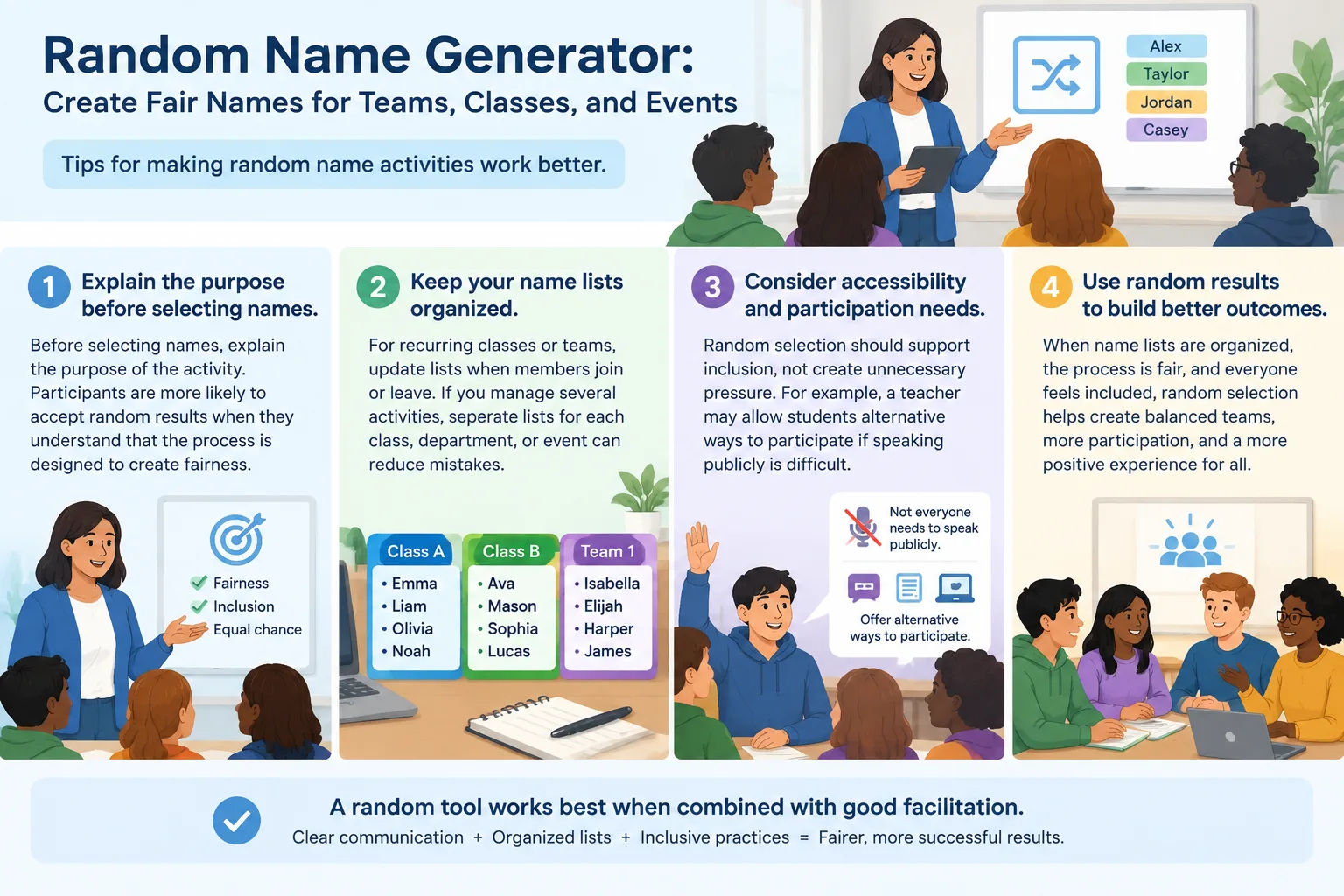
A practical example is a weekly team meeting. A manager can maintain a current employee list and randomly select a person to share a project update. The process encourages shared participation while keeping the meeting structure predictable.
For creative activities, combining tools can also help. After selecting participants, organizers can create team identities using a Group Name Generator. This can make workshops and classroom projects more engaging without adding extra planning time.
When a random name generator is not the right choice
Random selection is useful, but it has limits. Some decisions require expertise, qualifications, or personal context. A random name generator should not replace careful judgment for hiring decisions, performance evaluations, safety assignments, or other situations where criteria matter.
It is also important to check the quality of your input list. If names are missing or duplicated, the result will not represent the intended group. A fair process starts with accurate information.
Another consideration is participant expectations. Some groups may prefer volunteers or assigned roles based on interest. Before using random selection, consider whether the activity goal is equal opportunity, skill matching, confidence building, or another purpose.
When used in the right situations, a random name generator is a practical tool for reducing administrative work while keeping selection processes clear and understandable.
Frequently asked questions about random name generators
What is a random name generator?
A random name generator is a tool that selects one or more names from a provided list using a random selection process. Teachers, trainers, and organizers use these tools for fair participation, assignments, and activities.
How can teachers use a random name generator?
Teachers can use a random name generator to select students for questions, presentations, reading activities, and classroom discussions. It can help distribute opportunities across a class instead of relying only on volunteers.
Can a random name generator create groups?
Some tools can create groups, pairs, or teams from a name list. If you need full team assignments, a dedicated Random Group Generator may be more suitable than selecting individual names.
Is random name selection fair?
Random selection can be fair when everyone included in the list has the same chance of being selected. However, fairness also depends on using an accurate list and choosing random methods for situations where random choice makes sense.
Can I use random selection for online meetings?
Yes. Random name selection can support online classes, virtual workshops, and remote team activities. Facilitators can prepare participant lists and use digital tools during live sessions.
Create fair selections faster with a random name generator
A random name generator helps educators, trainers, and organizers save time while creating a clear and neutral selection process. Whether you are choosing a discussion leader, assigning activities, or organizing participants, random selection can make everyday workflows easier.
Start creating fair name selections today with the Random Student Picker or explore other tools from Random Group Generator to organize your next activity.