
random matchup generator
Random Matchup Generator: Create Fair Matchups from Two Lists
Learn how to use a random matchup generator to build unbiased head-to-head fixtures, tournaments, and classroom debates from two distinct lists.
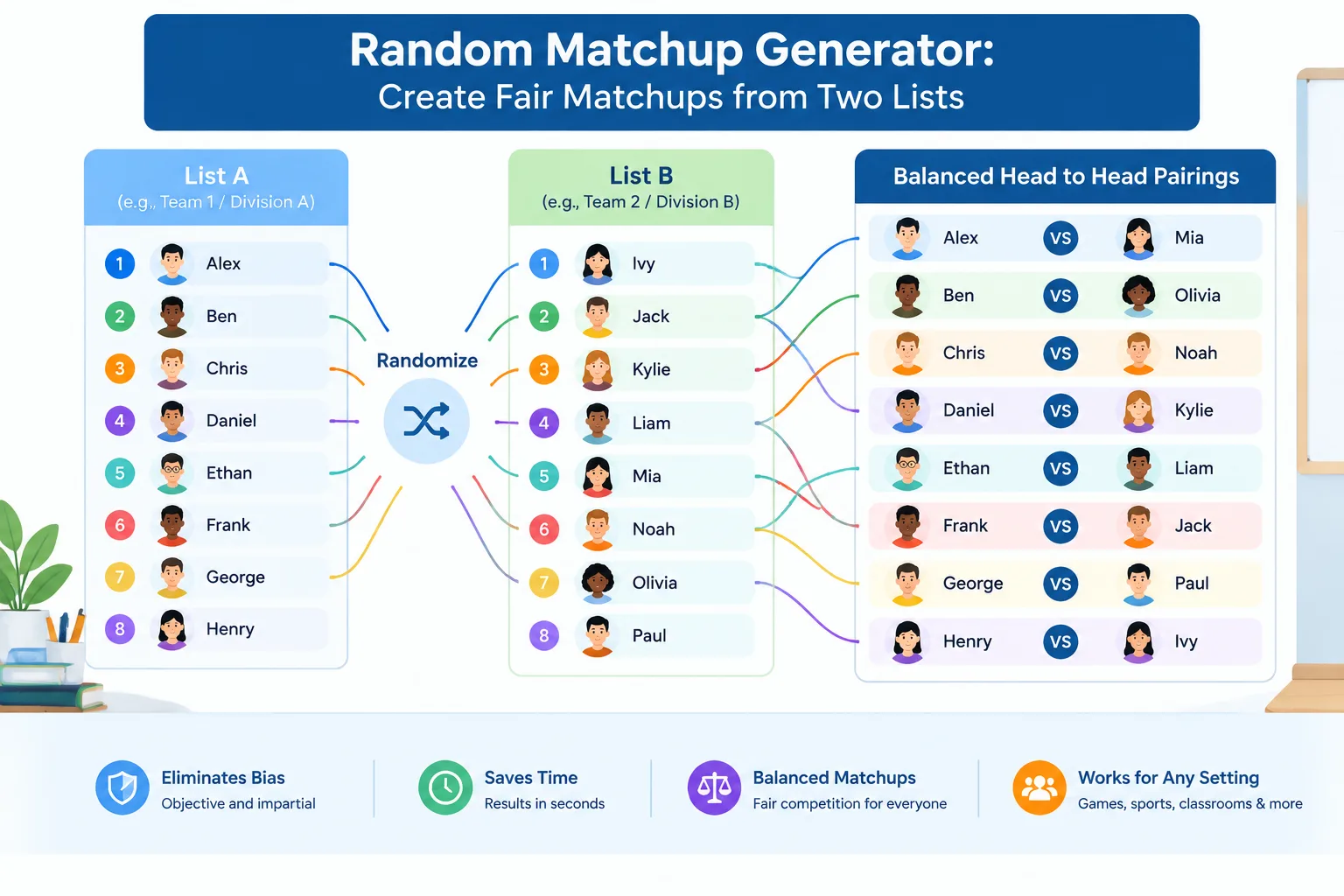
When organizing competitive game nights, bracket play, athletic scrimmages, or classroom debate rounds, manual scheduling often creates unintentional bias. A dedicated random matchup generator solves this challenge by pairing competitors objectively across different skill pools, divisions, or roster sets. Instead of relying on manual draws that leave participants questioning fairness, automated matchup tools produce balanced head-to-head showdowns within seconds.
Whether you need to pit seniors against juniors, pair mentors with mentees, or match offensive units against defensive squads, generating two-list fixtures requires precision. Let us explore the mechanics behind competitive pairing, walk through step-by-step implementations, and review strategies to keep your matchups transparent, engaging, and impartial.
Why Use a Random Matchup Generator for Competitive Fixtures?
Organizing matches by hand invites skepticism. When a facilitator draws names from a hat or writes pairings on a whiteboard, participants frequently suspect favoritism or seeding bias. A digital random matchup generator establishes an auditable, impartial foundation that all participants can trust.
In competitive gaming and esports LAN events, creating an unbiased versus schedule ensures that team rivalries feel earned rather than manufactured. Similarly, in high school forensics and classroom debates, pairing proposition and opposition teams without instructor subjectivity keeps the focus squarely on argumentation rather than perceived teacher preference.
Beyond perception, manual matchmaking becomes exponentially harder as lists grow. Pairing twelve players against twelve opponents involves 144 possible combinations. Ensuring that no duplicate pairings occur while honoring roster divisions requires computational shuffling. By relying on a verified randomizer algorithm, organizers save prep time and eliminate administrative errors.
Key Differences: Single-Roster Pairing vs. Two-List Matchups
Many facilitators wonder how a versus match generator differs from standard peer collaboration tools. Understanding this distinction ensures you pick the right tool for your specific event structure.
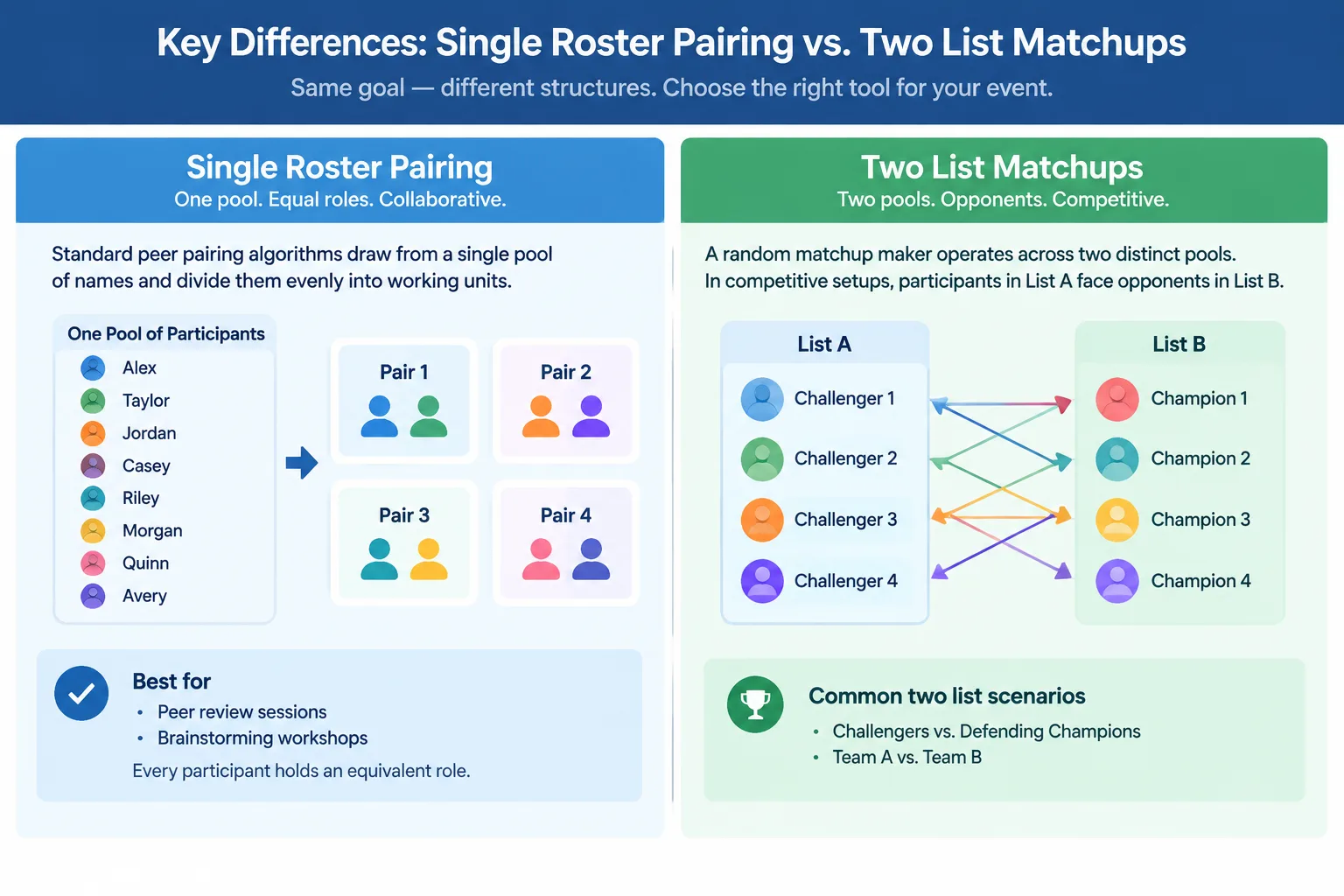
Standard peer pairing algorithms draw from a single pool of names and divide them evenly into working units. If you are conducting peer-review sessions or brainstorming workshops, using our Random Pair Generator is ideal because every participant holds an equivalent role.
In contrast, a random matchup maker operates across two distinct pools. In competitive setups, participants in List A face opponents in List B. Common two-list scenarios include:
- Challengers vs. Defending Champions: Pairing incoming tournament seeds against veteran players.
- Affirmative vs. Negative: Assigning structured debate stances to opposing teams without cross-contamination.
- Mentors vs. Apprentices: Generating cross-departmental sparring or review pairs across hierarchical boundaries.
- Home vs. Away: Creating fair sports schedules where designated home teams face distinct visiting rosters.
If your goal is to break down a single classroom into cooperative pods rather than competitive fixtures, the standard Random Group Generator provides the balanced grouping parameters you need.
How to Create Matchups Step-by-Step
Setting up head-to-head pairings with a two-list randomizer is straightforward. Follow these steps to ensure your competitive draw proceeds smoothly:
Step 1: Prepare Your Participant Rosters
Clean your input data before running the shuffle. Ensure that duplicate entries are removed and spelling is uniform. Divide your participants into two balanced lists representing the respective sides of the contest (such as "Team Red Candidates" and "Team Blue Candidates").
Step 2: Configure Your Pairing Constraints
Decide how uneven rosters should be handled. If List A contains ten competitors but List B contains only eight, choose whether the remaining two candidates receive a first-round bye or face double-duty exhibition rounds.
Step 3: Run the Randomizer Algorithm
Paste your rosters into the generator interface. Execute the draw publicly or share screen during virtual events. Running the generation live enhances buy-in, as participants see the random permutation execute in real time.
Step 4: Export and Publish the Fixtures
Export the pairings directly into your event spreadsheet, Discord server, or printed schedule. Clearly display match stations, assigned rooms, or starting times next to each generated versus pair.
--- Example Output: Classroom Debate Round 1 ---
Match 1: Marcus Vance (Affirmative) vs. Sarah Lin (Negative)
Match 2: David O'Connor (Affirmative) vs. Elena Rostova (Negative)
Match 3: Chloe Bennett (Affirmative) vs. Tariq Mansoor (Negative)
Match 4: Liam Campbell (Affirmative) vs. Aisha Patel (Negative)
Practical Use Cases for Two-List Random Matchup Creators
A dependable random match up generator serves diverse environments beyond traditional video game tournaments. Here are three practical scenarios where dual-list matchmaking delivers immediate value:
1. Corporate Sales Pitch Roleplays
Training sales professionals requires realistic objection handling. Place account executives in Pool A and sales managers playing skeptical buyers in Pool B. Generating random pairs prevents colleagues from practicing with their everyday office desk mates, exposing trainees to unpredictable conversational styles.
2. Intramural Sports and Pub Trivia Showdowns
When running community sports leagues or trivia trivia nights, facilitators often need to schedule inter-division play. Pitting the "East Conference" roster against the "West Conference" roster via a randomizer ensures every squad receives varied competition without manual match fixing.
3. Language Exchange and Conversation Practice
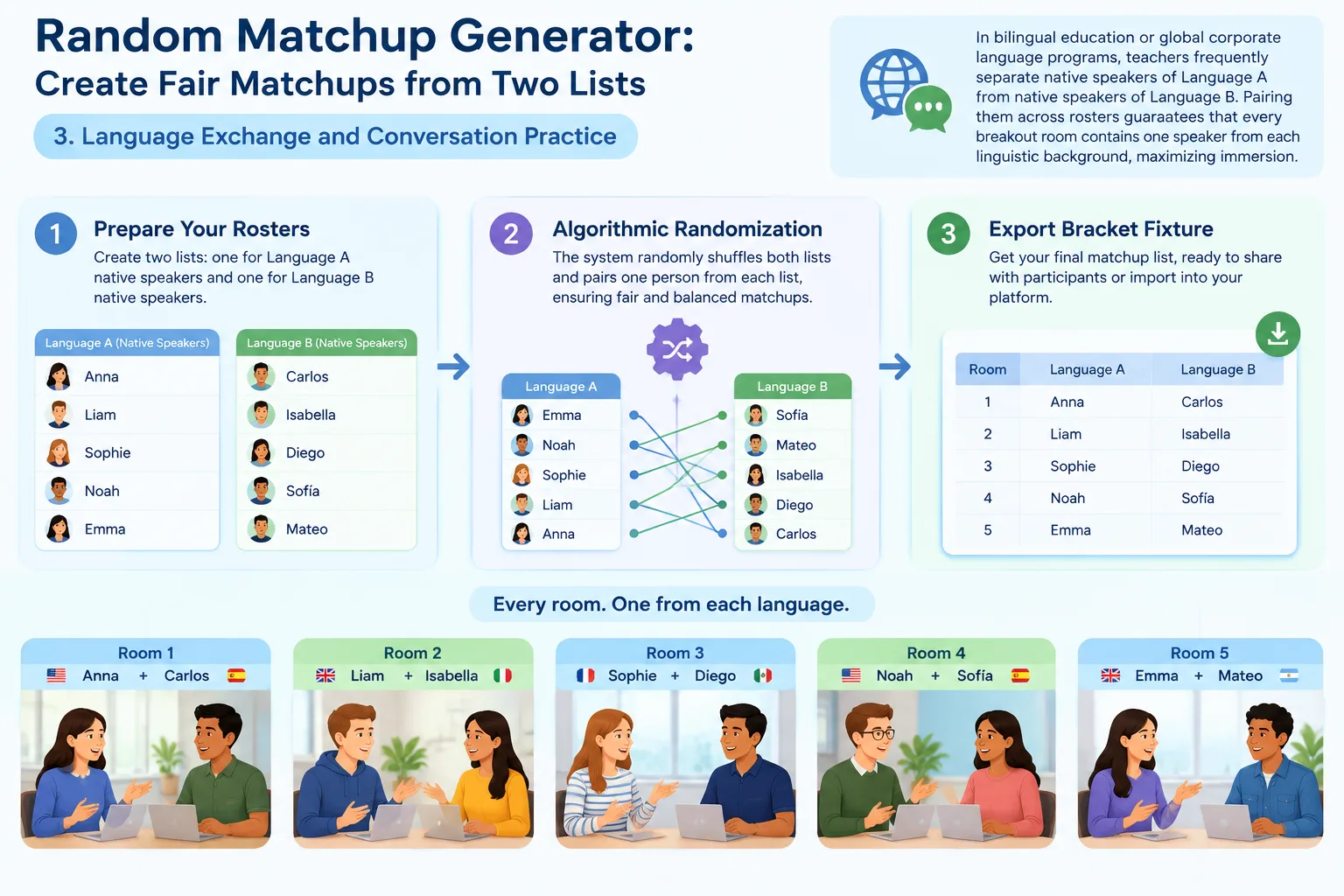
In bilingual education or global corporate language programs, teachers frequently separate native speakers of Language A from native speakers of Language B. Pairing them across rosters guarantees that every breakout room contains one speaker from each linguistic background, maximizing immersion.
Overcoming Common Matchup Pitfalls
Even with automated tools, competitive scheduling presents logistical snags. Facilitators must plan for uneven numbers, skill disparities, and sudden dropouts.
- Unequal Pool Sizes: When List A and List B have different counts, establish a clear bye policy before running the generator. Assigning byes randomly prevents complaints about unfair advantages.
- Skill Disparities: If your tournament features beginners and advanced participants, consider creating tiered pools (e.g., Novice List A vs. Novice List B, Open List A vs. Open List B) before running the draw. Running tiered randomizations prevents blowout games while retaining organic fairness.
- Last-Minute No-Shows: When a competitor drops out, substitute a designated alternate directly into the missing slot rather than re-running the entire generator, which would disrupt matchups for every other player.
If your event evolves into an elimination format, transferring your final match outcomes into our Tournament Bracket Generator allows you to track advancement seamlessly.
Frequently Asked Questions
What is a random matchup generator?
A random matchup generator is a digital utility designed to pair items or names from two distinct lists into objective head-to-head fixtures. It eliminates human bias in tournament seeding, classroom debates, sports schedules, and competitive games.
How does a random matchup generator differ from a team generator?
A team generator pools individuals together into cooperative units of various sizes to work collaboratively toward a single outcome. A matchup generator specifically creates opposing fixtures, setting two entities against each other in a versus structure.
What happens if my two lists have an unequal number of players?
When your rosters do not match in length, the excess players in the larger pool are typically granted an automatic bye round or scheduled for exhibition matches. It is best practice to agree on bye rules before generating the final fixtures.
Can I prevent specific opponents from playing each other?
Advanced grouping tools allow you to apply exclusion constraints to prevent immediate rematches or club teammates from playing each other in opening rounds. When using standard tools, sorting participants into distinct sub-pools prior to the draw achieves the same result.
Can I generate visual brackets from my matchups?
Yes. Once your primary round matchups are established, you can import those initial pairings into structured bracket layouts to track single-elimination, double-elimination, or round-robin tournaments across subsequent stages.
Start Building Fair Matchups Today
Eliminate administrative overhead and ensure complete competitive integrity across your upcoming events. Whether you are staging an esports tournament, scheduling inter-squad scrimmages, or organizing educational debates, visit our homepage at the Random Group Generator to explore our complete suite of free classroom and event pairing tools.
Related Tools
Pick the right generator for the job — every tool runs free in your browser.