
random match generator
Random Match Generator: Create Fair Random Matchups
Learn how a random match generator creates fair pairings for classrooms, teams, workshops, and events. Explore practical steps, examples, and tips for better matchups.
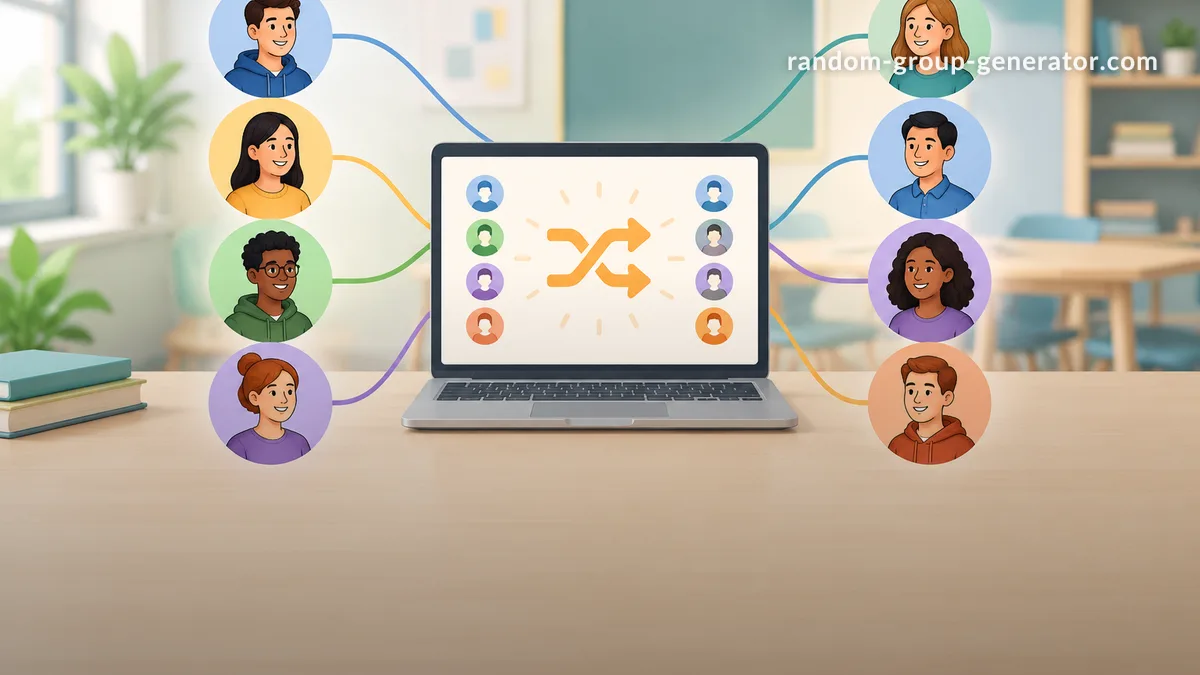
When a teacher, trainer, or event organizer needs to quickly pair people together, choosing names manually can take time and may create concerns about fairness. A random match generator creates random matchups by selecting participants and organizing them into pairs or small groups using a consistent process. It is useful for classroom activities, team-building sessions, workshops, networking events, and collaborative exercises where everyone needs an equal chance to be matched.
A reliable random matching process helps reduce repeated pairings, avoids personal bias, and makes group activities easier to manage. Instead of writing names on cards or asking people to find partners, facilitators can use a digital random matcher to create results in seconds.
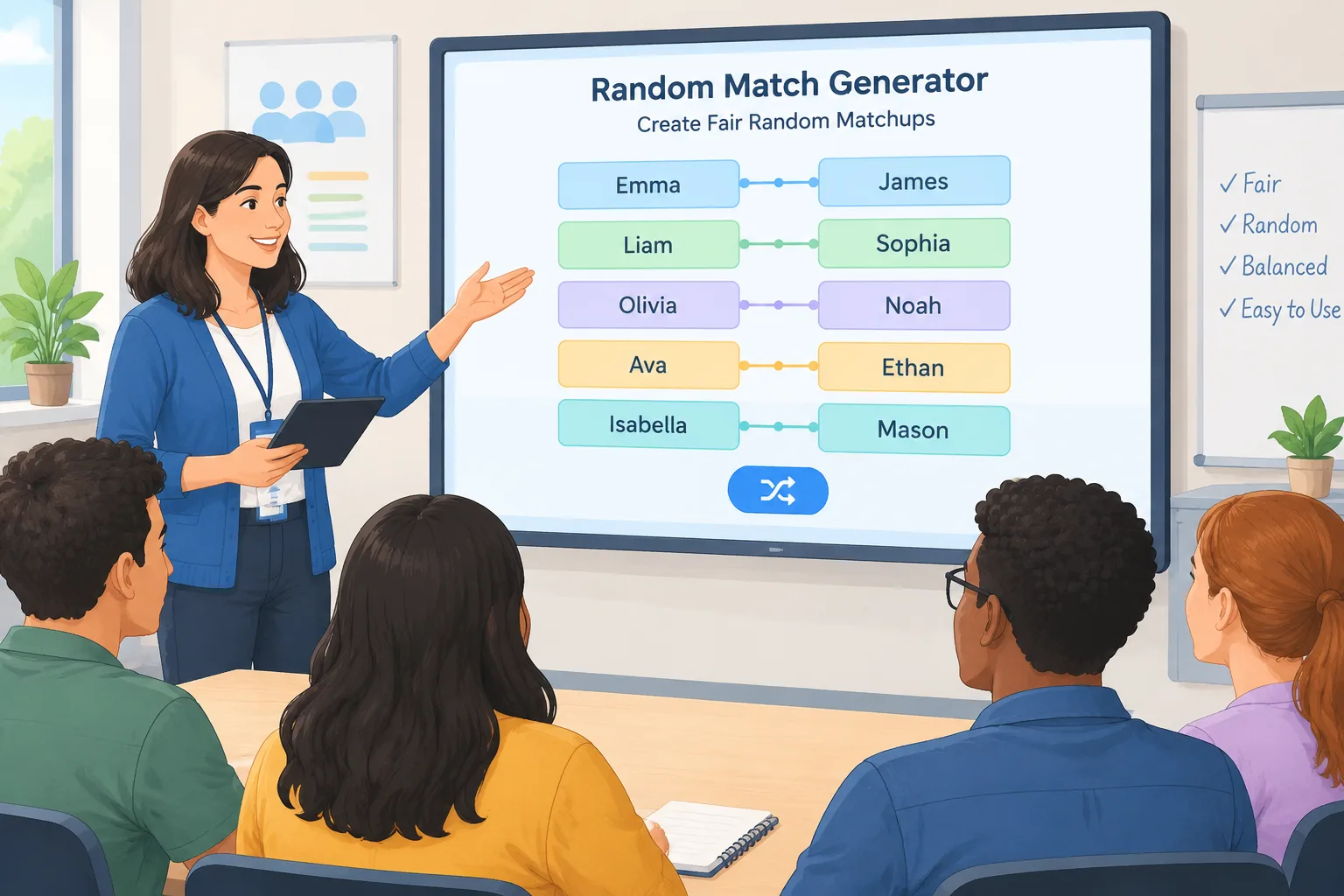
Why use a random match generator for pairings?
Creating random matches sounds simple, but manual methods often create problems. A teacher may accidentally pair the same students together repeatedly, a workshop leader may overlook quieter participants, or an event organizer may spend unnecessary time rearranging names. A random matchup generator provides a repeatable method for making selections.
The main benefit is fairness. When names are entered into a tool and matched randomly, every participant follows the same selection rules. This is especially helpful in classrooms where students need new partners for discussions, peer reviews, or collaborative projects. It is also useful in workplaces where teams rotate frequently during training activities.
For example, a high school teacher preparing a debate activity may have 28 students who need partners. Instead of manually deciding who works together, the teacher can enter all names, generate 14 random pairs, and start the activity immediately. The same approach works for a corporate trainer creating discussion partners during a virtual workshop.
A random match generator is also helpful when the goal is variety. Rotating partners can expose people to different ideas, communication styles, and problem-solving approaches.
How a random matching generator works
Most random matching tools follow a straightforward process. While the exact features may differ, the basic workflow usually includes adding participants, choosing the desired match format, and generating results.
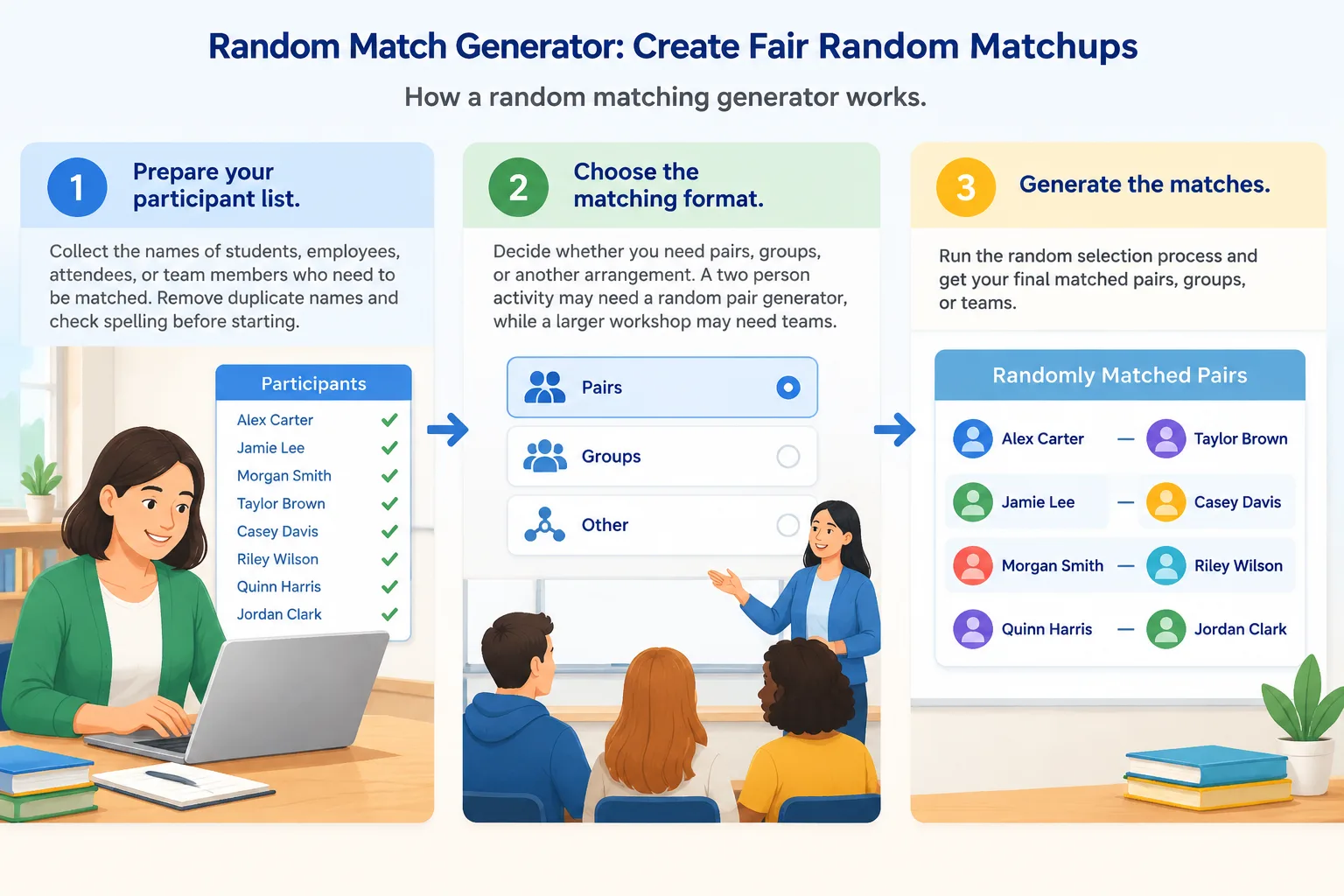
Follow these steps to create random matchups:
- Prepare your participant list. Collect the names of students, employees, attendees, or team members who need to be matched. Remove duplicate names and check spelling before starting.
- Choose the matching format. Decide whether you need pairs, groups, or another arrangement. A two-person activity may need a random pair generator, while a larger workshop may need teams.
- Generate the matches. Run the random selection process and review the results. A good tool should create clear pairings that are easy to share.
- Adjust for practical needs. Consider situations such as an absent participant, an odd number of people, or accessibility requirements. Random tools support the process, but facilitators still use professional judgment.
- Share the results. Display the matches on screen, copy them into a message, or share them through your normal classroom or workplace workflow.
For example, a university instructor running a weekly discussion activity could create new pairs every Monday. Students get different partners throughout the semester, while the instructor avoids spending class time organizing groups.
Random match generator examples for classrooms and teams
Different environments use random matching in different ways. Understanding the purpose of the activity helps facilitators decide how to use a random matcher effectively.
In K-12 classrooms, teachers often use random matches for think-pair-share activities, language practice, science discussions, and peer feedback. A language teacher might create random conversation partners so students practice speaking with classmates they do not normally work with.
In higher education, instructors can use random matching for project check-ins, study discussions, and review sessions. A random match up generator can help large classes organize short activities without creating extra administrative work.
In business settings, trainers and HR teams use random matching for networking sessions, mentoring rotations, and team-building exercises. For remote teams, random pairings can encourage communication between coworkers who rarely interact.
For example, a company hosting a virtual onboarding session may create random pairs for a five-minute introduction exercise. Participants can join a short conversation, learn about another colleague, and then return to the main session.
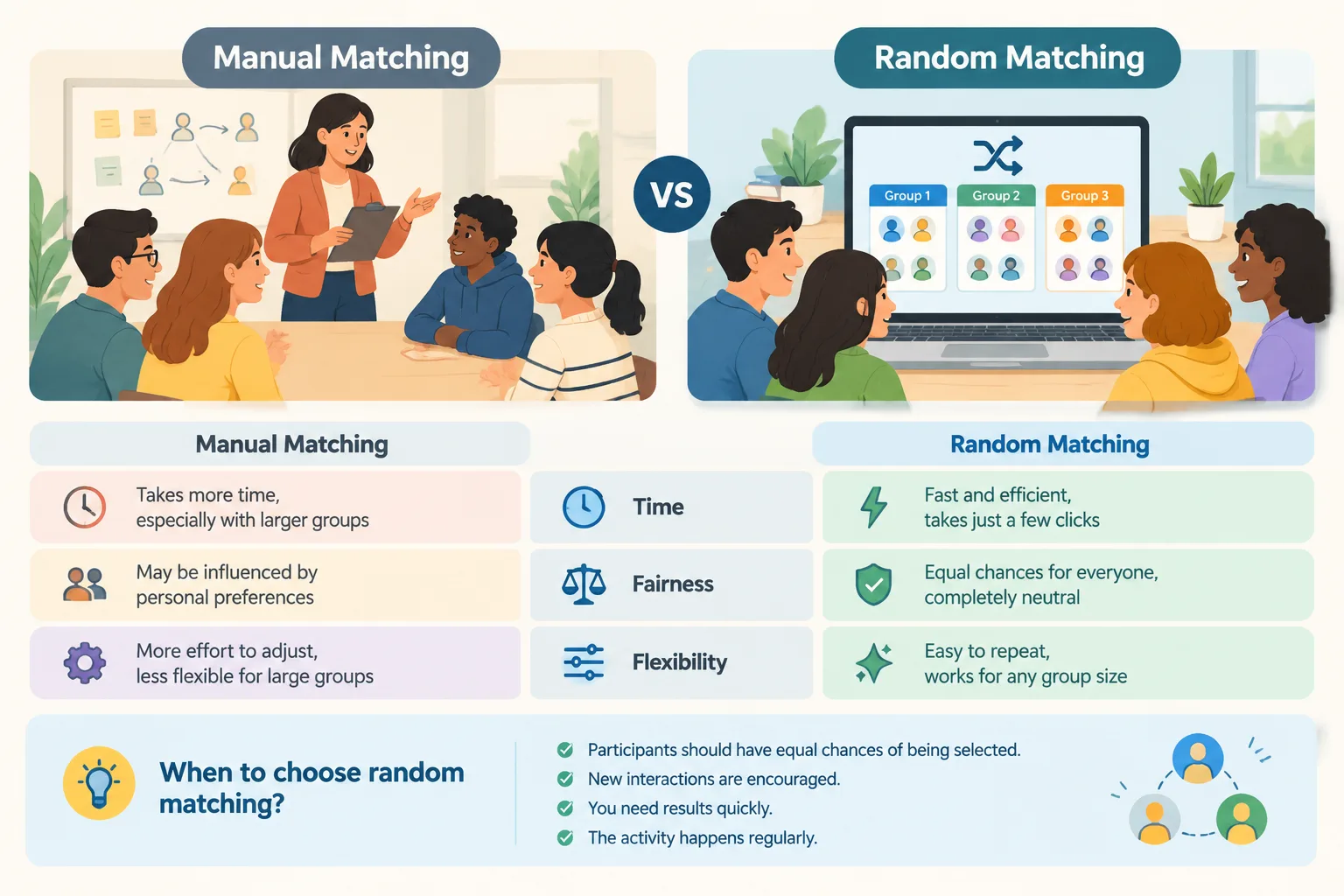
Random match generator vs. manual matching
Manual matching can work for small groups, but it becomes harder as the number of participants increases. A facilitator who knows everyone well may intentionally create strong combinations, but this approach takes time and may introduce personal preferences.
A random match maker is designed for situations where speed and neutrality matter. It does not replace the expertise of a teacher or facilitator. Instead, it handles the repetitive selection step so the organizer can focus on the activity itself.
Random matching is a good choice when:
- Participants should have equal chances of being selected.
- New interactions are encouraged.
- The organizer needs results quickly.
- The activity happens regularly and requires fresh combinations.
Manual selection may be better when there are specific learning goals, skill requirements, accessibility needs, or carefully planned team roles. For example, a science project team may require certain skills to be distributed evenly. In that case, a facilitator may use random matching as a starting point and make thoughtful adjustments afterward.
How to create better random pairings
A randomizer match process is most effective when combined with good planning. Random does not automatically mean every activity will succeed. The quality of the experience depends on clear instructions, appropriate group sizes, and thoughtful follow-up.
Before creating matches, consider these questions:
- What is the purpose of the activity?
- How long will participants work together?
- Should pairs change frequently or remain together?
- Are there any participation requirements to consider?
For example, a workshop facilitator running a problem-solving exercise may want pairs for a short discussion first, then larger groups for a final activity. The facilitator can create random pairs and later combine them into teams.
For simple pair activities, you can also use the Random Group Generator to organize participants into balanced groups when the activity requires more than two people. If the goal is specifically creating pairs, the Random Pair Generator provides a focused way to create partner selections.
Using random matchups in online and hybrid environments
Remote learning and distributed teams make quick matching even more valuable. When participants are not in the same room, organizers cannot rely on physical methods such as drawing cards or moving seats.
A digital random matcher can support online workflows by producing clear results before a session begins. Teachers can post pairs in a learning platform, and trainers can share matches before a video meeting starts.
For example, during a remote professional development session, a facilitator can generate random pairs for breakout room discussions. Participants receive a partner, complete the activity, and then return to the main meeting with new perspectives.
When using online matching tools, remember to protect participant information. Only include the names or details needed for the activity, and avoid sharing unnecessary personal data.
Frequently asked questions about random match generators
What is a random match generator?
A random match generator is a tool that creates random pairings or matchups from a list of participants. It helps teachers, trainers, and organizers quickly assign partners without manually selecting each match.
Is a random match generator fair?
A random match generator can provide a fair selection process because each participant is included using the same random approach. However, facilitators should still review results when activities have special requirements.
Can I use a random match generator for two random people?
Yes. A random match generator can select two random people from a participant list and create a pair. This is useful for classroom partners, networking activities, and short discussions.
What is the difference between a random match generator and a buddy generator?
A buddy generator usually focuses on creating partner relationships, while a random match generator can be used for a wider range of activities, including classroom exercises, workshops, and team rotations.
Can random matching work for large groups?
Yes. Digital random matching is especially useful for larger groups because it reduces the time needed to organize participants. For very large events, organizers should still consider activity goals and communication needs before assigning matches.
Create your random matchups today
Whether you are organizing a lesson, workshop, or team activity, a random match generator can make partner selection faster and more consistent. Use a simple random process to create new connections while keeping your focus on the activity itself.
Try the Random Pair Generator to create fair partner matches, or explore the Random Group Generator for larger team activities.
Related Tools
Pick the right generator for the job — every tool runs free in your browser.