
NBA random team generator
NBA Random Team Generator: Fair Practice and Fantasy Drafts
Learn how an NBA random team generator can create balanced practice teams, fantasy draft groups, and fair basketball matchups with simple steps.
Choosing basketball teams can become a time-consuming task when coaches, teachers, or organizers want a quick and fair result. An NBA random team generator helps users create random basketball team assignments for practice sessions, fantasy drafts, classroom activities, and friendly competitions without manually sorting names or making repeated changes.
A random team generator is useful when the goal is to remove selection bias and save time. Instead of asking one person to divide players or participants, the tool creates groups using a consistent process. This article explains how NBA-style random team creation works, how to use it effectively, and where it fits into real basketball and group activities.
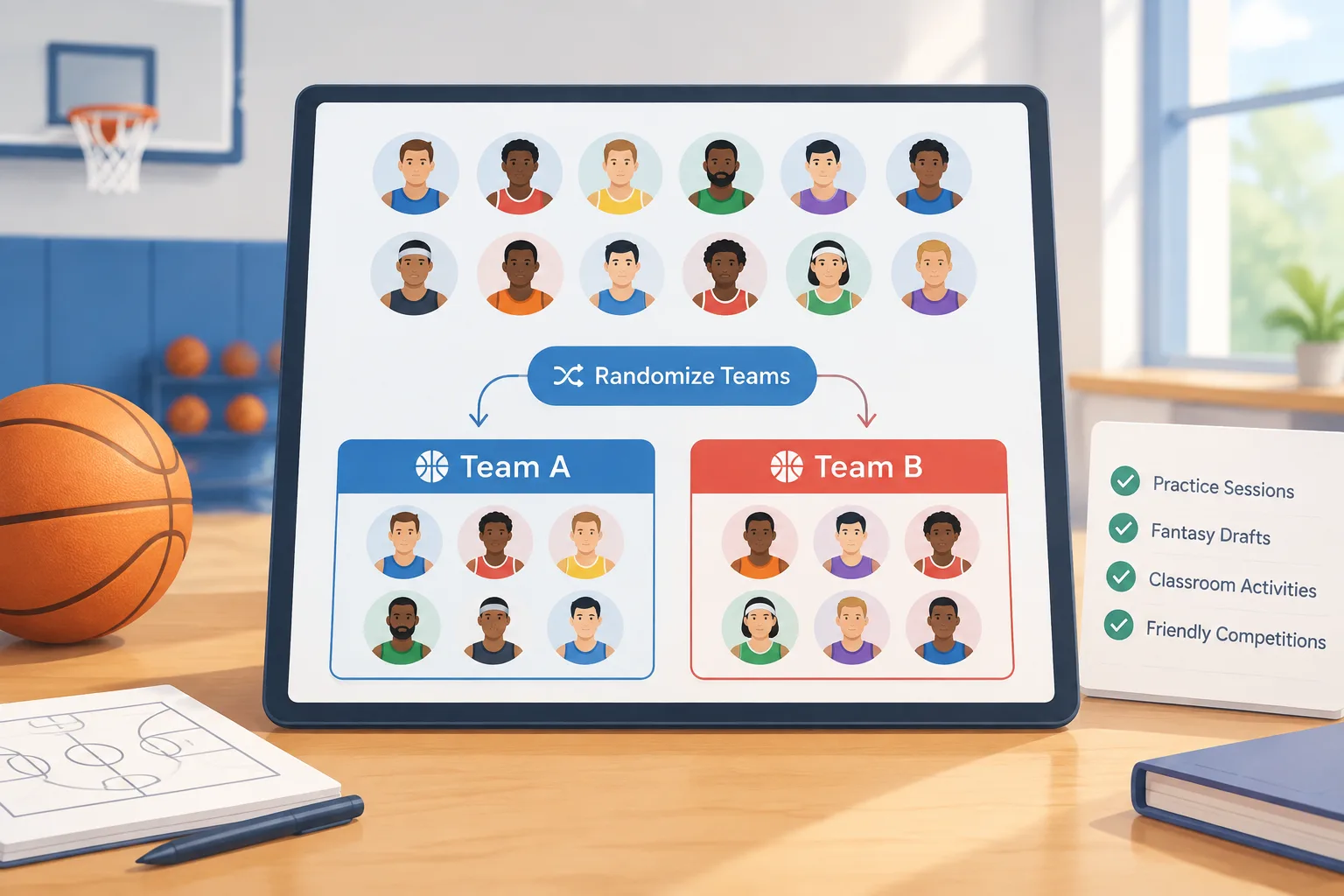
Why use an NBA random team generator?
Creating teams manually often creates the same problems. A coach may accidentally place stronger players together, friends may always choose each other, or participants may feel that the selection process is unfair. Random assignment provides a simple way to start with a neutral process.
For basketball practice, random teams can encourage players to communicate with different teammates and adapt to new roles. For fantasy drafts or casual leagues, random selection can add variety and make the process faster. The generator does not replace coaching decisions about safety, skill development, or competition rules, but it can handle the basic organization step.
A basketball instructor running a weekly training session is one example. Instead of spending ten minutes choosing teams, the instructor can enter player names, generate groups, and then adjust assignments if specific skill or safety needs require it. The random result becomes the starting point rather than a stressful decision.
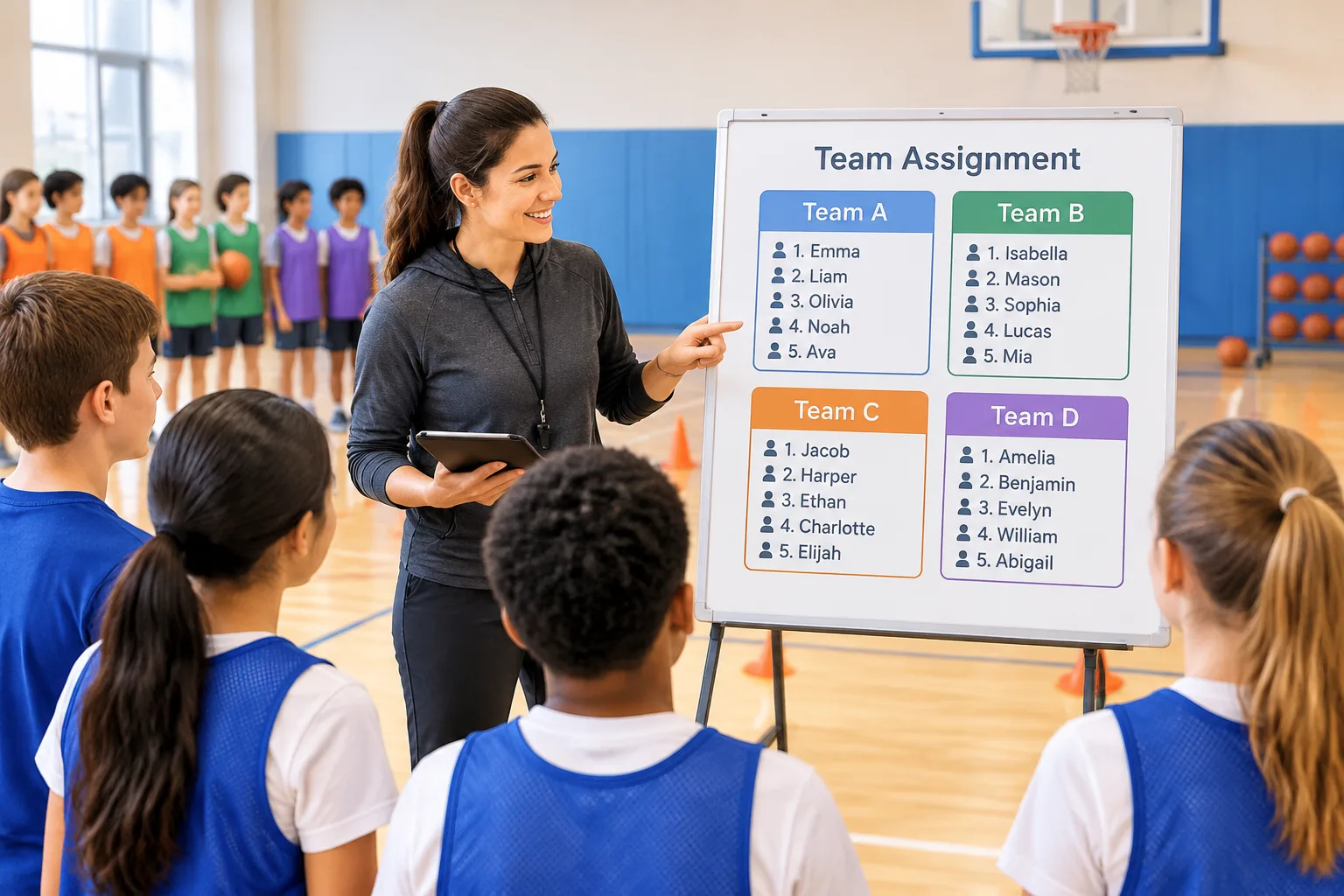
Another example is a school physical education class. A teacher may need several groups for a basketball activity. Using a random assignment method helps students focus on the activity instead of debating who should be on each team.
How an NBA random team generator works
Most random team generators follow a simple process: collect participant names, shuffle the list, and divide the names into groups. The exact features vary between tools, but the basic idea is to make the selection process consistent and easy to repeat.
A typical workflow looks like this:
- Prepare a list of players or participants.
- Decide how many teams you need.
- Enter the names into the generator.
- Run the random selection.
- Review the results and make any necessary adjustments.
- Share the final teams with participants.
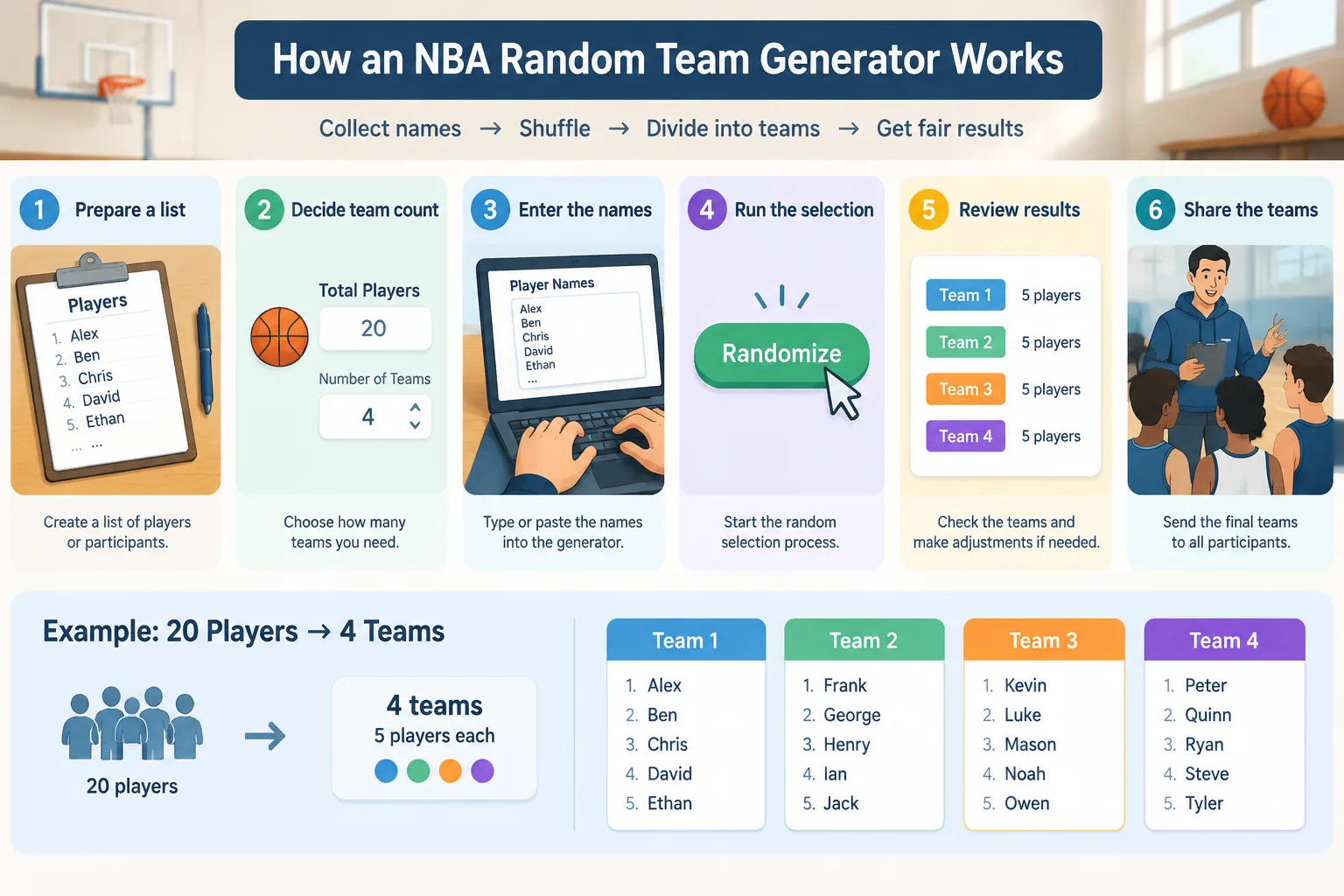
For example, a youth basketball coach has 20 players attending practice. The coach wants four practice teams of five players each. After entering all names, the generator creates four groups. The coach can then review whether each team meets practice goals, such as giving newer players enough support or avoiding unsafe skill differences.
Random selection is especially helpful before activities where speed matters. A tournament organizer preparing short exhibition games, for instance, can generate groups quickly and spend more time explaining rules and managing the event.
Using random teams for NBA fantasy drafts and basketball games
An NBA random team generator can also support fantasy-style activities. Some groups enjoy creating imaginary teams, assigning NBA players randomly, or dividing participants into competing groups for a basketball challenge. Randomization adds surprise and reduces arguments about who gets the first choice.
For a fantasy draft activity, organizers can create a clear process:
- List the available players, participants, or teams.
- Decide whether the goal is random order, random groups, or random assignments.
- Generate the results.
- Record the outcome before making any optional changes.
- Explain the rules to everyone involved.
For example, a basketball fan club may organize a fantasy challenge where members receive random NBA teams and compare season results. The generator creates assignments quickly, allowing the group to focus on discussion rather than manual sorting.
However, random does not always mean perfectly balanced competition. If a league requires equal skill levels, organizers may need additional information such as player experience, age, or position. Random assignment works best when fairness means giving everyone the same selection opportunity, not guaranteeing identical outcomes.
How to create better basketball groups with a random generator
A random tool is most effective when combined with thoughtful planning. Coaches and facilitators should first decide what kind of fairness they need. A practice session may benefit from mixed abilities, while a casual game may only need fast and simple team creation.
Here are practical steps for better results:
1. Define the purpose of the teams
Before generating teams, decide whether the goal is practice variety, competition, learning, or entertainment. The purpose determines whether you should accept the first random result or make small adjustments afterward.
A coach teaching passing skills may want different players working together each session. A competitive playoff event may require a separate ranking system instead of pure randomness.
2. Prepare accurate participant information
The quality of the input affects the usefulness of the output. Remove duplicate names, confirm attendance, and include all eligible participants before generating teams.
For example, an after-school basketball club with 18 registered players should update the list when two players are absent. Generating teams from an outdated list can create confusion.
3. Use the result as a starting point
Random team creation is a support tool, not a replacement for human judgment. Coaches should still consider injuries, age differences, and activity goals.
A useful approach is to generate teams first, then make only necessary changes. This keeps the process transparent while allowing responsible decisions.
Random team generator alternatives and when to use them
Different activities require different selection methods. A random team generator is one option among several approaches.
Manual selection works well when a coach knows every player's ability and needs precise control. The downside is that it can take longer and may appear less neutral to participants.
A draft system allows participants to choose players in turns. This can be engaging for competitive events, but it may create unequal teams or leave some participants feeling overlooked.
A random generator is useful when speed and equal opportunity are the main goals. It is especially practical for warm-up games, classroom sports activities, workshops, and casual fantasy challenges.
For broader group activities beyond basketball, the same idea can be applied with tools such as the Random Group Generator or the Random Pair Generator. These tools help facilitators create groups quickly for lessons, meetings, and collaborative activities.
Practical examples of NBA random team generator use
Real situations often need simple solutions. Here are several ways an NBA random team generator approach can help.
Basketball practice rotation
A coach has 24 players and wants six teams for short games. Instead of assigning teams manually every week, the coach generates new groups before each session. Players experience different teammates and practice communication skills.
Fantasy basketball activity
A community group runs a weekend NBA prediction contest. Members receive random teams through a generator, creating a simple and transparent assignment process.
School sports lesson
A physical education teacher needs groups for a basketball skills circuit. Students are divided randomly, allowing the teacher to begin activities quickly and spend more time teaching.
Common mistakes when creating random basketball teams
Random tools are easy to use, but a few mistakes can reduce their usefulness. One common problem is using random selection when the activity requires carefully balanced competition. If teams are part of an official tournament, organizers may need a ranking or seeding method instead.
Another mistake is not explaining the process. Participants are more likely to accept results when they understand that everyone followed the same rules. A short explanation such as "teams were randomly generated first, then checked for safety" can prevent confusion.
It is also important to avoid using random assignments as the only way to manage long-term team development. Coaches should still track progress, provide feedback, and create opportunities for players to improve.
FAQ about NBA random team generators
What is an NBA random team generator?
An NBA random team generator is a tool that randomly assigns players, names, or teams into groups. It can be used for basketball activities, fantasy drafts, practice sessions, and other situations where a quick selection process is needed.
Can a random team generator create perfectly balanced NBA teams?
A random generator creates fair selection conditions, but it does not automatically measure player ability or guarantee equal skill levels. For competitive games, organizers may need additional information and manual adjustments.
How many teams can I create with a random team generator?
The number of teams depends on the tool being used and the number of participants. Most group generators allow users to choose how many groups they need and divide a list accordingly.
Is random team selection fair for basketball practice?
Random selection is often considered fair because everyone follows the same process. However, coaches should still consider safety, age, experience, and learning goals when organizing activities.
Can I use random tools for other group activities?
Yes. Random selection methods are useful beyond basketball. Teachers and facilitators can also use tools like the Random Student Picker or Group Name Generator for classroom and event activities.
Create teams quickly with a random generator
Whether you are organizing basketball practice, a fantasy activity, or a group event, an NBA random team generator can simplify the first step of team creation. Start with a fair random assignment, then apply your knowledge of the activity to create the best experience for everyone.
Try the Random Group Generator to create teams and groups in seconds.