
mercenary guild names
Mercenary Guild Name Ideas: How to Create Memorable Names for Groups and Teams
Learn how to create strong mercenary guild name ideas with practical naming methods, examples, and tips for fantasy groups, games, and creative teams.
Creating mercenary guild name ideas can be challenging when you need a name that feels powerful, unique, and suitable for a fantasy group. Whether you are naming a gaming guild, a fictional organization, a role-playing group, or a creative project, the right name helps define the group's personality before anyone learns the story behind it.
A strong mercenary guild name usually communicates a sense of purpose, reputation, and character. This guide explains how to build names step by step, where common naming patterns come from, and how to use practical tools such as a Group Name Generator to explore new possibilities.
Why a Mercenary Guild Name Matters
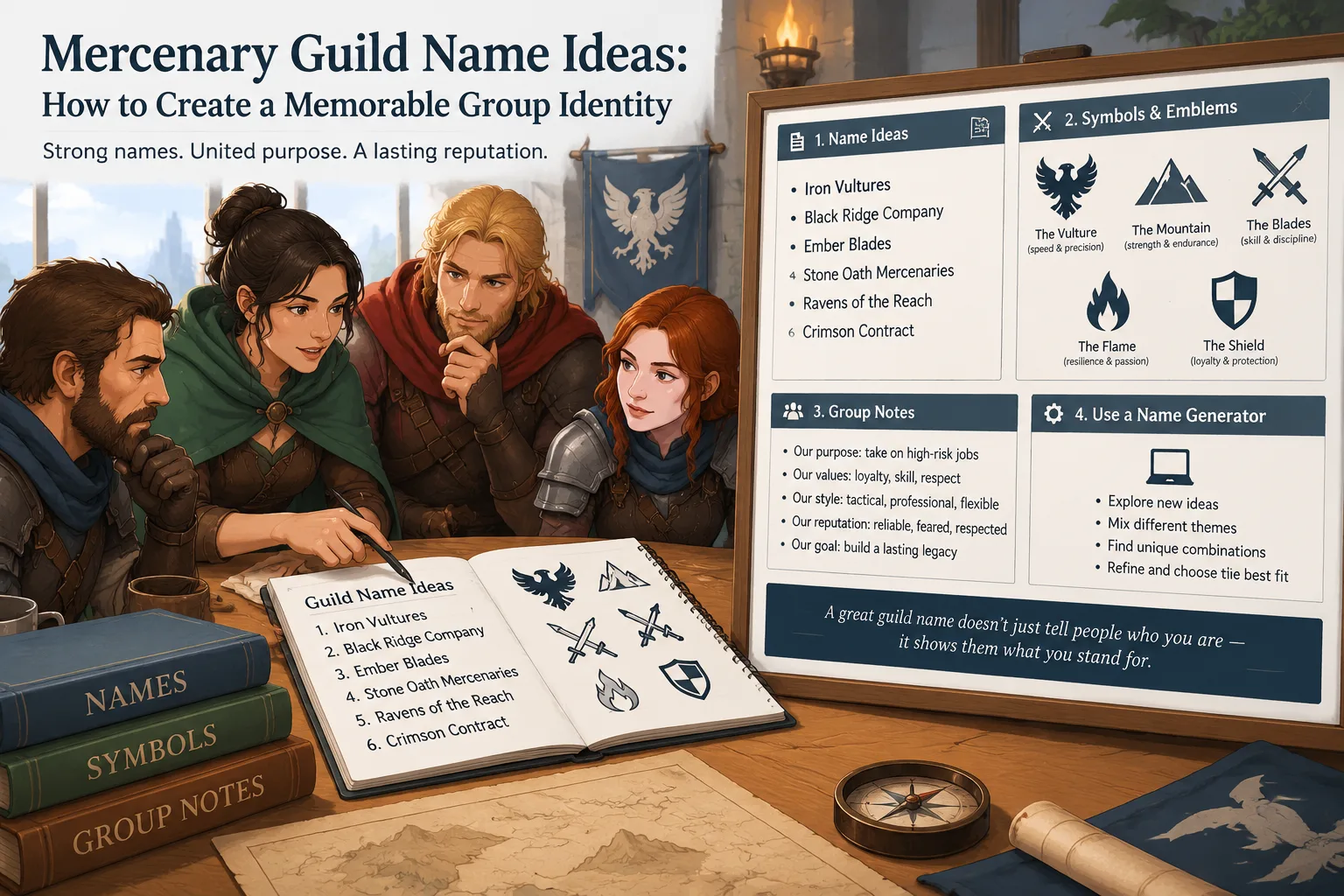
A guild name is more than a label. It gives a group an identity that members can recognize and remember. In fantasy settings, mercenary organizations often represent a mixture of skill, loyalty, reputation, and mystery. A name can suggest whether a guild is honorable protectors, dangerous warriors, clever strategists, or independent adventurers.
For example, compare names like “The Silver Vanguard” and “The Ashen Contract.” Both sound like mercenary groups, but they create different expectations. The first suggests discipline and protection, while the second suggests secrecy and difficult missions. The words chosen in a name influence how people imagine the group.
When creating names for games or stories, it helps to think about the role your guild plays. Consider these questions:
- What does the guild value most: honor, wealth, survival, knowledge, or freedom?
- What type of missions does the guild accept?
- Does the group have a public reputation or operate in secret?
- What symbols, locations, creatures, or historical themes are connected to it?
A teacher running a creative writing activity might use the same approach. Students can create fictional organizations by first defining a group's values and then choosing words that match those ideas.
How to Create Mercenary Guild Name Ideas Step by Step
The easiest way to create a memorable name is to build it from smaller parts. Instead of trying to invent a perfect name immediately, combine different concepts and test how they sound together.
Step 1: Choose the guild's identity
Start with the main impression you want the name to create. Common themes include:
- Strength and combat: Iron, Blade, Shield, Fortress, Legion
- Mystery and strategy: Shadow, Raven, Veil, Whisper, Cipher
- Wealth and contracts: Coin, Crown, Fortune, Charter, Oath
- Nature and exploration: Storm, Wolf, Ember, Thorn, Horizon
For example, a guild focused on protecting travelers might begin with ideas such as “Shield,” “Road,” and “Oath.” This could lead to names like “The Roadbound Oath” or “The Shielded Horizon.”
Step 2: Combine words with different roles
Many memorable guild names use a two-part structure. One word creates imagery, while the other explains the group's identity.
Examples:
- The Crimson Blades
- The Forgotten Contract
- The Northern Sentinels
- The Ember Company
- The Golden Oath
A useful formula is:
[Theme word] + [Guild word]
Theme words create emotion. Guild words explain the organization. Possible guild words include Company, Order, Legion, Circle, Brotherhood, Alliance, or Vanguard.
Step 3: Check the name's sound and meaning
A good name should be easy to say and remember. Read it aloud and consider whether it fits the world where the guild exists. A humorous campaign might need a playful name, while a serious fantasy novel may require something more dramatic.
For example, “The Thunder Chickens” might work for a comedy adventure group but not for an ancient warrior organization. The best choice depends on the purpose of the group.
Different Styles of Mercenary Guild Names
Mercenary guild names can follow different styles depending on the setting. Understanding these styles makes it easier to create names that match your project.
Traditional warrior names
Traditional names focus on strength, courage, and reputation. They often use weapons, animals, metals, or military terms.
Examples:
- The Iron Wolves
- The Bronze Legion
- The Storm Guard
- The Black Shields
These names work well for groups that are respected fighters or professional soldiers.
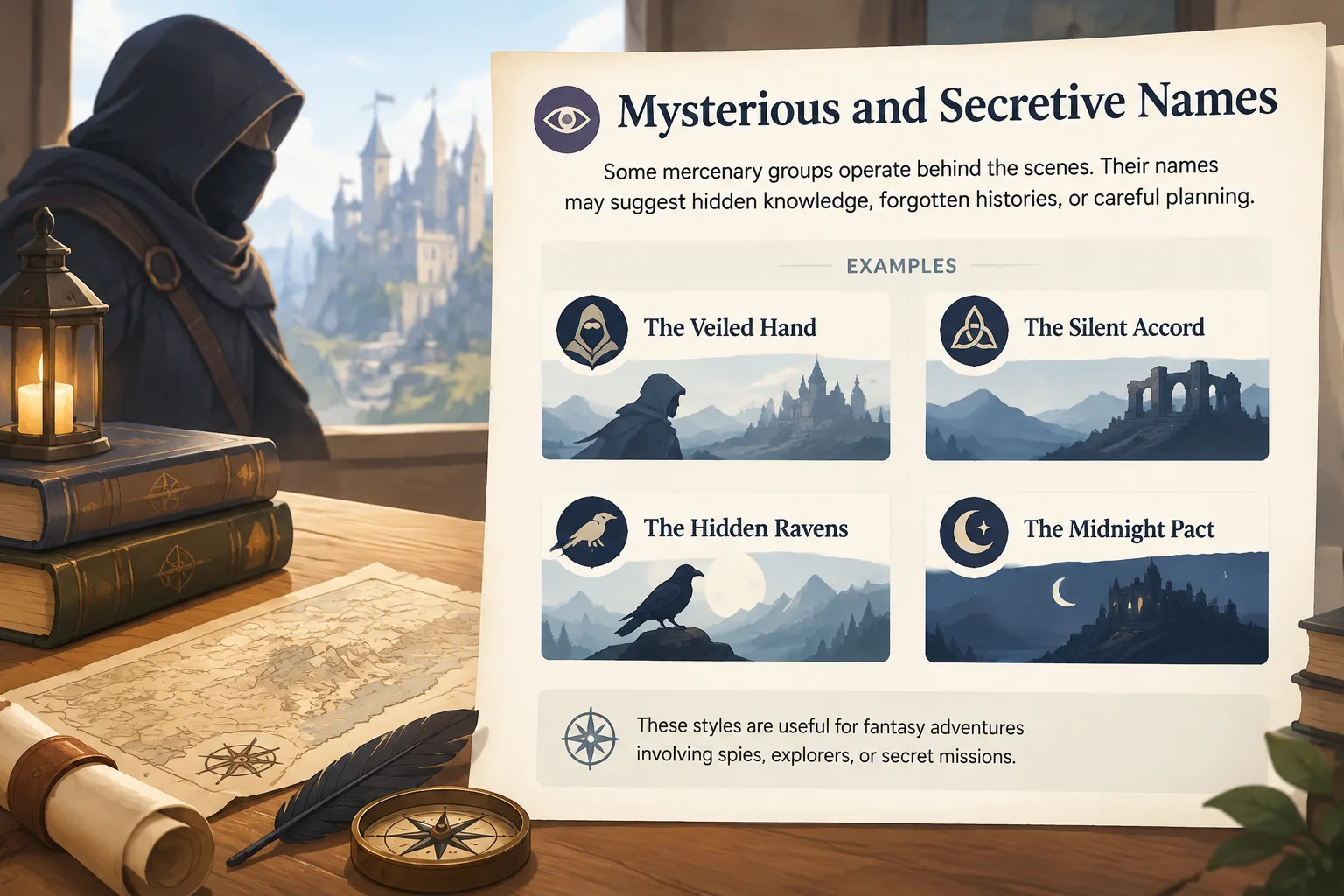
Mysterious and secretive names
Some mercenary groups operate behind the scenes. Their names may suggest hidden knowledge, forgotten histories, or careful planning.
Examples:
- The Veiled Hand
- The Silent Accord
- The Hidden Ravens
- The Midnight Pact
These styles are useful for fantasy adventures involving spies, explorers, or secret missions.
Adventurous and flexible names
Not every mercenary guild needs to sound intimidating. Some groups are explorers, problem solvers, or hired specialists.
Examples:
- The Wandering Company
- The Open Road Guild
- The Frontier Circle
- The Brave Compass
These names can fit role-playing groups, online communities, or collaborative creative projects.
Using Name Generators to Explore More Options
When you need many ideas quickly, a name generator can help overcome creative blocks. A generator is especially useful for teachers, game masters, event organizers, and teams that need several options before choosing a final name.
A practical workflow is:
- Decide the theme or feeling you want.
- Generate multiple options.
- Remove names that do not fit the group's purpose.
- Adjust words until the final name feels original.
- Ask members to vote or discuss the strongest choices.
For example, a classroom fantasy writing project could split students into groups, ask each group to create a fictional mercenary organization, and use generated names as starting points. Students can then explain why their chosen name matches their group's values.
A generator should support creativity, not replace decision-making. The final choice still requires human judgment because context, audience, and meaning matter.
For group activities where participants need balanced teams before starting a naming challenge, a Random Group Generator can help organize participants fairly. For smaller activities, a Random Pair Generator can create discussion partners.
Real Examples of Mercenary Guild Naming Approaches
Different situations require different naming methods. Here are examples based on common uses.
Example 1: Fantasy role-playing campaign
A game master creates a mercenary guild that accepts dangerous missions from kingdoms. The guild values loyalty but works independently. The naming process might be:
- Core value: loyalty
- Symbol: wolf
- Organization type: company
- Final name: The Wolfbound Company
The name immediately suggests teamwork and professionalism.
Example 2: Fiction writing project
A writer creates a secret organization that protects ancient knowledge. The process might be:
- Theme: forgotten history
- Mood: mysterious
- Key image: shadow
- Final name: The Shadow Archive
The name creates curiosity without explaining everything.
Example 3: Team creativity exercise
A workplace workshop asks teams to create fictional identities. Participants define their strengths first, then create names that represent those qualities. This approach helps teams discuss shared goals in a creative way.
Common Mistakes When Creating Guild Names
A common mistake is choosing a name that sounds impressive but does not match the group's identity. A powerful word alone does not create a meaningful name. The best names connect to a story, purpose, or theme.
Another mistake is making names too complicated. Long names with many unusual words can be difficult for people to remember. A shorter name with clear imagery often has a stronger impact.
It is also useful to check whether the name has unwanted meanings in different languages or communities, especially for public projects. A quick review can prevent confusion later.
FAQ: Mercenary Guild Name Ideas
What makes a good mercenary guild name?
A good mercenary guild name is memorable, easy to pronounce, and connected to the group's purpose. Strong names usually combine an interesting image with a word that describes the organization.
How many mercenary guild names should I create before choosing one?
Creating several options is usually helpful. A list of 10 to 20 ideas gives you enough variety to compare styles and choose a name that fits the group's personality.
Can I use a name generator for fantasy guild names?
Yes. A name generator can provide creative starting points. It works best when you review and customize the suggestions instead of using the first result automatically.
Are mercenary guild names only useful for games?
No. These names can also be useful for writing projects, classroom activities, creative workshops, online communities, and team-building exercises.
How can groups choose a final guild name fairly?
Groups can create a shortlist and vote, discuss the meaning behind each option, or use a structured selection process. Fair participation helps everyone feel connected to the final choice.
Create Your Own Mercenary Guild Name Ideas
The right guild name starts with understanding the group's personality and purpose. Whether you are building a fantasy world, organizing a creative activity, or naming a fictional team, a clear process makes the task easier.
Use the Group Name Generator to explore new possibilities, then refine your favorites until you find a name that represents your group's story.
Related Tools
Pick the right generator for the job — every tool runs free in your browser.