
random sports team generator
Random Sports Team Generator: How to Create Fair Teams
Learn how to create fair, balanced sports teams with a random sports team generator. Explore practical steps, coaching tips, examples, and easy ways to divide players.
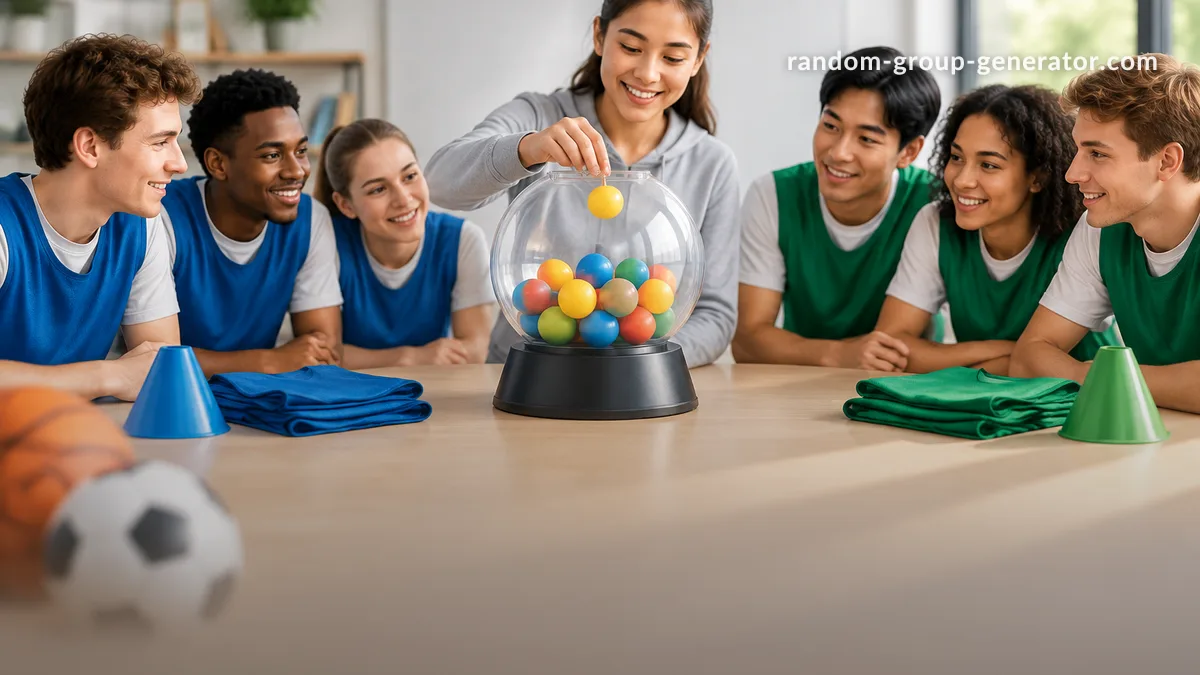
Dividing players into sports teams sounds simple until you have a group with different skill levels, experience, ages, and personalities. Teachers, coaches, and event organizers often spend more time choosing teams than actually playing the game. A random sports team generator offers a practical way to assign players quickly while reducing personal bias and repeated selection arguments. With a few sensible preparation steps, you can create teams that are fair, inclusive, and ready to compete.
Whether you are organizing a school PE lesson, a youth soccer practice, a company sports day, or a friendly basketball tournament, the goal is the same: give everyone a reasonable opportunity to participate and enjoy the activity.
Why Is Fair Sports Team Selection Important?
Team selection affects more than the final score. It can influence how comfortable players feel, how actively they participate, and whether they want to join the next activity. When the same experienced players are always placed together, less experienced participants may feel overlooked. Similarly, when one team consistently dominates, the competition can become frustrating for everyone.
This is particularly important in school sports. A PE teacher may have students with very different athletic backgrounds in the same class. Some children play competitive sports outside school, while others are still learning basic skills. Organizing teams with participation and inclusion in mind helps create a more welcoming environment. The NSPCC's guidance on inclusion in children's sport also emphasizes understanding individual needs and making suitable adjustments so participants can feel valued.
Fairness does not necessarily mean making every team identical. It means using a consistent process, avoiding favoritism, and considering the needs of the people taking part. For a casual warm-up game, completely random assignments may be enough. For a competitive match, a little additional planning may be necessary.
Consider a school basketball lesson with 24 students. If the teacher always lets two confident students choose their teammates, the same students may be selected first while others repeatedly wait. Random assignment changes the process and gives everyone a fresh opportunity to play with different classmates.
What Is a Random Sports Team Generator?
A random sports team generator is an online tool that divides a list of participants into separate teams automatically. Instead of manually assigning every player, you enter their names, choose how many teams you need or how many players should be in each team, and generate the assignments.
The main advantage is convenience. A coach can organize a group of players in seconds rather than repeatedly writing names on paper, drawing slips, or moving players between lists. The same process can be repeated whenever a new activity begins, making it easier to introduce variety into regular sessions.
Random selection also provides a neutral starting point. The organizer does not need to decide who should be teammates, which can reduce disagreements about personal preferences. However, randomness alone does not guarantee equal athletic ability. A randomly created team can still have several highly experienced players together. Understanding this distinction helps coaches use the tool responsibly.
For example, a community soccer coach with 20 participants might need four teams for a small-sided practice. Entering all 20 names and generating four groups creates an initial allocation without requiring the coach to manually distribute every player.
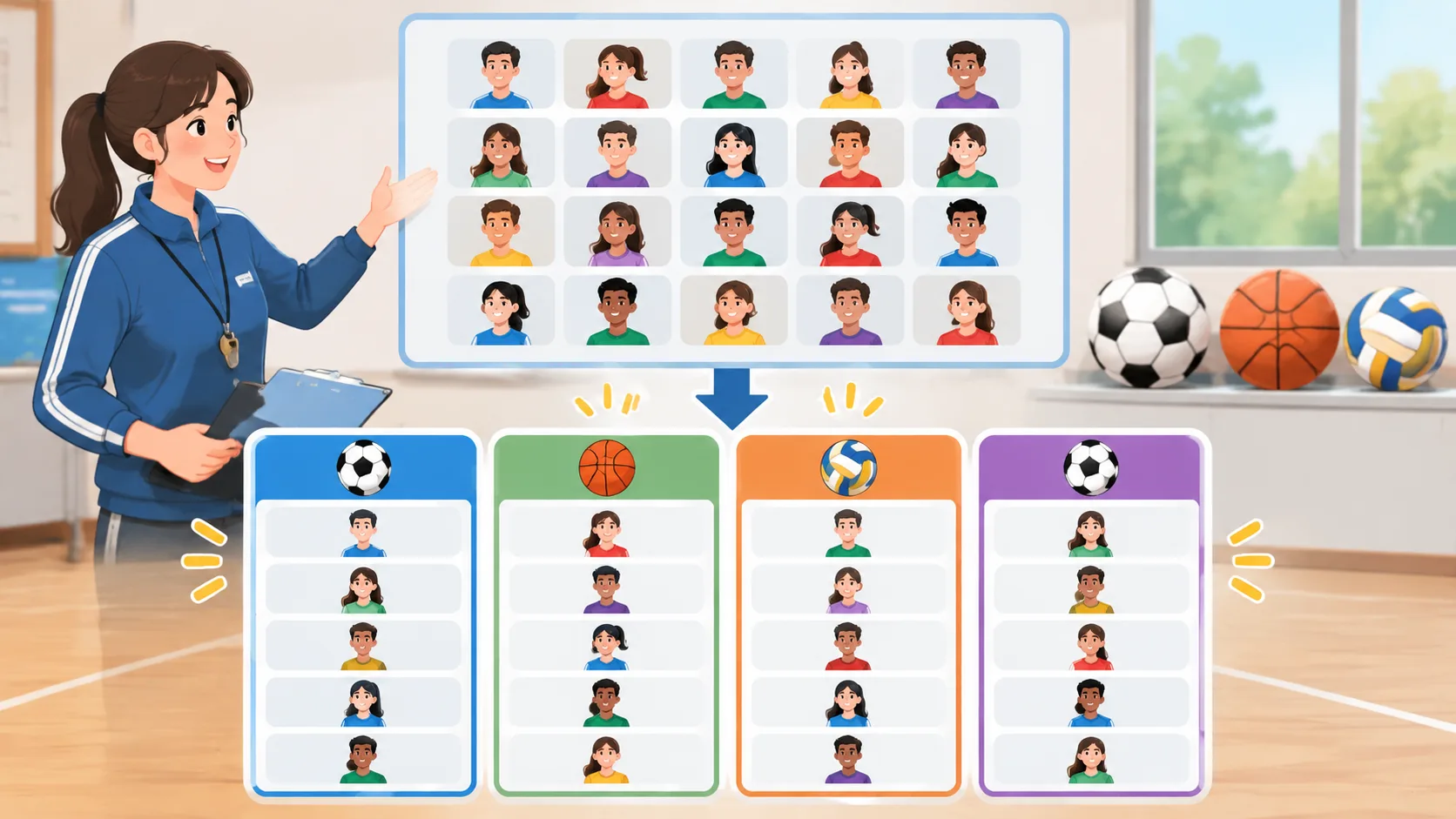
How to Create Teams Using a Random Sports Team Generator
Creating teams does not need to be complicated. The following process works well for classroom games, recreational sports, training sessions, and informal competitions.
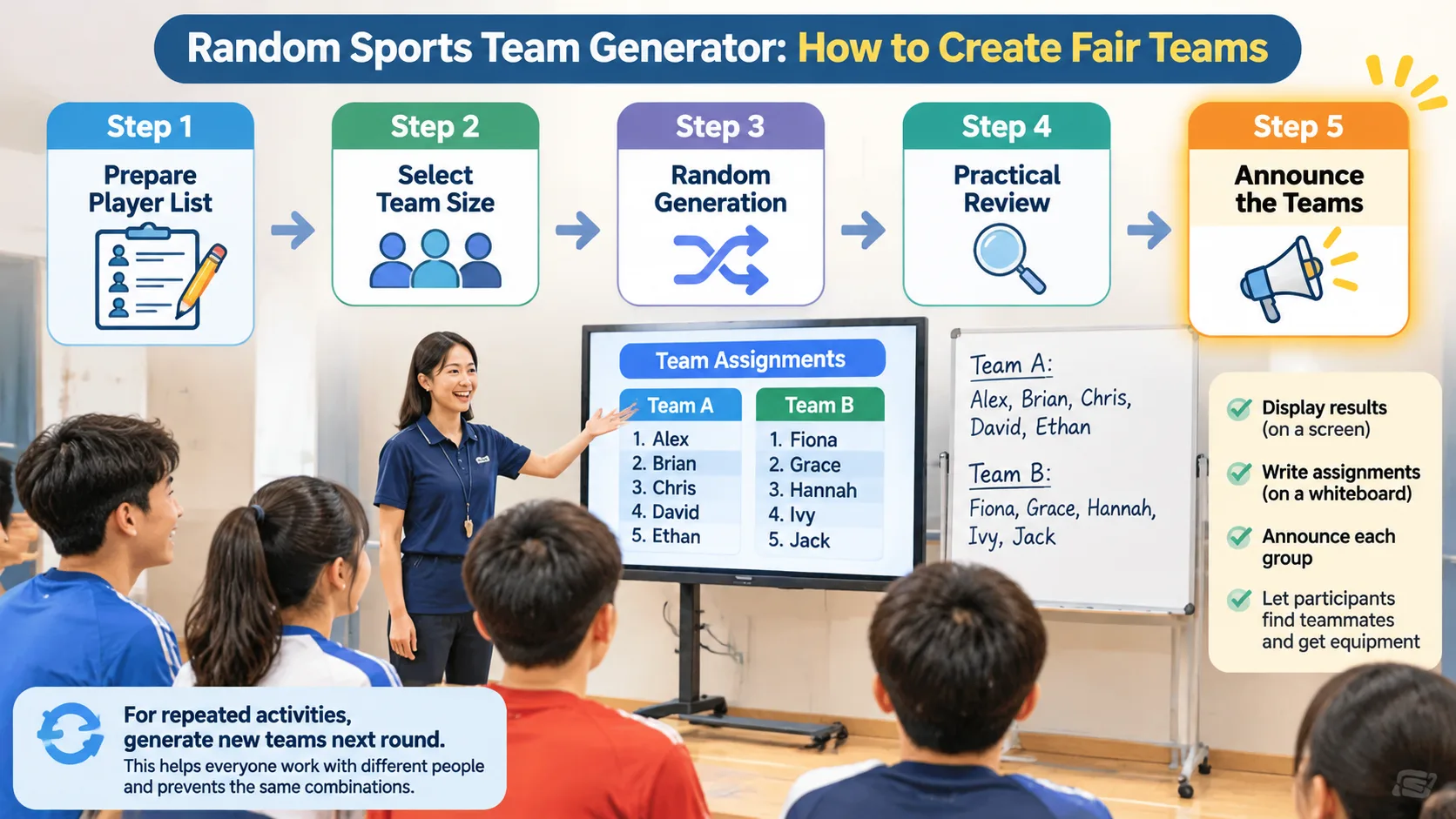
Step 1: Prepare Your Player List
Start by collecting the names of everyone participating. Check attendance before generating teams so that absent players do not end up in the assignments. For larger groups, a digital list is usually easier to manage than handwritten notes.
Use consistent names or identifiers. If two participants have the same first name, include an initial or another appropriate identifier. Avoid including sensitive personal information or unnecessary details in the list.
For example, a volleyball instructor preparing a session with 16 participants should confirm that all 16 players are present before generating four teams.
Step 2: Choose the Number of Teams
Decide how many teams your activity requires. You can also determine the target number of players per team, depending on the available space, equipment, and sport.
For instance:
- 12 players can form three teams of four.
- 16 players can form four teams of four.
- 20 players can form five teams of four.
- 24 players can form four teams of six.
If the total number of players cannot be divided evenly, decide how you will handle the extra participant. You might create one slightly larger team, rotate a substitute, or organize a short rest period.
Step 3: Generate the Teams
Open the Random Group Generator and enter your participant names. Select the grouping arrangement that matches your activity and generate the teams.
Review the results to confirm that everyone appears in the correct group. If the activity requires a specific number of participants per side, check the group sizes before moving to the next step.
The benefit of this approach is that the organizer does not have to manually decide where each person belongs. The tool handles the initial grouping, leaving more time for explaining rules, preparing equipment, and starting the game.
Step 4: Review Practical Requirements
Before starting, check whether any adjustments are necessary. Consider player safety, accessibility, equipment requirements, and the nature of the activity. A team may need an appropriate goalkeeper, a particular position, or a player rotation plan.
Make adjustments transparently when needed. Explain that the initial assignment was random and that any changes are being made to support the activity rather than reward or punish particular players.
Step 5: Announce the Teams and Start Playing
Display the results on a screen, write the assignments on a whiteboard, or announce each group. Give participants a moment to find their teammates and distribute equipment.
For repeated activities, consider generating new teams during the next round. This gives participants opportunities to work with different people and prevents the same combinations from becoming permanent.
How to Make Random Sports Teams More Balanced
A random sports team generator is useful for removing manual selection, but coaches should understand the difference between random teams and balanced teams. Randomness determines who is grouped together without a deliberate selection preference. Balance considers whether each group has a reasonable distribution of relevant characteristics.
For competitive activities, consider a few practical factors before accepting the final assignments:
- Experience: Avoid concentrating all experienced players in one group when the activity is intended to be competitive.
- Position requirements: Sports such as soccer and volleyball may require particular playing roles.
- Age and development: Younger participants may need different arrangements from older or more experienced players.
- Accessibility: Consider equipment, communication, mobility, and other participation requirements.
- Group size: Make sure each team has enough participants to play safely and comfortably.
A useful approach is to generate random teams first and then make only the adjustments that are genuinely necessary. This keeps the process transparent without treating every participant as a ranking or reducing players to their athletic ability.
Imagine a basketball coach organizing 20 players into four teams. The first random result places several experienced players together. Rather than repeatedly regenerating teams until the preferred outcome appears, the coach can make a limited adjustment based on experience and then explain the reason for the change.
The SCORE Leader Handbook from PLAY International similarly discusses mixing and balancing teams according to factors such as age, gender, community, and experience. Its broader lesson is that inclusive team activities require attention to who participates and how everyone gets involved.
For recreational activities, however, avoid overcomplicating the process. If players are simply participating in a short warm-up game, random assignments may be entirely appropriate.
Real-World Examples of Random Sports Team Formation
Different sports and environments have different organizational needs. Here are practical ways to apply random team assignments.
School Physical Education Classes
Teachers often need to divide a full class into teams quickly. A random generator can reduce the time spent choosing sides and help students work with classmates they might not normally approach.
For example, a teacher with 28 students could create four teams of seven for a field-based activity. If the next activity requires smaller groups, the teacher can generate new assignments rather than keeping the original teams throughout the lesson.
The key is to make participation the priority. Teachers should consider whether the activity, equipment, and group sizes are suitable for the students involved. If a student needs an adjustment to participate safely, make that adjustment before starting.
Youth Soccer and Basketball Practice
Youth coaches frequently organize short practice games, skill challenges, and small-sided matches. Repeating the same team combinations can limit opportunities for players to cooperate with different teammates.
A random sports team generator can create fresh groups for each practice round. For instance, a coach with 18 soccer players could organize three groups of six for rotating drills. Each group practices for a set period before moving to another station or activity.
For younger players, consider reducing team sizes and simplifying game formats when appropriate. The Japan Football Association's coaching guidance discusses adapting game formats to encourage participation and give young players more opportunities to become involved.
Company Sports Days and Team-Building Events
Corporate facilitators can use random team assignments to organize informal football matches, relay races, volleyball games, and other group challenges.
Suppose an HR team is organizing a company sports day for 36 employees. Six teams of six participants can make the event easier to coordinate. Random assignment also helps colleagues interact beyond their usual departments.
For activities involving employees who may have different physical abilities, offer suitable alternatives and make participation voluntary. The goal is to create an enjoyable event, not to pressure people into activities that are uncomfortable or unsuitable for them.
Community Tournaments
Community organizers often have limited time to arrange friendly matches. Random assignment can help create initial teams when participants register individually rather than as established clubs.
For example, a recreational volleyball event with 24 participants could begin with four teams of six. Organizers can then schedule short matches and rotate opponents. If the event includes elimination rounds, a separate tournament structure may be more appropriate after the initial grouping.
Random Team Generator vs. Manual Team Selection
Both approaches have a place in sports organization. The right choice depends on the purpose of the activity and the amount of time available.
| Method | Advantages | Limitations |
|---|---|---|
| Random team generator | Fast, repeatable, reduces personal selection bias | Does not automatically guarantee equal skill levels |
| Manual selection | Allows specific skill and position considerations | Can take longer and create perceptions of favoritism |
| Drawing names from a container | Simple, inexpensive, easy to understand | Difficult to manage with large groups or repeated rounds |
| Pre-planned teams | Useful for formal competitions and specific requirements | Requires preparation and can become repetitive |
For most casual sports activities, a random generator is a convenient starting point. For competitive leagues, official tournaments, or activities with strict eligibility requirements, organizers should follow the relevant competition rules and make assignments accordingly.
If you only need to divide participants into pairs for a doubles activity, a Random Pair Generator may be more suitable than creating larger teams. For activities where participants need to be selected individually, the Random Student Picker serves a different purpose.
Common Mistakes to Avoid When Creating Sports Teams
Even a straightforward team assignment process can cause problems if the organizer overlooks a few details.
Ignoring attendance: Generating teams before checking who is present can leave groups with missing players. Confirm attendance first and update the participant list whenever someone joins or leaves.
Assuming random means equal ability: A random assignment can produce uneven teams. If competitive balance matters, review the results and make reasonable adjustments rather than assuming every group will be equally strong.
Always keeping the same teams: Using identical teams for every activity can reduce opportunities for participants to cooperate with new people. Rotate assignments when the session benefits from variety.
Overlooking individual needs: Players may have accessibility requirements, injuries, equipment needs, or other considerations. Random selection should not replace sensible supervision and appropriate safety decisions.
Making unexplained changes: If you adjust a randomly generated team, explain the practical reason. Transparency helps participants understand that changes are intended to support the activity.
A simple routine can prevent most of these issues: check attendance, generate the groups, review essential requirements, explain any changes, and begin the activity.
Tips for Organizing Better Sports Sessions
Team selection is only one part of a successful sports session. The activity itself should also be appropriate for the participants and the available facilities.
Start by deciding what you want the activity to achieve. A warm-up might focus on movement and cooperation, while a competitive game might focus on applying specific skills. The number of teams, playing time, and rules should reflect that purpose.
Use rotations when you have more participants than available playing spaces. For example, three teams can take turns playing two short matches while the remaining team completes a skills challenge. This keeps more people involved instead of leaving one group waiting without an activity.
Consider adapting the rules when necessary. NSW Health's guidance on coaching children's sport describes changing elements such as the playing area, scoring rules, and coaching approach to support participation and accommodate different abilities. These adjustments can be more useful than repeatedly changing team assignments.
Finally, ask participants for feedback. A quick question about whether the activity felt enjoyable, manageable, and inclusive can help you improve the next session. The most useful team organization method is one that supports the actual needs of the group.
Frequently Asked Questions
What Is the Best Way to Create Random Sports Teams?
The easiest approach is to prepare a complete list of participants, choose the number of teams, and use a random team generator to distribute the names. Review the results for attendance, safety, and practical requirements before starting the activity. This approach works well for school games, recreational sports, and informal competitions.
Does a Random Sports Team Generator Create Equal Teams?
A random sports team generator distributes participants without deliberately choosing who belongs together, but it does not automatically guarantee equal athletic ability. If skill balance is important, review the initial assignments and make reasonable adjustments. Random grouping is best understood as a fair starting process rather than a complete competitive balancing system.
Can Teachers Use a Random Sports Team Generator for PE Classes?
Yes. Teachers can use random team assignments for basketball, soccer, volleyball, relay races, and many other PE activities. Check attendance and consider students' individual participation needs before announcing the groups. Changing teams between activities can also introduce new opportunities for cooperation.
How Do You Divide an Uneven Number of Players Into Teams?
When the number of players cannot be divided evenly, some teams will need one additional participant. For example, 17 players can be divided into three teams of six, six, and five. Alternatively, you can rotate a substitute between rounds so everyone gets a reasonable opportunity to play.
Should Sports Teams Always Be Completely Random?
Not necessarily. Random assignments are useful for casual games and activities where variety is the main goal. Competitive matches, age-specific activities, and sports with specialized positions may require additional planning. Organizers should combine a transparent selection process with appropriate attention to safety, accessibility, and competition requirements.
How Often Should Coaches Generate New Teams?
It depends on the activity. For short classroom games and recreational practice sessions, creating new groups between rounds can keep activities fresh. For formal tournaments or team-based training programs, keeping teams together may be more practical. Choose a schedule that supports the purpose of the session.
Create Your Sports Teams in Seconds
Organizing sports activities should leave more time for playing and less time for debating who belongs on which team. A random sports team generator provides a straightforward way to distribute participants, reduce manual selection, and introduce variety into your activities.
Whether you are a PE teacher preparing your next lesson, a coach organizing practice matches, or an event facilitator planning a company sports day, start with an accurate participant list and choose a grouping arrangement that suits your activity.
Ready to organize your next game? Try the free Random Group Generator to create teams quickly and get everyone ready to play.
Related Tools
Pick the right generator for the job — every tool runs free in your browser.