
classroom group names
Creative Classroom Group Names Ideas (+ Free Group Name Generator)
Discover creative classroom group names ideas for teams, projects, and activities. Learn how teachers can choose memorable names and use a free group name generator.
Choosing names for classroom teams can become a small but important challenge. Teachers often need creative classroom group names ideas that help students identify their teams, organize activities, and build a sense of belonging without spending too much preparation time. A good group name can support classroom organization, project work, games, and collaborative learning.
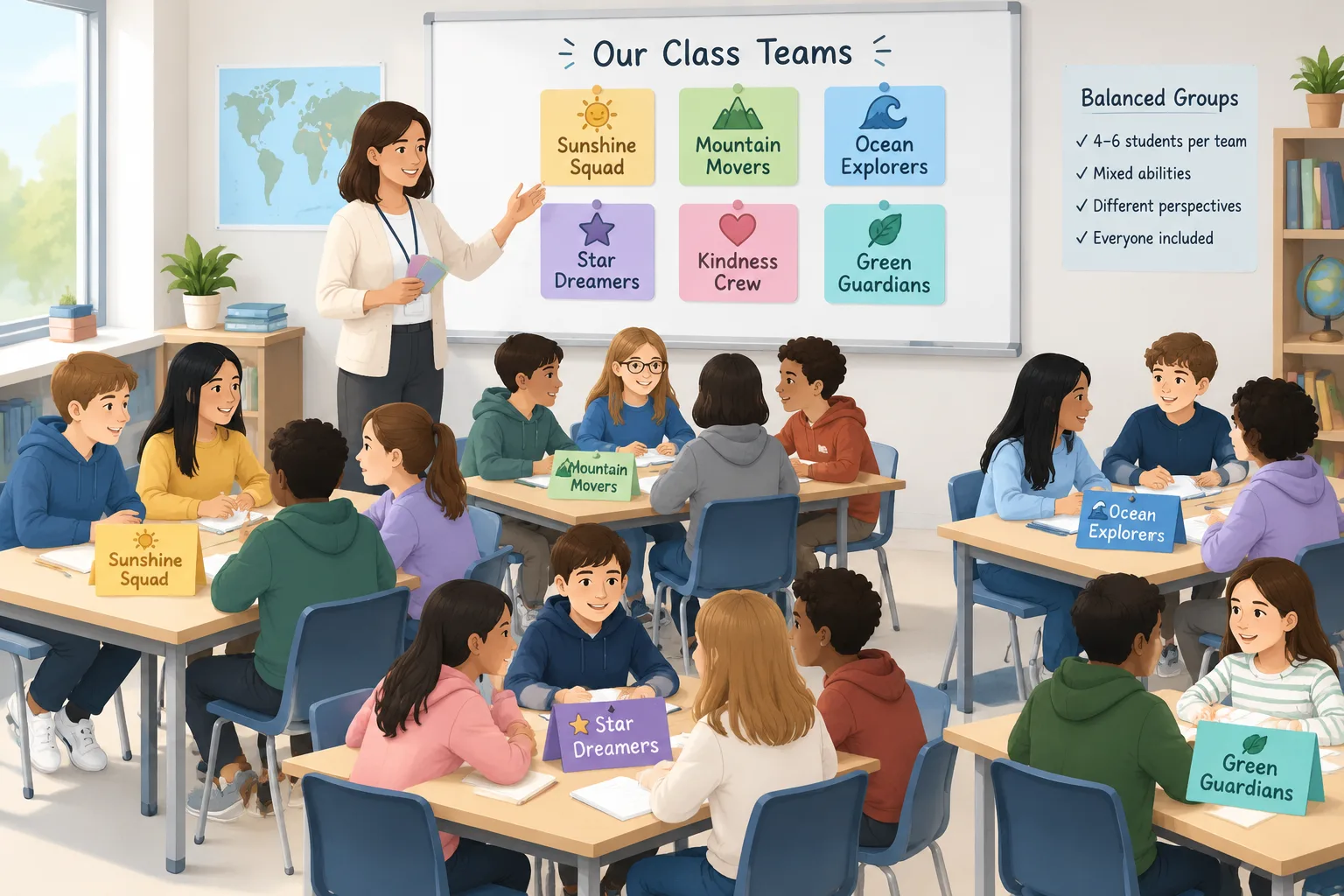
Why creative classroom group names matter
Classroom group names do more than provide labels. When students work in teams, a clear name gives each group an identity and makes classroom management easier. Instead of saying “the group near the window” or “the third table,” teachers can quickly refer to teams by names that students remember.
Creative names can also encourage participation. A science project team called “The Solar Explorers” creates a different feeling from “Group 1.” A reading circle named “The Story Detectives” can help students feel connected to the activity. The goal is not to make names complicated, but to create a simple identity that fits the classroom purpose.
For example, an elementary teacher running a weekly problem-solving activity might create four teams: The Puzzle Makers, The Bright Builders, The Idea Inventors, and The Solution Seekers. Students know their teams, and the names connect naturally with the learning activity.
Teachers should also consider classroom culture when selecting names. Names should be easy to pronounce, inclusive, and appropriate for the age group. A fun name for a middle school class may not work well for a college workshop, and a competitive name may not fit a cooperative learning environment.
How to create effective classroom group names
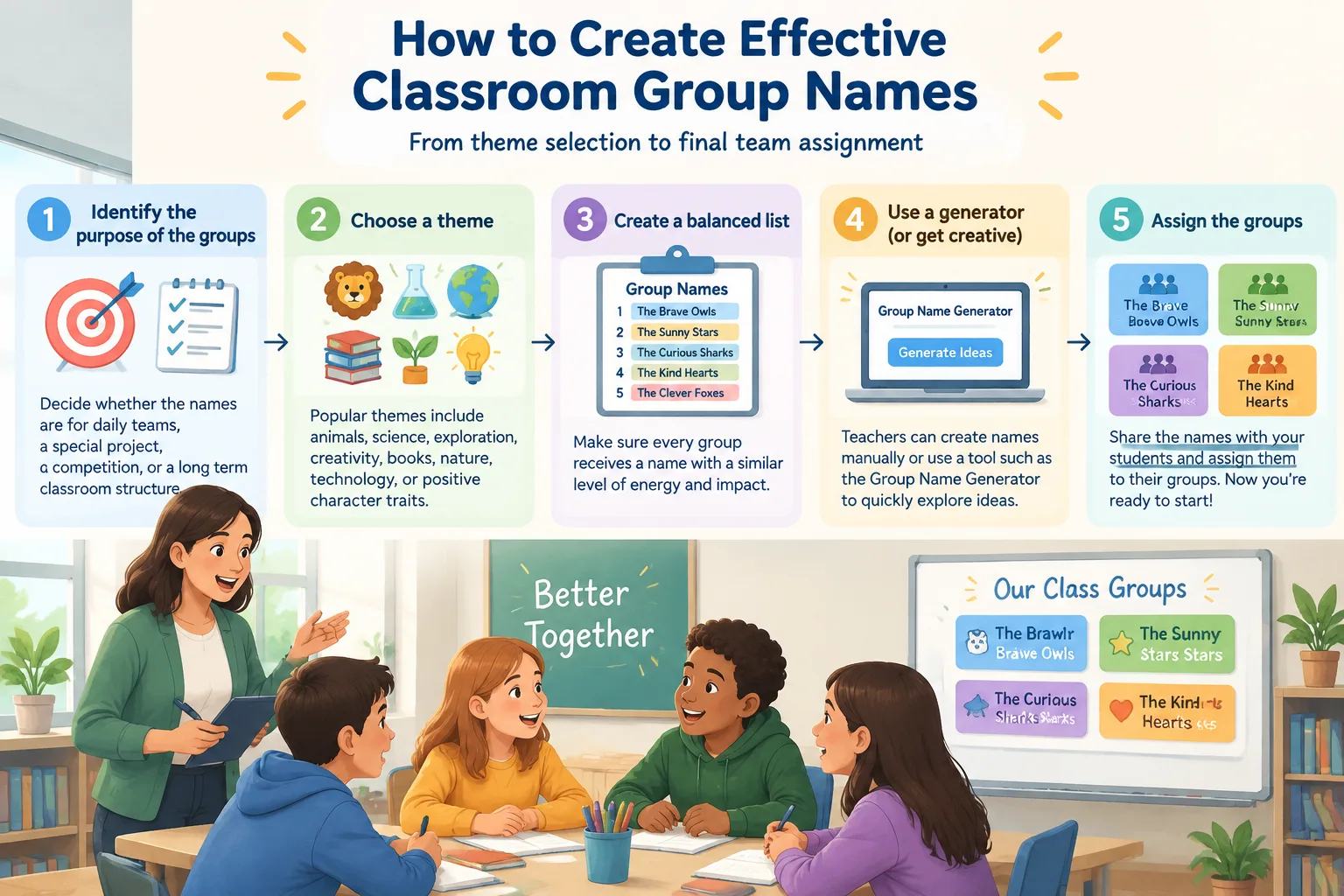
The best classroom group names usually follow a few simple principles. They are memorable, positive, and connected to the classroom experience. Teachers can create names manually or use a tool such as the Group Name Generator to quickly explore ideas.
Follow these steps to create useful group names:
- Identify the purpose of the groups. Decide whether the names are for daily teams, a special project, a competition, or a long-term classroom structure.
- Choose a theme. Popular themes include animals, science, exploration, creativity, books, nature, technology, or positive character traits.
- Create a balanced list. Make sure every group receives a name with a similar level of energy and importance.
- Check student understanding. Avoid names that are difficult to spell, pronounce, or explain.
- Let students participate when appropriate. Allowing students to suggest names can increase ownership.
A practical example is a language class preparing presentations. The teacher chooses an exploration theme and creates names such as The Word Travelers, The Language Leaders, The Culture Creators, and The Communication Crew. Each name supports the activity while helping students remember their assigned teams.
Creative classroom group names ideas by theme
Different subjects and activities often need different styles of names. A themed approach makes it easier to create names that match the classroom environment.
For younger students, friendly and imaginative names often work well. Examples include The Rainbow Readers, The Curious Cubs, The Clever Creators, and The Discovery Stars. These names are simple and help younger learners connect positive feelings with teamwork.
For science and technology classes, teachers might use names such as The Data Detectives, The Future Engineers, The Experiment Experts, and The Innovation Team. These names reinforce the subject while giving students a shared identity during projects.
For older students, names can be more focused on skills and collaboration. Examples include The Research Partners, The Strategy Team, The Creative Thinkers, and The Knowledge Builders. These names feel more suitable for academic discussions, workshops, and professional training.
Event organizers and corporate trainers can use similar ideas. A training session may use names based on company values, project themes, or learning goals. The same naming principles apply: keep names clear, positive, and connected to the purpose of the activity.
How to combine group names with fair team creation
A creative name helps students recognize their team, but teachers also need a fair way to create groups. Manually assigning teams can take time and may accidentally create uneven groups. A random process can help distribute students more fairly when the activity does not require specific skill-based grouping.
Teachers can start by creating groups with a Random Group Generator and then assign creative names to the results. This approach separates two tasks: creating balanced groups and giving those groups an identity.
For example, a teacher has 28 students and wants seven teams of four for a history activity. The teacher uses a random grouping process, then assigns names based on the lesson theme: The Timeline Team, The Archive Explorers, The History Hunters, The Past Investigators, The Culture Connectors, The Era Experts, and The Story Builders.
This workflow can save preparation time while reducing concerns about favoritism. However, random grouping is not always the right choice. If a project requires specific skills, accessibility considerations, or carefully designed peer support, teachers may need to create groups using their professional judgment first.
Classroom activities where group names are useful
Creative classroom group names can support many types of activities. They are especially helpful when students work together repeatedly and need a quick way to identify teams.
For classroom games, names make score tracking easier. A teacher running a vocabulary challenge can record points by team name instead of student names. During a debate activity, teams can use their names on presentation materials and planning sheets.
For project-based learning, names help students organize shared responsibilities. A group working on an environmental project might become The Green Innovators or The Planet Protectors. Students can use the name on posters, reports, and presentations.
For online or hybrid classes, names can improve organization as well. Teachers using digital classrooms can match group names with breakout rooms, shared documents, or discussion channels. If students need pairs instead of larger groups, a Random Pair Generator can help create quick partner assignments.
A university instructor, for example, may divide students into discussion groups for a weekly seminar. Instead of changing labels every session, the instructor can use themed names that students recognize throughout the course.
Common mistakes when choosing classroom group names
Although naming groups seems simple, a few mistakes can reduce the value of the activity. One common issue is creating names that are too complicated. Long names may slow down classroom communication and confuse students.
Another mistake is using names that create unwanted competition. Names should encourage teamwork rather than suggest that one group is naturally better than another. Neutral themes, creative topics, and positive words usually work well.
Teachers should also avoid names that exclude students. Cultural references, jokes, or difficult vocabulary may not be understood by everyone in the classroom. A quick review before using names can prevent misunderstandings.
For example, a teacher creating teams for an international classroom might choose universal themes such as colors, animals, inventions, or natural features instead of references that only some students recognize.
FAQ about creative classroom group names ideas
What makes a good classroom group name?
A good classroom group name is easy to remember, positive, appropriate for the students’ age, and connected to the classroom activity. The best names help students identify their teams while supporting a welcoming learning environment.
How many group names should a teacher prepare?
The number of names depends on the number of teams needed. Teachers can prepare a few extra names in case class sizes change or students are moved between groups. A generator can help create additional ideas quickly.
Should students choose their own group names?
Student-created names can increase engagement and ownership, especially for long-term projects. However, teachers may want to provide guidelines so names remain respectful and suitable for the classroom.
Can group names be used with randomly assigned teams?
Yes. Many teachers create teams randomly first and then assign creative names afterward. This combines fair team creation with a fun classroom identity.
When should teachers avoid random group names and assignments?
Random grouping and creative names may not be the best approach when an activity requires specific abilities, carefully planned support, or confidential team arrangements. Teachers should choose the method that fits the learning goal.
Create your classroom teams with creative names
Creative classroom group names ideas can make everyday activities easier to organize and more engaging for students. Whether you are preparing a lesson, project, workshop, or team activity, combining thoughtful names with a fair grouping process can improve classroom management.
Start by creating your teams, then give each group a memorable identity with the free Group Name Generator.
Related Tools
Pick the right generator for the job — every tool runs free in your browser.