
random soccer player
Random Soccer Player: How to Select Players Fairly for Games and Activities
Learn how a random soccer player tool can help coaches, teachers, and organizers create fair selections for practices, games, and group activities.
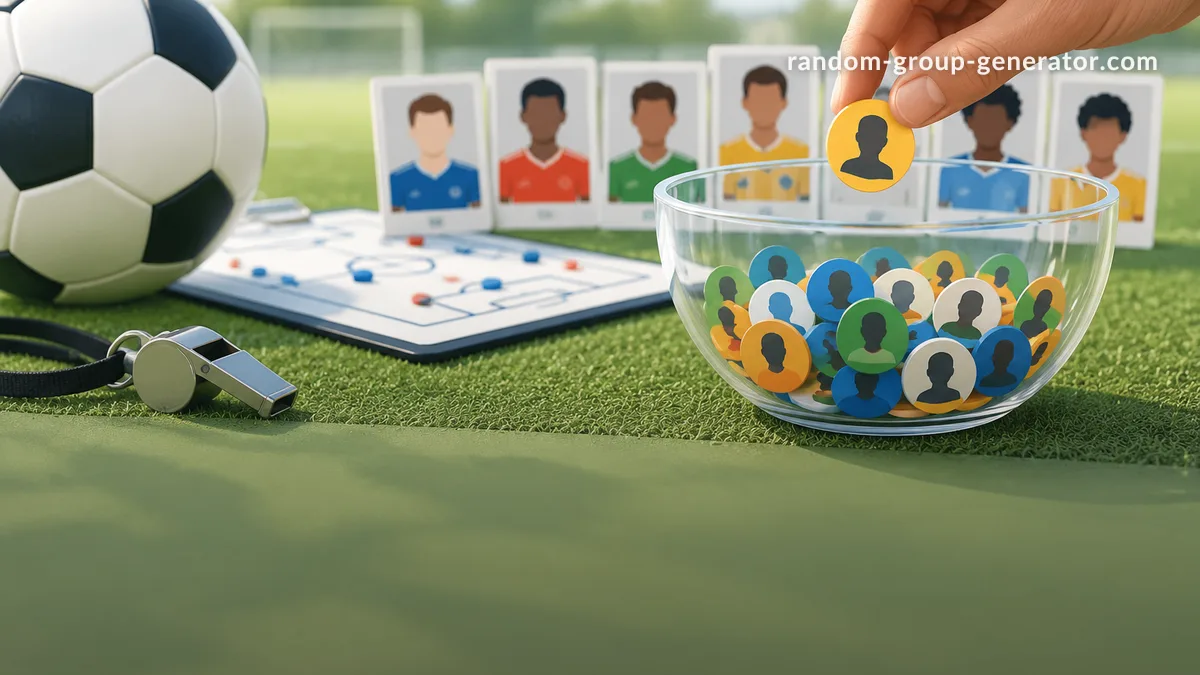
Choosing players for a soccer activity can become difficult when the same people are selected first, when time is limited, or when organizers want to avoid accusations of favoritism. A random soccer player approach helps coaches, teachers, and team facilitators create a more balanced selection process by using chance instead of personal preference. This method is useful for practice drills, classroom sports activities, youth programs, and informal team events.
A fair selection process does not mean every player will have identical skills or roles. Instead, it creates a clear and repeatable way to decide who participates, who starts a drill, or who joins a group. Tools such as a random selector can save time while helping organizers focus on coaching, communication, and player development.
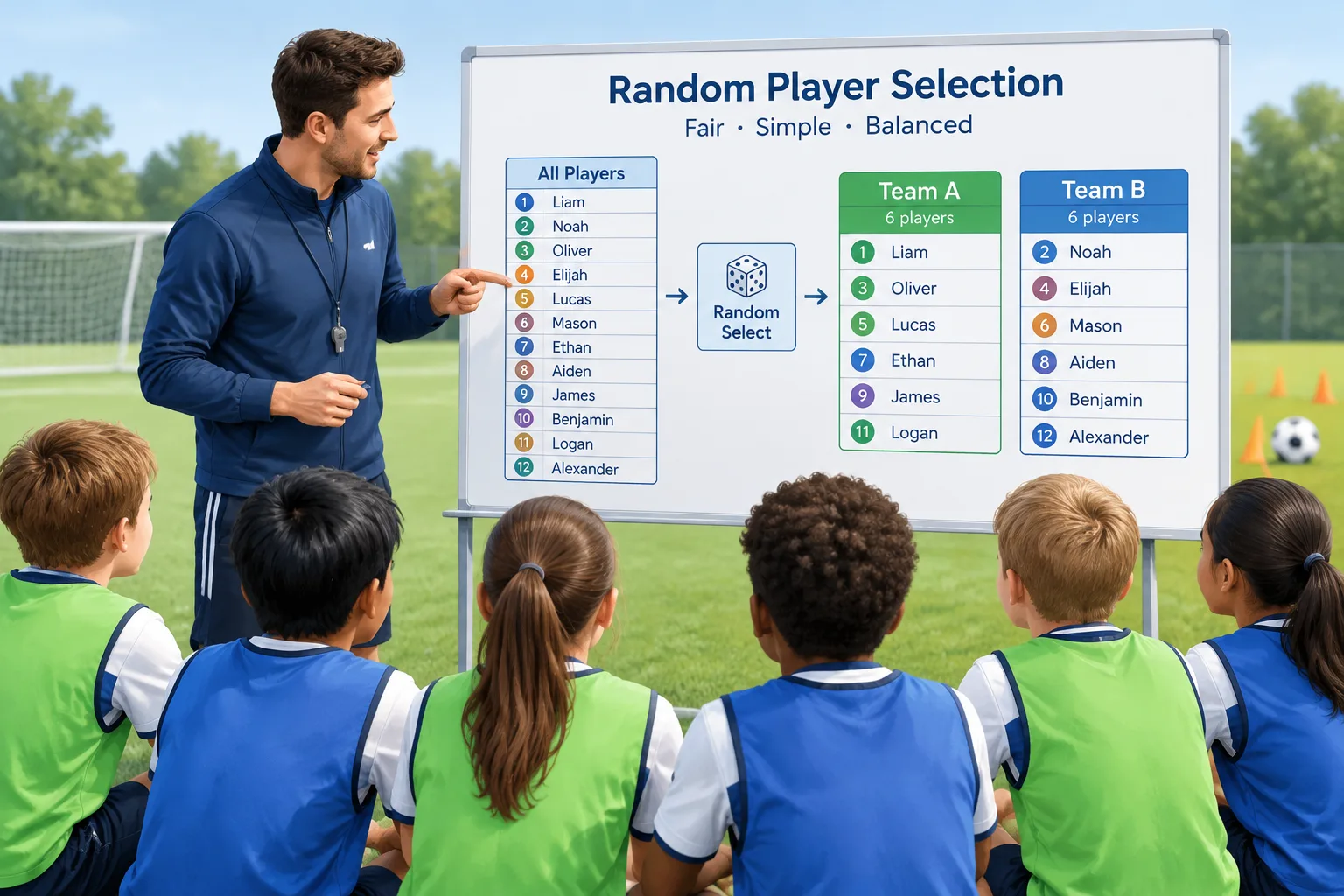
Why use a random soccer player selection method?
Many coaches and educators face the same challenge: selecting players quickly while keeping everyone engaged. Manual choices often follow familiar patterns. A coach may choose the strongest players first, a teacher may call on the same volunteers, or a team leader may accidentally overlook quieter participants. A random soccer player method provides a neutral starting point.
Random selection is especially useful when the goal is participation rather than competition. For example, during a school soccer lesson, a teacher may need to divide 24 students into four practice groups. Instead of spending several minutes deciding who goes where, the teacher can use a random process and then adjust groups if needed for safety or skill balance.
A random approach also creates transparency. Players understand that the selection was based on a consistent rule rather than hidden preferences. This can be valuable in youth sports, where building confidence and encouraging participation are important parts of the experience.
However, random selection is not always the right choice. Competitive matches, safety-focused activities, and situations requiring specific positions may need a coach's judgment. The best approach often combines random selection with professional knowledge.
How a random soccer player tool works
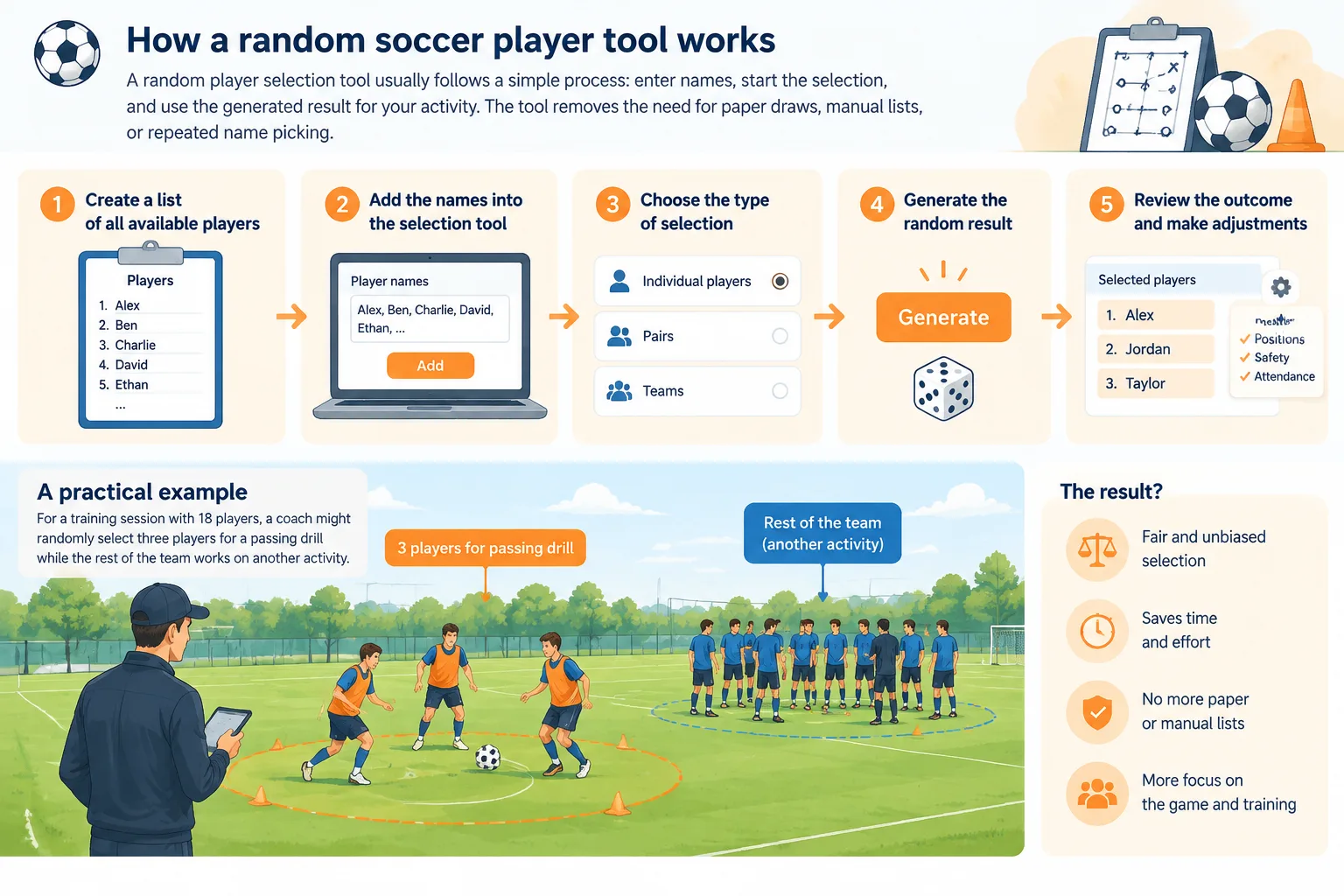
A random player selection tool usually follows a simple process: enter names, start the selection, and use the generated result for your activity. The tool removes the need for paper draws, manual lists, or repeated name picking.
Here is a practical example:
- Create a list of all available players.
- Add the names into the selection tool.
- Choose whether you need individual players, pairs, or teams.
- Generate the random result.
- Review the outcome and make any necessary adjustments for positions, safety, or attendance.
For a training session with 18 players, a coach might randomly select three players for a passing drill while the rest of the team works on another activity. The coach can repeat the process throughout the session so different players receive opportunities.
The same workflow can support teachers and facilitators outside traditional sports. A physical education teacher can use random selection to assign practice roles, while a company event organizer can use it for friendly soccer team building activities.
Benefits of random player selection for coaches and educators
One major benefit of random selection is efficiency. Coaches often have limited preparation time before a session begins. Instead of manually organizing every activity, they can prepare a list and generate selections within seconds. This leaves more time for warm-ups, instruction, and feedback.
Another benefit is participation balance. When the same players are repeatedly chosen, others may become less involved. A random method encourages wider participation by giving everyone a chance to be selected. This does not replace coaching decisions, but it can create more opportunities during practice.
For example, a youth coach running a shooting exercise might randomly select five players for the first round and five different players for the second round. Over several sessions, the coach can combine random selection with performance observations to ensure every player receives useful practice time.
Random tools can also support remote or hybrid activities. Facilitators who organize online sports discussions, fantasy leagues, or team events can use digital selection tools instead of relying on physical methods. The Random Group Generator platform provides tools designed for quick and fair selection workflows.
Random selection compared with manual player picking
Manual selection gives coaches complete control, which can be useful when creating competitive teams or managing specific training goals. A coach may need to place experienced defenders together or ensure each group has a goalkeeper. In these situations, human judgment is necessary.
Random selection offers a different advantage: speed and neutrality. It reduces the chance that personal preferences influence every decision. For activities focused on inclusion, practice rotation, or team games, random selection can be a practical alternative.
Consider a school tournament preparation session. If the teacher is creating final competition teams, careful evaluation may be needed. If the teacher is simply organizing practice groups for a fun activity, a random method may work better because it keeps the process simple and engaging.
Some organizers use a mixed approach. They first create random groups and then make small adjustments. This keeps the fairness of random selection while allowing the organizer to consider important factors such as ability level, attendance, and safety.
Ways to use random soccer player selection in real activities
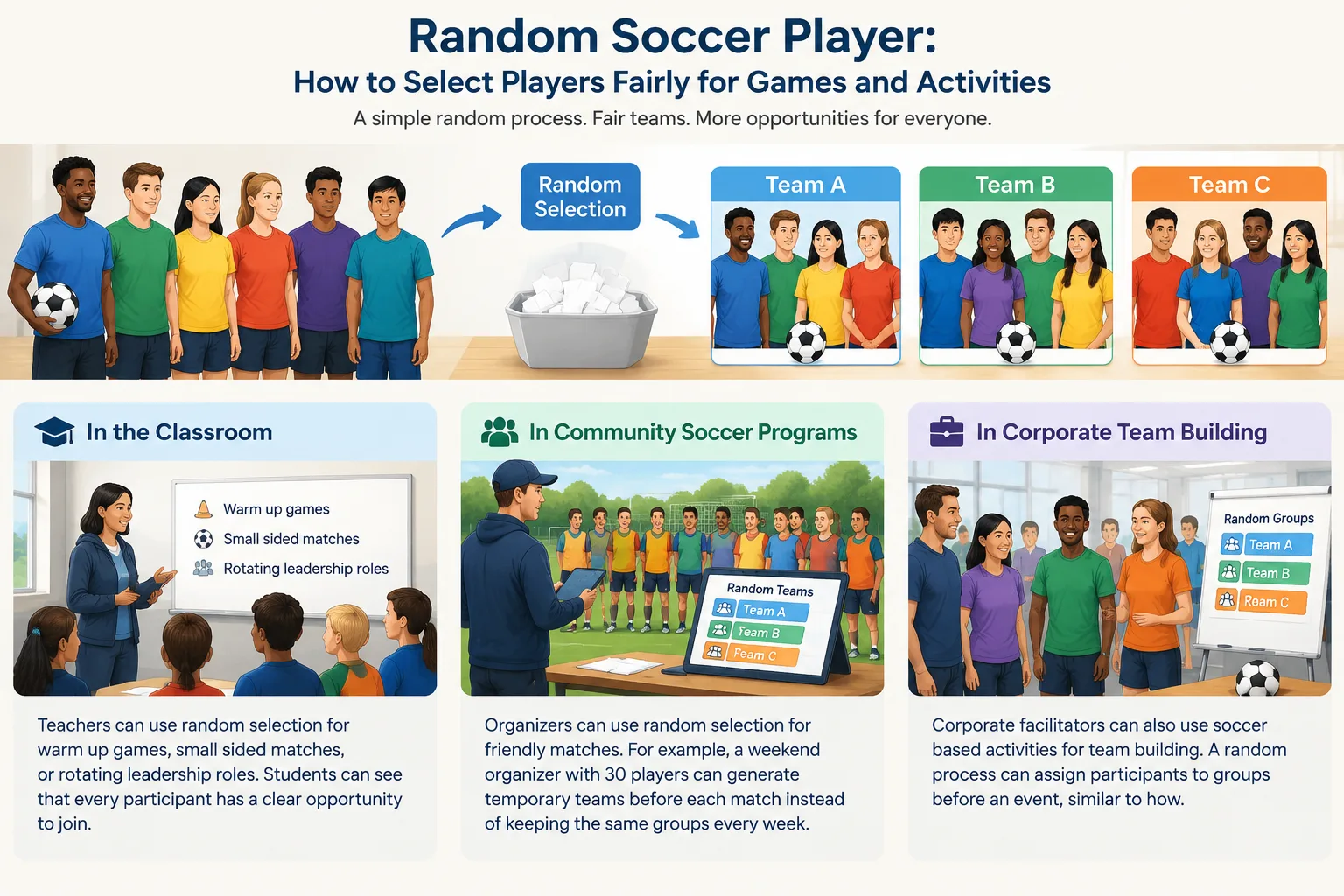
A random soccer player method can be adapted for many situations. In a classroom setting, teachers can use it for warm-up games, small-sided matches, or rotating leadership roles. Students can see that every participant has a clear opportunity to join.
In community soccer programs, organizers can use random selection for friendly matches. For example, a weekend organizer with 30 players can generate temporary teams before each match instead of keeping the same groups every week. This can help new participants meet more teammates.
Corporate facilitators can also use soccer-based activities for team building. A random process can assign participants to groups before an event, similar to how organizers use the Random Pair Generator for partner activities.
Tips for making random player selection work well
Before using a random selection tool, prepare clear rules. Decide whether you are selecting individual players, pairs, or teams. Explain the purpose of the process so participants understand that randomness is being used to support fairness and organization.
It is also helpful to keep records when running repeated activities. A coach may notice that some players receive more opportunities over several sessions. Combining random selection with simple tracking can help maintain balanced participation.
For younger players, explain random selection in simple terms. The goal is not to remove coaching decisions but to make some choices more open and predictable. Players are more likely to accept results when they understand the process.
If your activity requires creative team labels, a Group Name Generator can help add a fun element after teams are created. This can be useful for school events, camps, and informal tournaments.
Frequently Asked Questions
What is a random soccer player selector?
A random soccer player selector is a method or tool that chooses players from a list using a random process. Coaches, teachers, and organizers can use it to assign participants for drills, activities, or informal games.
Is random player selection fair for soccer teams?
Random selection can be fair when the goal is equal opportunity, rotation, or participation. It does not replace coaching decisions for competitive team building, where skill levels, positions, and strategy may need to be considered.
Can I use random selection for soccer practice groups?
Yes. Practice groups are one of the most common uses. A coach can randomly create groups and then adjust them if needed based on safety, attendance, or training goals.
How can teachers use random soccer player selection?
Teachers can use it during physical education lessons to assign teams, choose drill participants, or rotate roles. It helps create a clear process that students can understand.
Can random selection tools create teams as well as choose players?
Many selection tools can support group creation. For larger activities, organizers can use a Random Group Generator to divide participants into balanced groups before starting an activity.
Try a random soccer player workflow today
A random soccer player process can make activities easier to organize while giving participants a clear and consistent way to be selected. Whether you are running a school lesson, coaching practice, or planning a team event, a simple random workflow can save preparation time and support fair participation.
Start by adding your player list and exploring the free Random Group Generator tool for creating organized groups and activities.
Related Tools
Pick the right generator for the job — every tool runs free in your browser.